In a sleepy, sacred village of Tamil Nadu stands a temple that humbles even the most learned minds. Here, scholars forget their verses. Orators lose their words. Musicians fall into sudden silence. Not because they are unprepared—but because the goddess here demands not intellect, but surrender. This is Koothanur Saraswati Devi Temple—India’s only temple where Goddess Saraswati, the embodiment of knowledge, music, wisdom, and divine speech, is worshipped as the presiding deity.
But this temple is no ordinary shrine. There are no extravagant gopurams or gold-plated walls. No chants blasted over loudspeakers. Koothanur greets you not with spectacle, but with silence—and a sacred instruction that shakes the soul: “Leave your ego outside.”
Devotees here don’t come seeking blessings for fame or academic ranks. They come to unlearn, to shed the pride of knowing, and to offer their inner self—not just prayers. It’s said even the air here whispers: “If you carry arrogance, Saraswati will not speak to you.”
Why does a goddess of knowledge ask for unknowing? Why do true seekers travel miles to sit in silence here? Because in Koothanur, wisdom doesn’t roar—it awakens in those who are willing to fall at her feet, bare of ego. Now, let us journey into the heart of this extraordinary temple—layer by layer, soul by soul.
1. The Birth of Koothanur, A Gift of Grace, Not Pride.
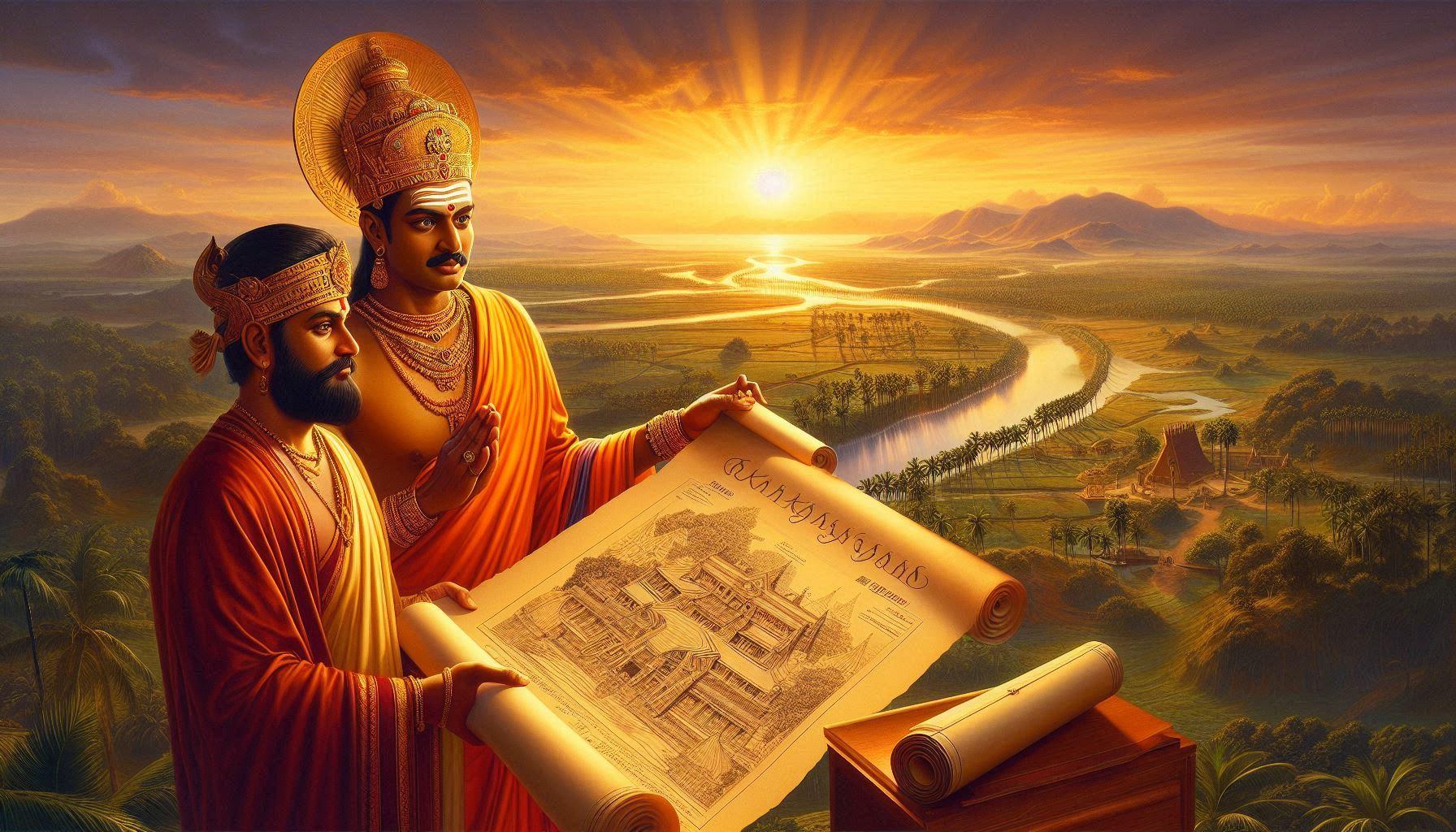
Long ago, the land of Tamil Nadu was home to many saints, poets, and divine devotees. Among them was a great Tamil scholar and poet named Ottakoothar, who lived during the Chola dynasty in the 12th century. He was not just any poet—he was the royal court poet of three Chola kings and possessed an ocean of literary wisdom. But Ottakoothar, despite his brilliance, remained humble. He always acknowledged that his talent was not his own—it was Devi Saraswati’s.
According to legend, King Rajaraja Chola II, impressed by Ottakoothar’s devotion and knowledge, wanted to offer him something rare. “Ask me anything,” the king said. The poet thought for a while and replied, “My Lord, all I ask is a village—a small piece of land where I can establish a temple for my divine mother, Saraswati Devi, who speaks through me.” The king was moved. He granted the village, which was then named Koothanur—meaning “Koothar’s village.”
And thus, the village itself was born from humility, not from conquest. A temple was built for Saraswati Devi—India’s only such temple where she is worshipped as the presiding deity, not just an auxiliary goddess on the side of Shiva or Vishnu.
2. The Silent Rules, No Entry With Ego.
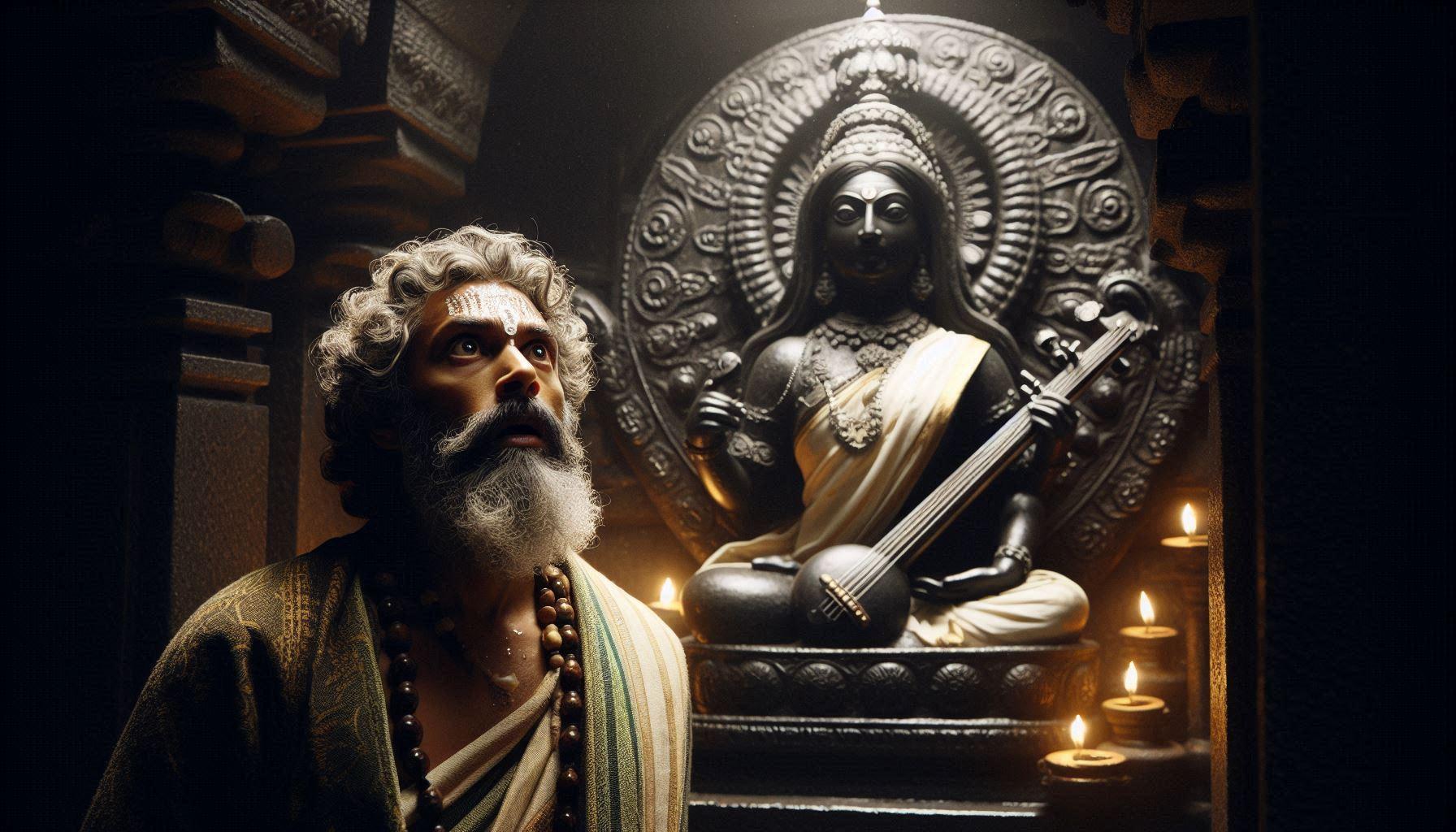
From the moment the temple came into existence, something strange started happening. Learned men would visit this temple and be unable to speak. Vedic scholars would suddenly forget their mantras. Poets would stand mute before the deity. Some say even the most articulate men would stammer when standing in front of her idol. Why? Because Saraswati, the goddess of wisdom, does not tolerate ego. She does not inhabit intellect tainted with pride. And so, the devotees slowly realized: to stand in front of her, they must let go.
Even today, priests gently whisper to visitors: “Leave your ego at the door. Saraswati sees your soul, not your CV.”
There are no loud processions here. No grand shows of knowledge. Just surrender.
3. The Living Deity, A Goddess Who Still Whispers.
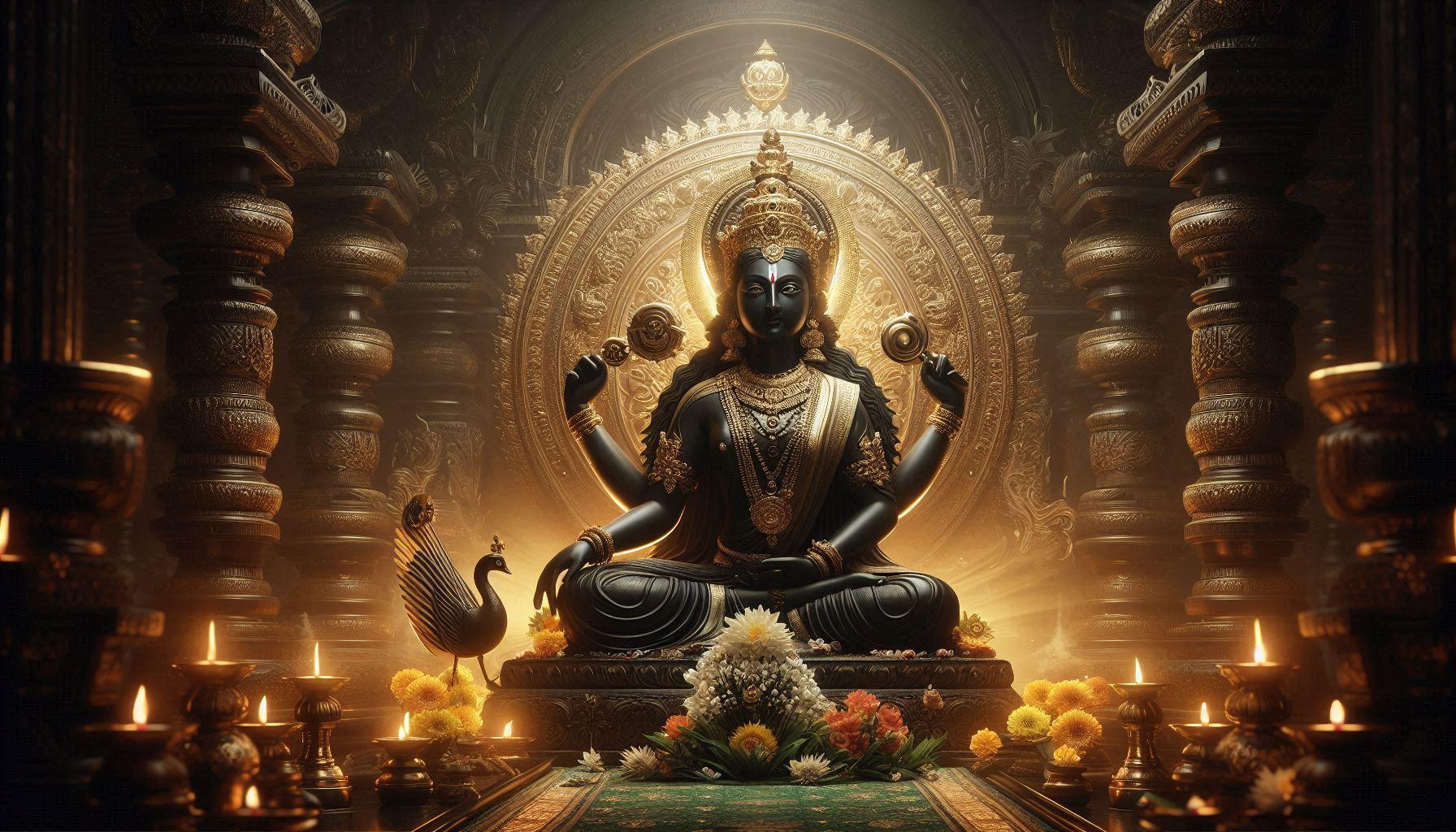
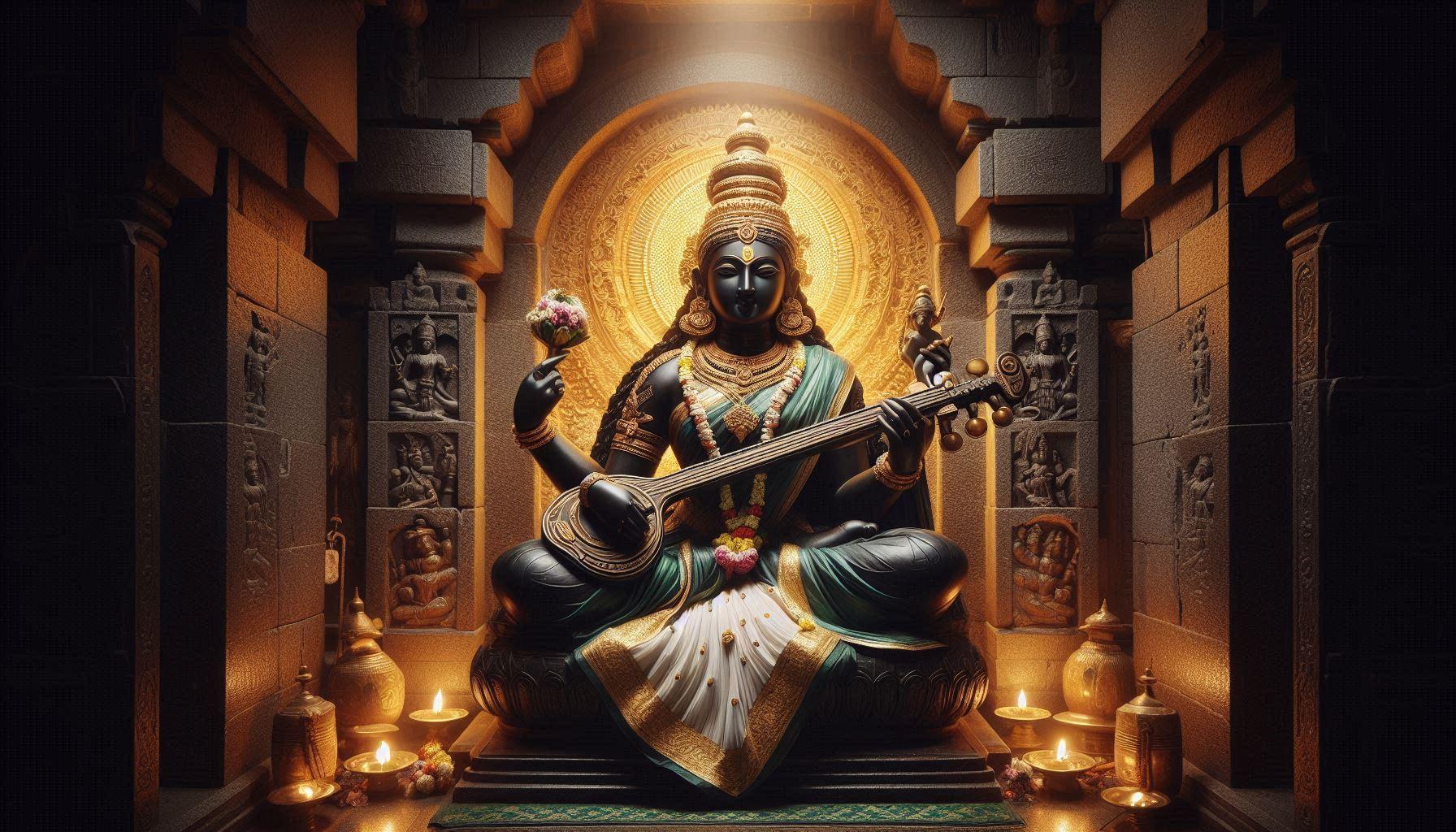
It is said that Goddess Saraswati truly resides here—not as a concept, but as a presence. Her idol at Koothanur is unlike any other. She is not shown with four hands, a veena, or riding a swan in motion. Instead, she sits in deep silence, almost meditative, yet intensely alive. Her eyes are calm but piercing. Many devotees say they feel as though she is reading their minds.
Children come here before their school year begins. Young students write their first alphabets here on a plate of rice placed before the goddess. Musicians offer their instruments here before performances. Yet, each one enters with a prayer that goes beyond grades or fame: “Let me be free of my arrogance.”
One popular story tells of a man who came to the temple boasting he had memorized all four Vedas. As he stood before the deity and tried to chant, his mind went blank. Not a single verse came out. Trembling, he sat down and cried, realizing that what he thought was knowledge was merely memorization without surrender. Only after a heartfelt apology to the goddess did his voice return—and this time, it was filled with humility.
4. The Miracles, Not Loud, But Profound.
Koothanur Saraswati Temple does not dazzle you with claims of instant wealth, grand healing, or showy supernatural phenomena. Instead, the miracles that unfold here are subtle—quiet shifts that stir the soul and reroute the course of lives in the most unexpected ways. The goddess doesn’t roar; she gently rearranges destinies.
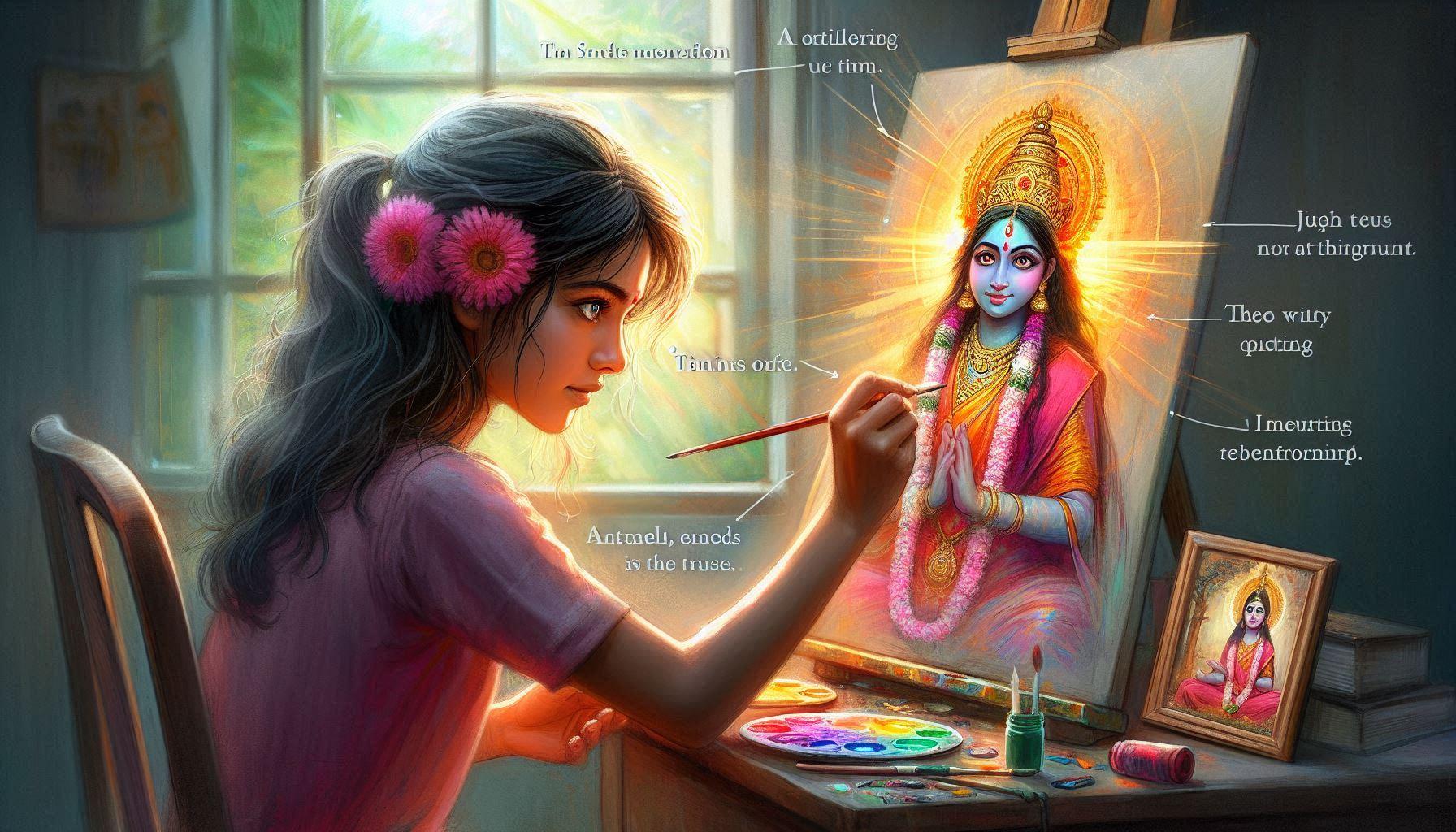
There are countless stories passed from one generation to the next—not written in books, but etched in memory. One such story is of a young girl battling dyslexia. Her parents, desperate and heartbroken, brought her to Koothanur. The child didn’t speak a word. She simply sat in silence before the goddess’s idol. No special pooja was done. No mantras chanted aloud. But something shifted. Back home, the girl felt an unexplainable pull toward colors and brushes. Today, she is an accomplished painter, her inner voice finally awakened through strokes of divine grace.
Another tale tells of a stammering boy, mocked by peers. He visited Koothanur with his grandmother. After offering his voice to the goddess with tearful surrender, his speech slowly began to flow. These miracles aren’t loud—they don’t demand attention. They whisper transformation into hearts ready to receive, making the impossible quietly possible.
5. The Festival of Light and Learning: Navaratri in Koothanur.
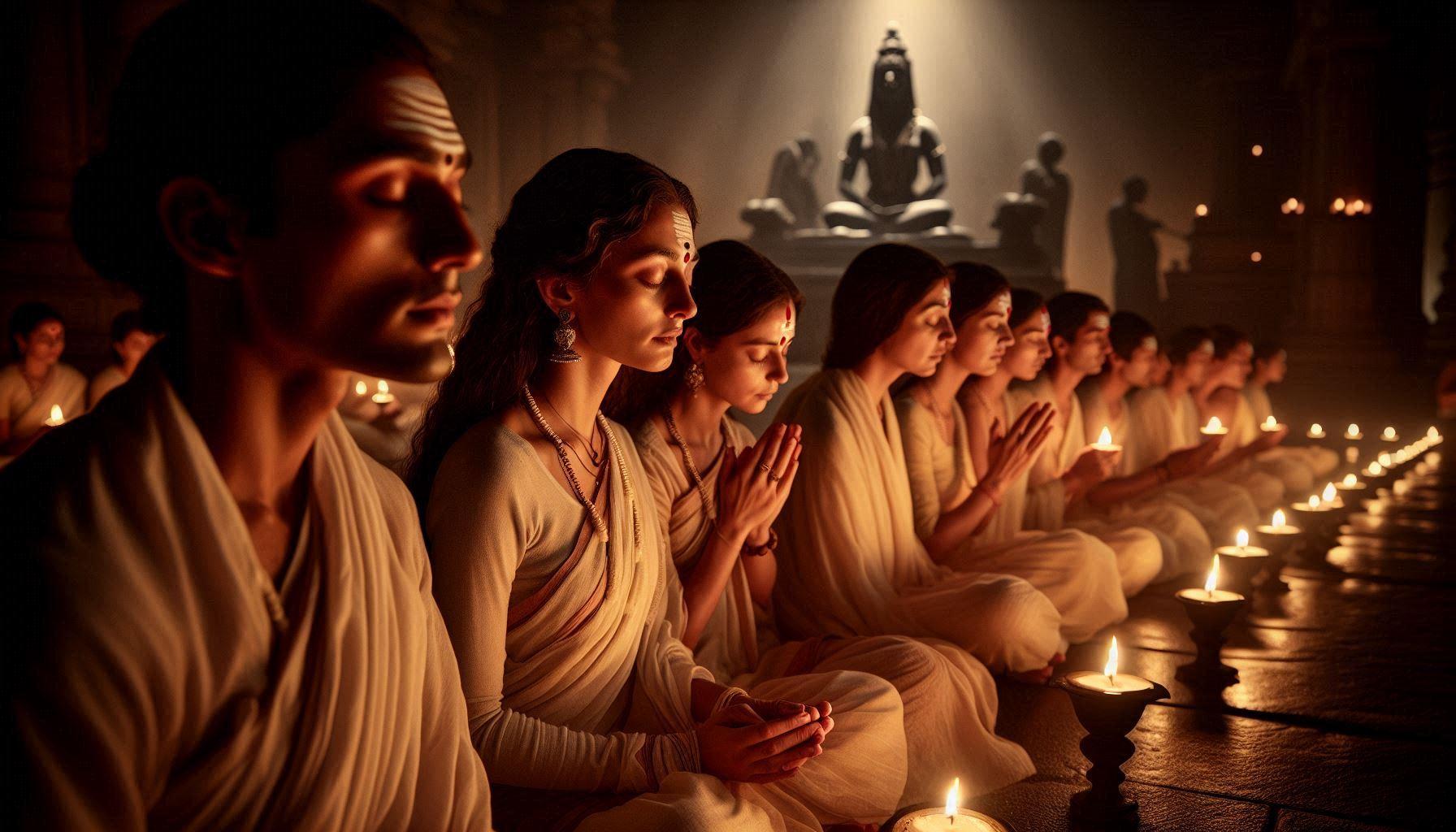
During Navaratri, the quiet village of Koothanur awakens into a spiritual radiance unlike anywhere else. But this transformation isn't marked by noise or spectacle—it's marked by light and inner devotion. Thousands of oil lamps are lit around the temple, their gentle glow casting a sacred aura across the entire premises. The temple doesn't rely on loudspeakers or grand processions. Instead, the only sound that fills the air is the soft, soul-stirring chant of Saraswati stotras, whispered through trembling lips and tearful eyes.
On Saraswati Puja day—Vijaya Dashami—the temple becomes a divine classroom. Children from all over Tamil Nadu come here, dressed in simple attire, holding their schoolbooks, pens, slates, veenas, and other tools of learning. With devotion and innocence, they place these items at the feet of the goddess, surrendering them for her blessings. No one dares touch these objects on that sacred day, for it is believed the goddess herself descends to bless each offering.
The ritual of Vidyarambham begins not with ambition, but with humility. Elders gently whisper to the children: “Don’t ask to be the smartest. Ask to be the most surrendered.” That is the true wisdom Koothanur offers.
6. A Temple Not for Tourists, But Seekers.
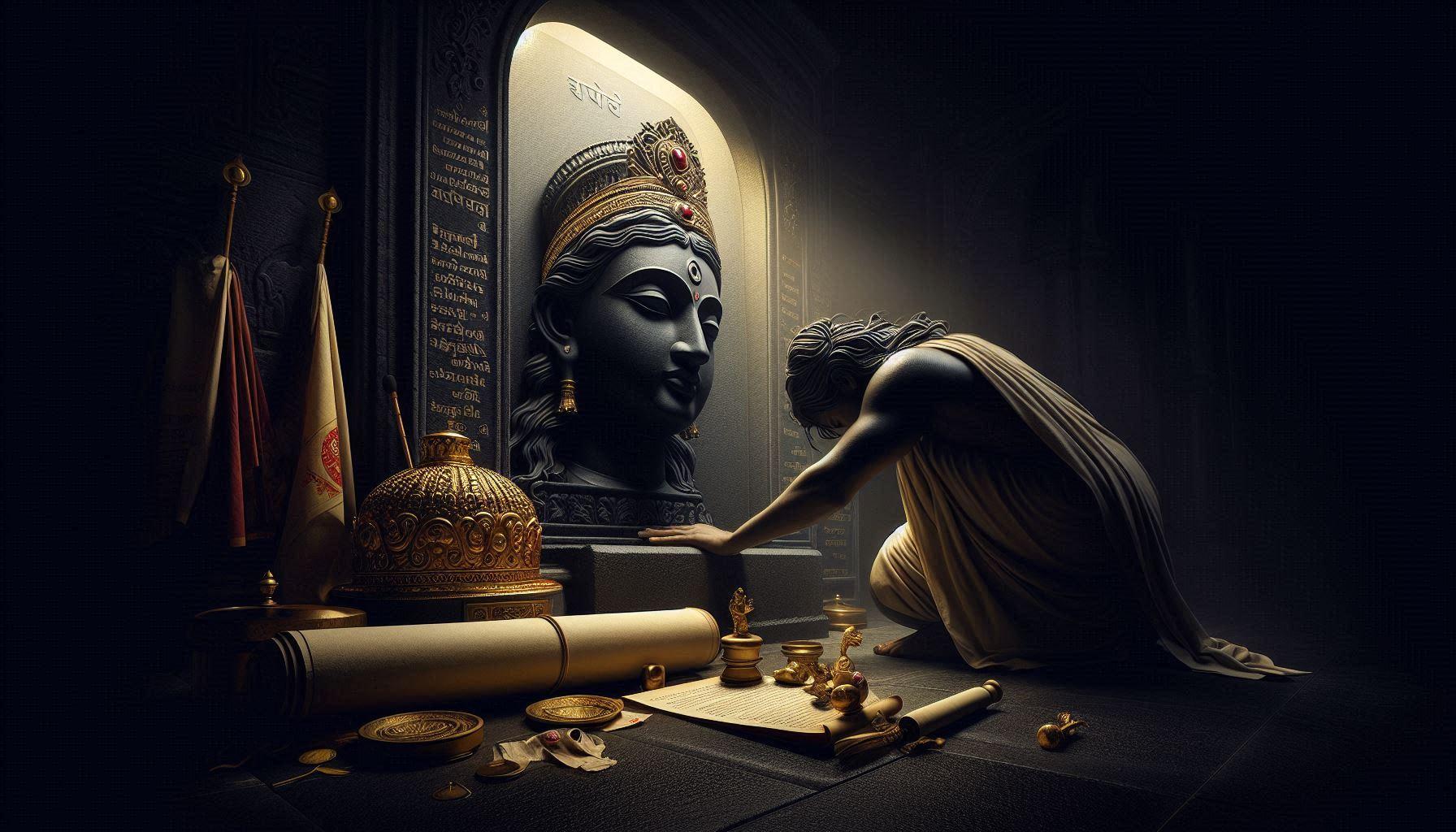
Koothanur Saraswati Temple is not meant for casual tourists who come seeking spectacle or grandeur. It is a space carved out for seekers—those who carry questions in their hearts, not cameras in their hands. Unlike bustling pilgrimage sites filled with commercial distractions, Koothanur remains untouched by noise and untouched by ego. There are no serpentine queues, no loud chants demanding attention, and no vendors shouting offers. Instead, what you find here is silence—profound, cleansing silence.
As you approach the sanctum, something shifts. The air thickens, not with incense, but with a spiritual stillness. You remove your footwear, of course—but that’s only the beginning. Here, you are silently invited to remove much more: your ego, your pride, your degrees, your status, and every identity you think defines you. You leave them all outside, at the invisible threshold of surrender. Inside, you are simply a child again—raw, honest, and curious.
The goddess does not give flashy boons. Instead, she removes the burdens that never belonged to you in the first place. You don’t walk out with all the answers—you walk out without the weight of needing them. And in that lightness, Saraswati smiles.
Conclusion, Surrender Is the Greatest Knowledge.
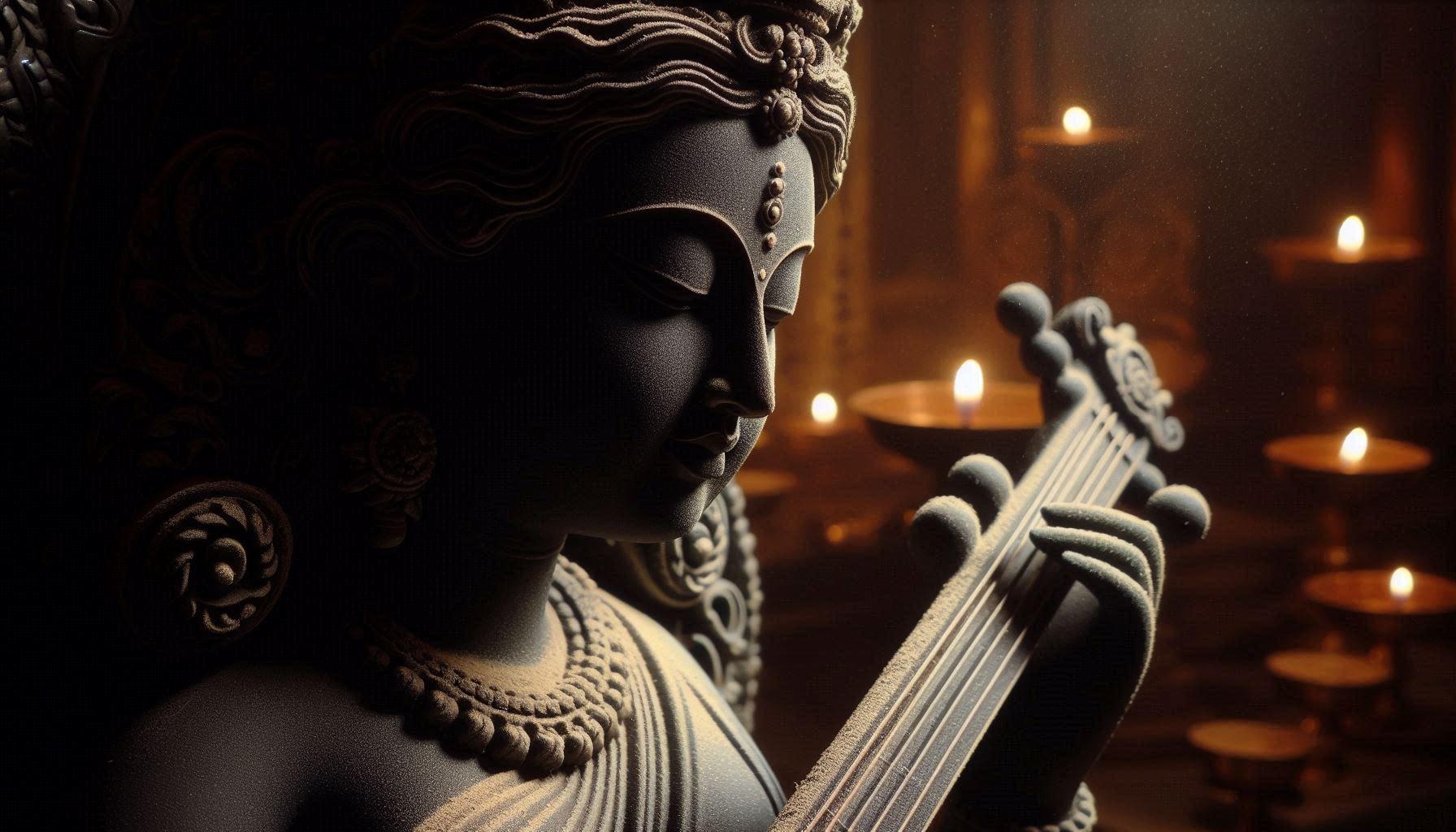
In an age where knowledge is measured in megabytes and pride is packaged in resumes, the Koothanur Saraswati Temple stands as a quiet rebellion. It reminds us that true learning begins not when you know, but when you realize you don’t know everything. Ego is the wall between you and divinity. And this temple? It breaks that wall down before you even step in.
Koothanur’s message isn’t loud. It’s not meant to be. Saraswati is, after all, the goddess of silence between sounds, the pause between thoughts, the wisdom behind words. She doesn’t shout. She whispers. And only the humble can hear her.
So, if you ever visit Koothanur, remember: don’t carry offerings of gold or garlands. Just carry a quiet heart, empty hands, and a willingness to let go.
Because in this temple…
Your ego is the only thing that is not allowed to enter.
Koothanur Saraswati Devi Temple FAQs
Where is Koothanur Saraswati Devi Temple located?
Where is Koothanur Saraswati Devi Temple located?
Koothanur Saraswati Devi Temple is located in Koothanur village, near Tiruvarur district of Tamil Nadu, India. It is one of the most famous temples dedicated to Goddess Saraswati.
What is the significance of Koothanur Saraswati Devi Temple?
What is the significance of Koothanur Saraswati Devi Temple?
The temple is the only prominent temple in Tamil Nadu dedicated to Goddess Saraswati, the Goddess of learning, wisdom, and arts. Students and devotees visit to seek blessings for knowledge and education.
What is the history of Koothanur Saraswati Devi Temple?
What is the history of Koothanur Saraswati Devi Temple?
The temple was built during the Chola period and was patronized by the great Tamil poet Ottakoothar. It is believed that he received divine blessings from Goddess Saraswati here.
What are the temple timings of Koothanur Saraswati Devi Temple?
What are the temple timings of Koothanur Saraswati Devi Temple?
The temple is generally open from 6:00 AM to 12:30 PM and from 4:00 PM to 8:30 PM. Timings may vary during special occasions and festivals.
Which festivals are celebrated at Koothanur Saraswati Devi Temple?
Which festivals are celebrated at Koothanur Saraswati Devi Temple?
Saraswati Pooja during Navaratri, Vijayadasami, and Vasant Panchami are celebrated with great devotion. Thousands of students bring their books to be blessed on Vijayadasami day.
How can devotees reach Koothanur Saraswati Devi Temple?
How can devotees reach Koothanur Saraswati Devi Temple?
The temple is about 25 km from Tiruvarur and 50 km from Thanjavur. It is well-connected by road, and the nearest railway station is Tiruvarur. The nearest airport is Tiruchirappalli International Airport, about 110 km away.
What are the special rituals at Koothanur Saraswati Devi Temple?
What are the special rituals at Koothanur Saraswati Devi Temple?
Devotees often place their books, pens, and musical instruments before the Goddess to seek her blessings. Special archana and homams are performed for students, especially during exam seasons.