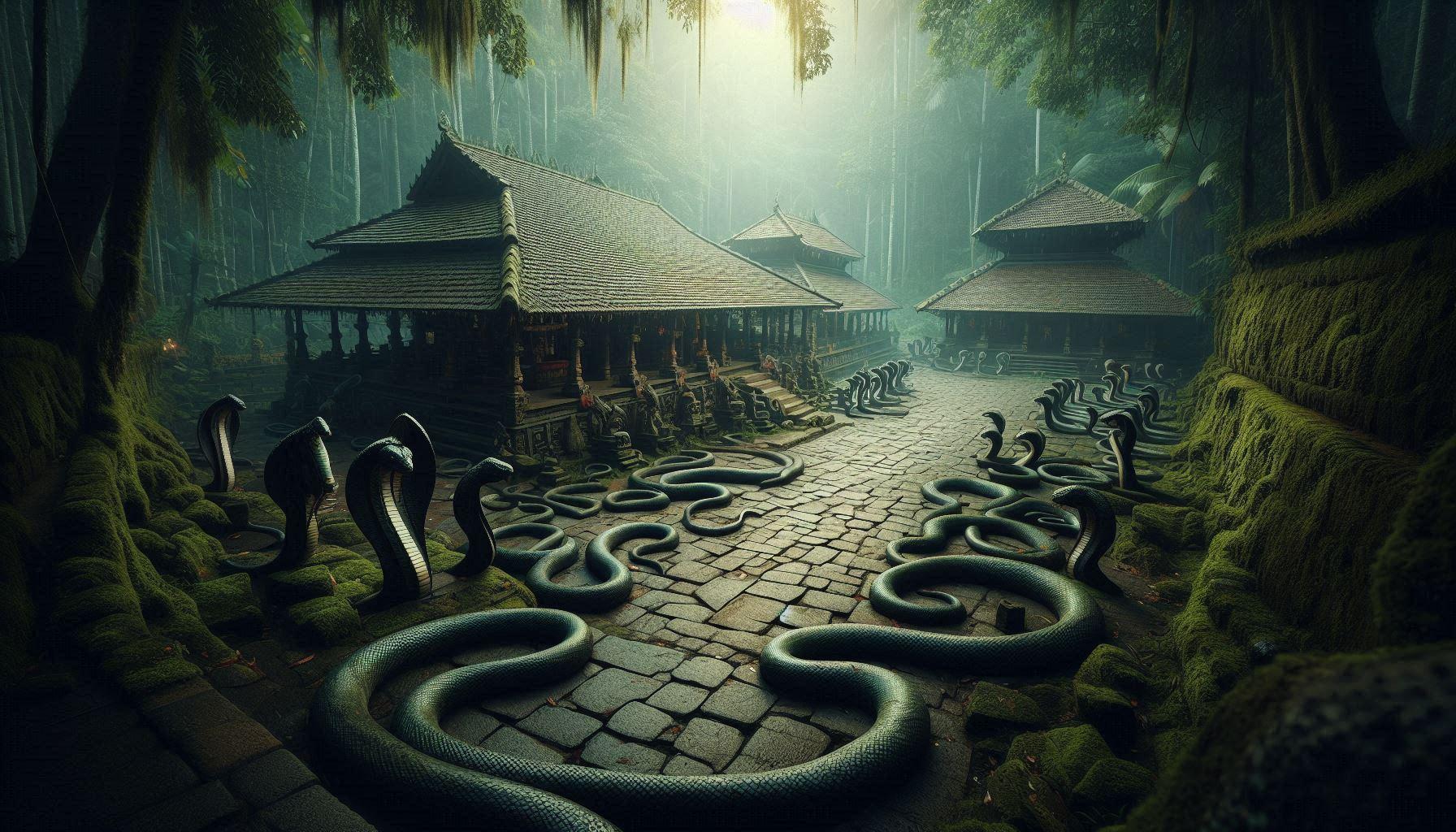
What if I told you there’s a temple deep in the forests of Kerala where the main idol is not carved—but alive? Where thousands of serpent idols line the forest floor, and devotees believe the stone murti itself grows in size over time?
Welcome to the Mannarasala Nagaraja Temple, unlike any other shrine in India. Here, snakes are not feared—they are worshipped as divine ancestors. Women pray here for children. Curses are lifted. Mysterious events unfold.
But the most chilling of all?
The main idol of the five-hooded serpent, believed to be made of herbal and mystical substances, grows slowly every year — without any human interference. Even scientists remain baffled.
Why is this temple off-limits at night? What’s the secret of the mysterious matriarch priestess? Why are real snakes said to guard the sanctum?
Let’s unravel the 5 strangest mysteries of Mannarasala…
1. The Snake Idol That Grows, A Living Murti?
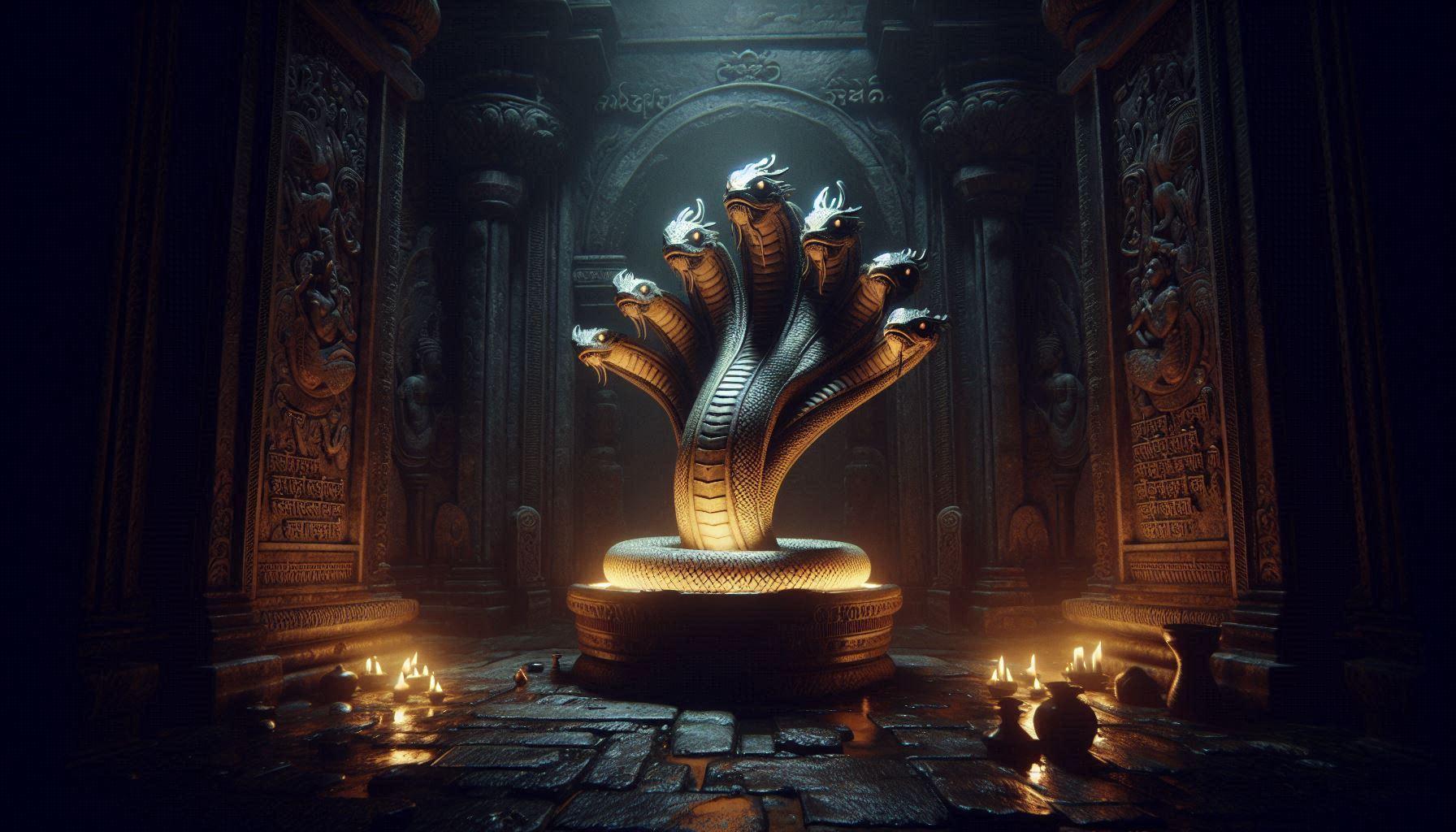
In the heart of the Mannarasala Temple lies a five-hooded serpent idol unlike any other in India. This is no ordinary stone sculpture. According to temple lore, it was created not from stone or metal, but from a secret herbal mixture prepared by Sage Parasurama himself — an alchemical blend known only to the temple’s ancient caretakers.
What’s baffling? The idol is said to grow in size over time.
Every generation of temple caretakers — all descendants of a sacred Brahmin family — have observed a subtle but consistent increase in the size and height of the idol. There is no carving, no reconstruction. No sculptor ever touches it. Yet, the idol expands, as if it were a living entity.
The high priestess (yes, here a woman holds the highest role) is forbidden from revealing the exact composition or rituals used. Scientists have shown interest, but testing is not allowed. Locals believe any attempt to "measure" or "interfere" will anger the divine serpent energy and lead to disaster.
Could this be a case of divine alchemy, where life and spirit infuse matter? Or is it a cosmic secret left unsolved for thousands of years?
Something is growing — and it’s not man-made.
2. The Forest of 30,000 Serpents, Who Placed Them?
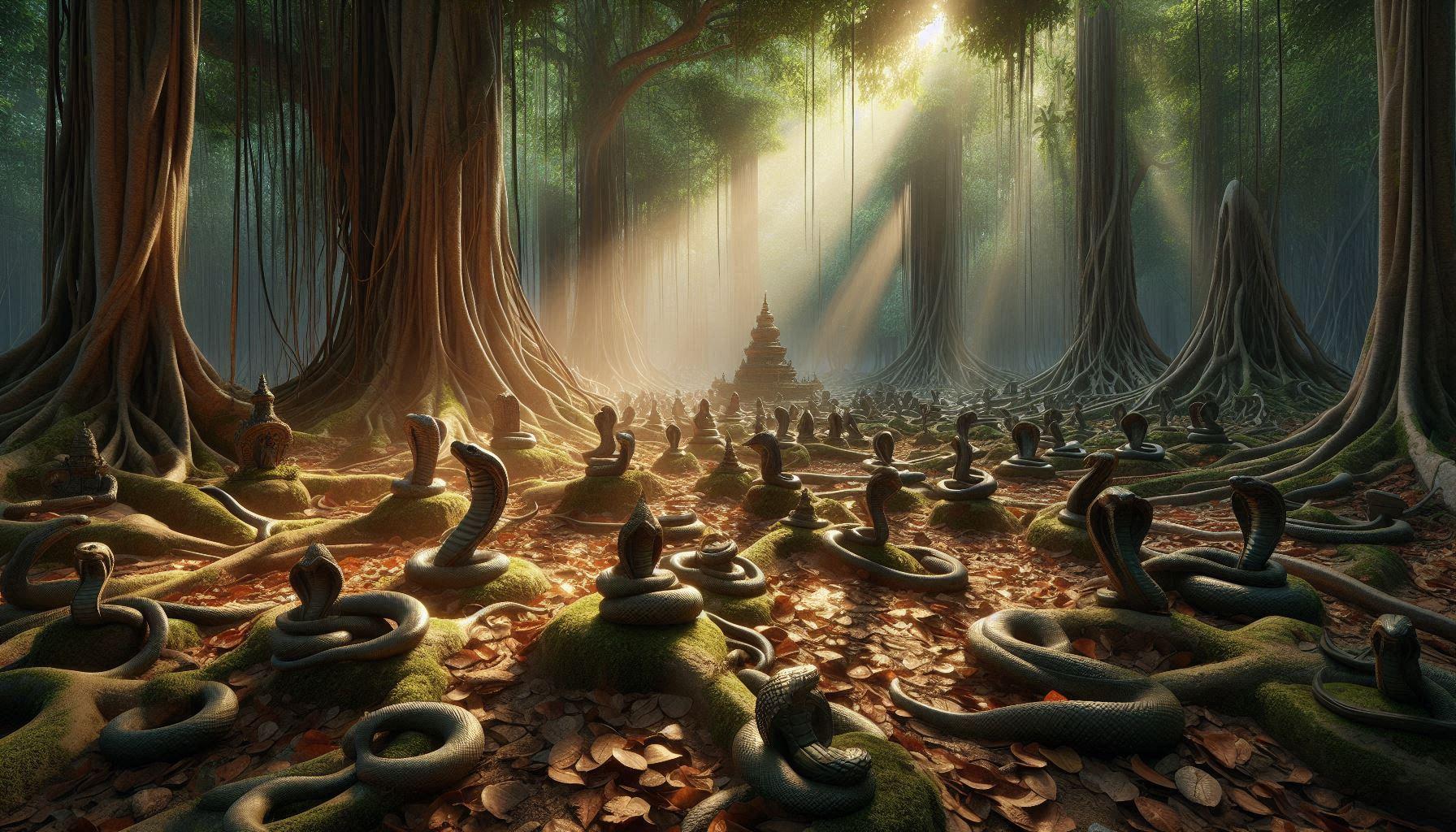
As you step into the sacred grove of Mannarasala, you’ll notice something extraordinary—thousands upon thousands of serpent idols tucked beneath trees, beside rocks, and across temple walls. These are not arranged in neat rows or placed by temple authorities. Instead, they are offered by devotees, each one with a personal prayer, a story, a bond.
It’s believed there are over 30,000 snake idols in the temple complex — making it the largest collection of its kind in the world. Many devotees return years later to find that the exact idol they placed has moved, shifted slightly, or even developed natural moss patterns that resemble divine markings.
Here’s what’s truly eerie: No one ever cleans the grove, yet it remains spotless. Locals claim the serpents themselves—spiritually or physically—guard and clean the premises. Some say real cobras appear near certain idols when sincere devotees arrive, acting as guardians of those specific wishes.
Scholars and archaeologists have tried to catalog these idols, but none have successfully completed it. It’s almost as if the forest refuses to be counted.
So who placed these idols? And more importantly—who protects them in the dead of night?
3. The Silent Matriarch, A Woman Priest Who Hears the Serpents.
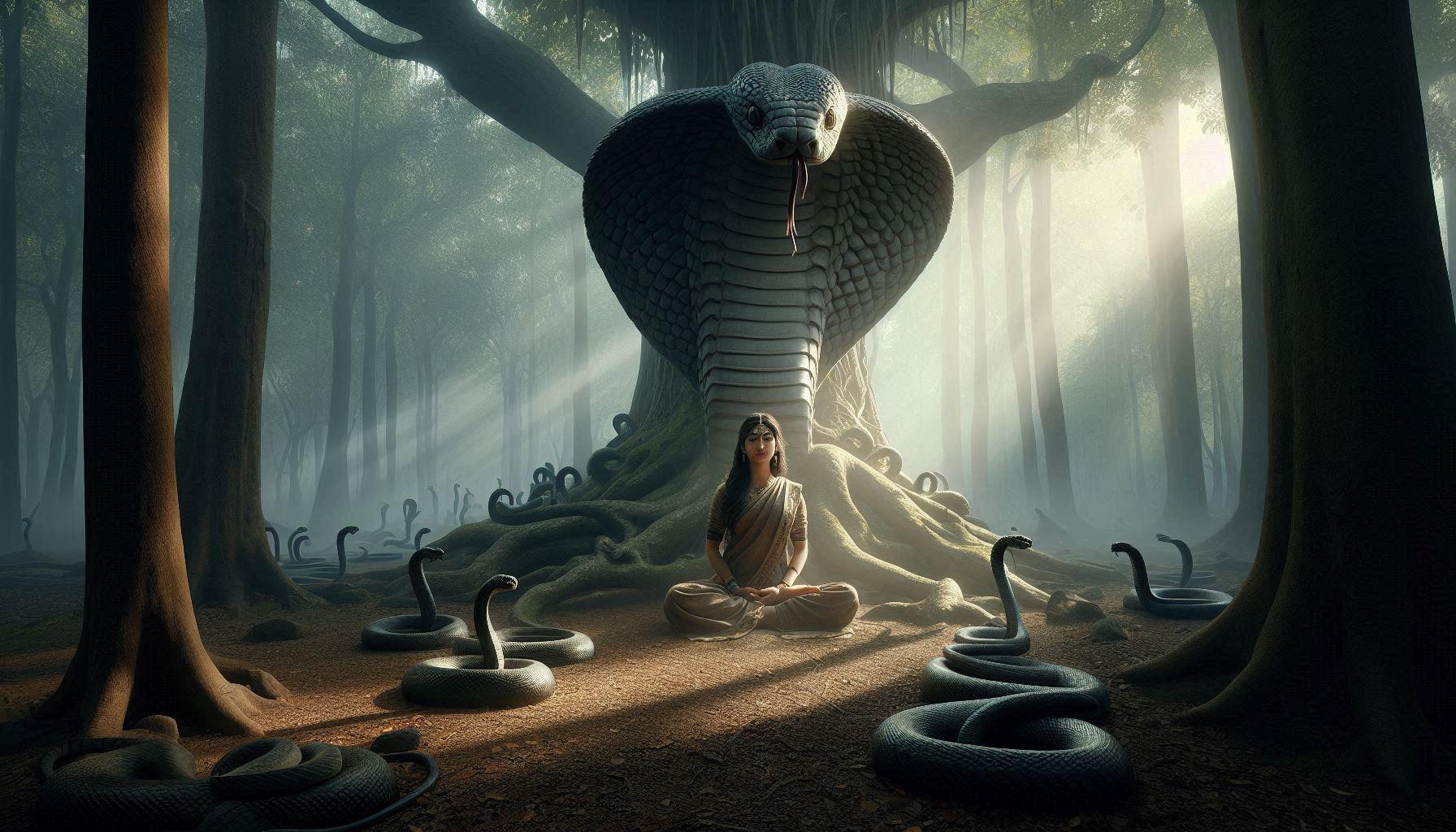
In a rare reversal of tradition, Mannarasala Temple is presided over by a woman—the Senior Priestess, called the Valiya Amma. Unlike most temples where rituals are conducted solely by male priests, here the spiritual authority rests with a mystical matriarch born into a sacred lineage.
But she’s no ordinary caretaker. Local lore says that the Valiya Amma is spiritually connected to the serpents of the forest. She performs secret rituals, often alone, within the inner sanctum—rituals that are never recorded, never shared, and passed down only from one Valiya Amma to the next.
During her lifetime, she is said to observe silence for long periods, meditate in isolation, and “listen” to the voices of the serpents—not hissing, but intuitive guidance. It is believed that the snakes reveal omens to her in dreams, warning of natural disasters, temple dangers, or divine displeasure.
Visitors are not allowed to witness her rituals. And after her death, she is given a ceremonial burial within the temple grounds, a rare honor in Hindu tradition.
Who is she really? A guardian of lost knowledge? A chosen messenger of the serpent gods?
In her silence… lie secrets not even the scriptures speak of.
4. The Snake That Appears Before Childbirth, A Divine Blessing or Guardian?
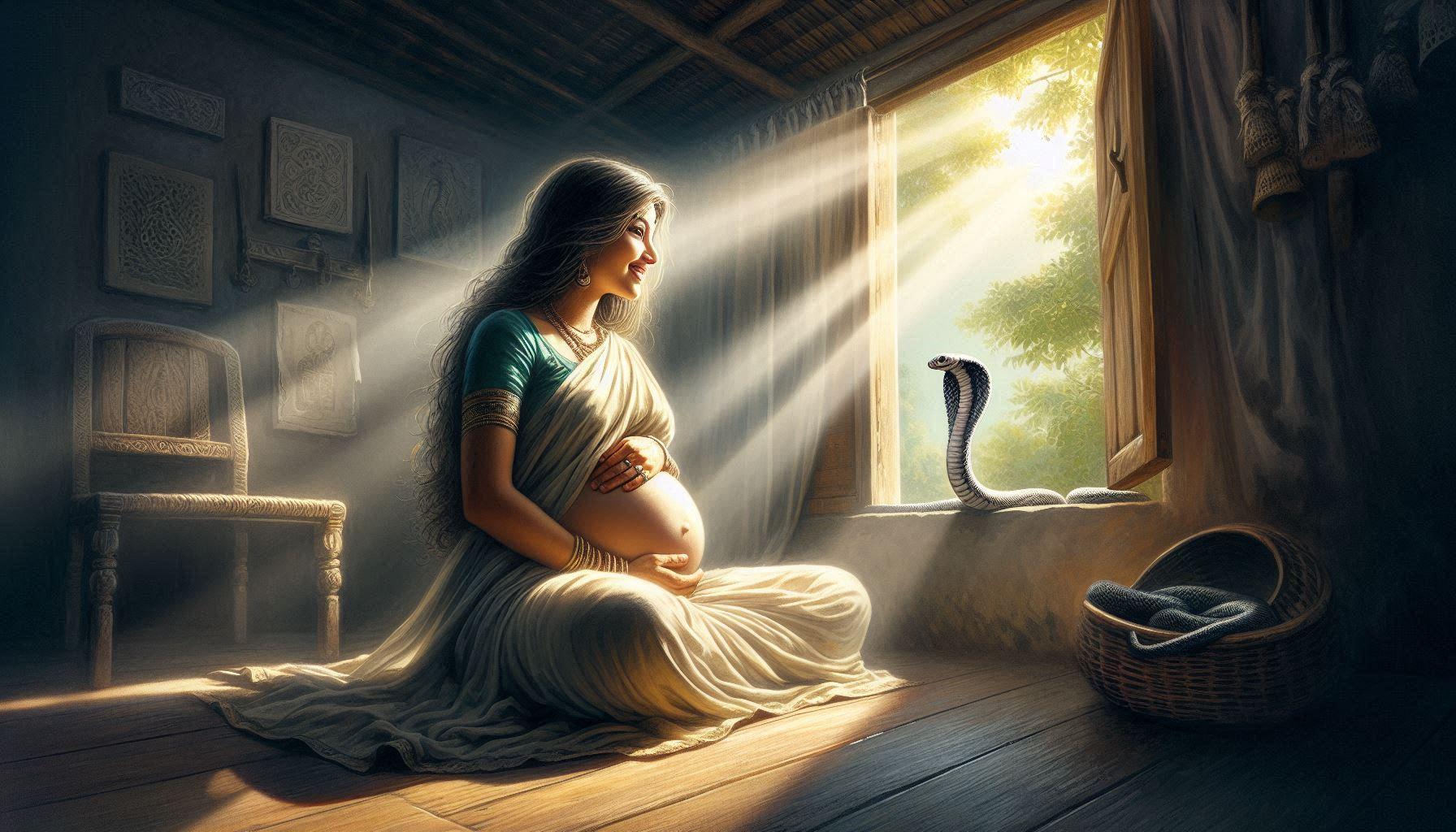
One of the most astonishing mysteries of Mannarasala Temple revolves around miraculous childbirths. Women who struggle with infertility often come here seeking blessings from Nagaraja, the Serpent King. They follow ancient rituals, offer turmeric and milk, and pray with deep devotion.
But then… something strange happens.
Many of these women report seeing a cobra near their home shortly after their visit — not in dreams, but in real life. The snake does nothing threatening. It simply appears… and vanishes. In every case, conception follows within months.
Locals believe this is Nagaraja himself or his emissary, coming to bless and protect the woman and her unborn child. In fact, once the child is born, it’s a tradition for the family to return to the temple with a special thanksgiving offering — a silver or stone serpent idol placed in the sacred grove.
Even more eerie? The child is often said to have a deep spiritual connection, with some displaying unusual calmness, intelligence, or empathy toward animals, especially snakes.
Is this psychological belief? Coincidence? Or are divine serpents truly walking unseen among us, blessing life where science had failed?
Thousands believe it. And thousands of babies are living proof.
5. The Forbidden Hours, Why the Temple Shuts Before Sunset.
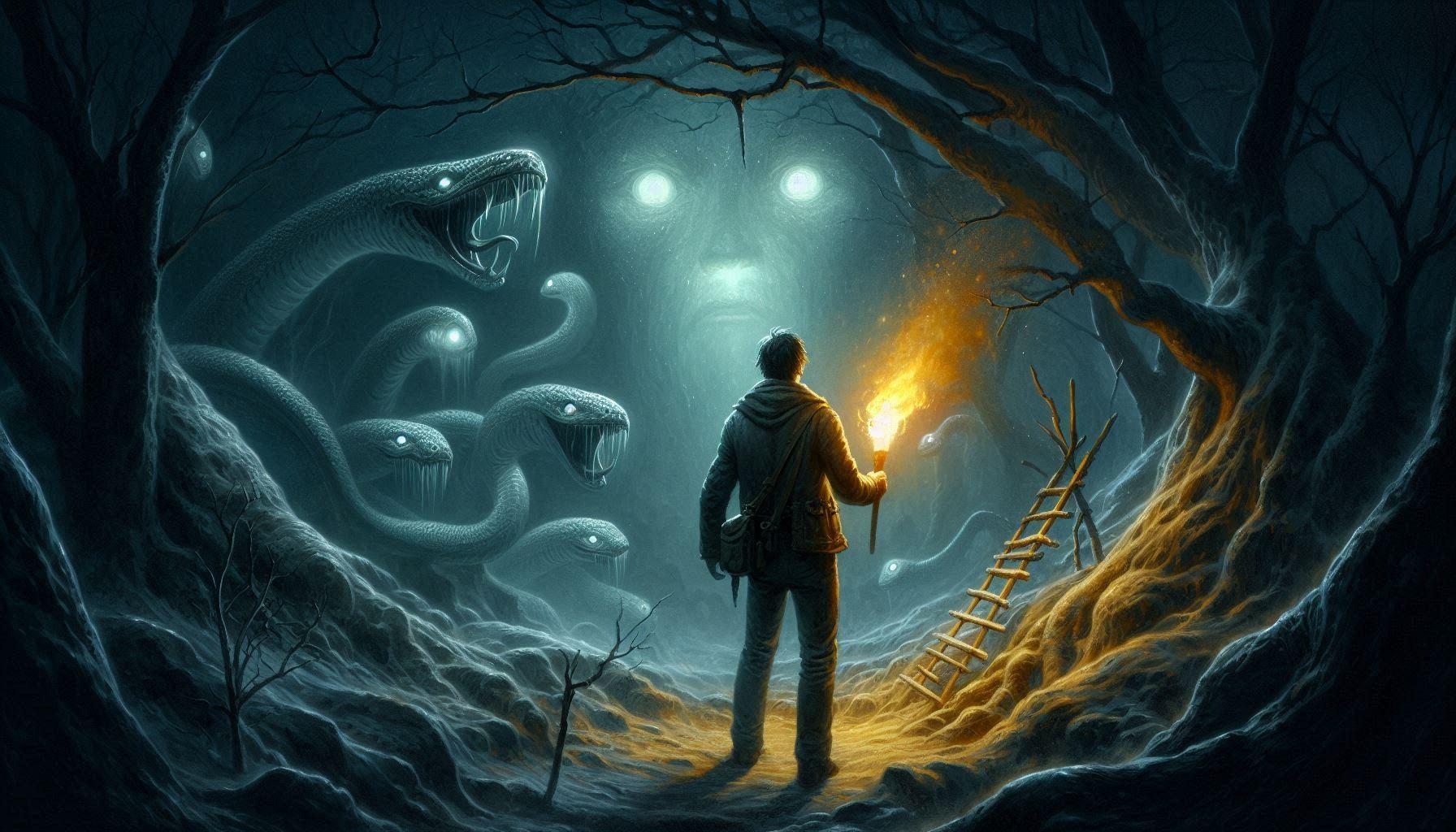
Unlike many other temples in South India that hold vibrant evening rituals, Mannarasala Temple shuts its doors before dusk, and no one is allowed inside after dark—not even the priests.
Why?
According to legend, the temple belongs to the serpents after sunset.
Devotees and locals believe that real celestial serpents, including the unseen forms of Nagaraja and Nagayakshi, descend to roam freely inside the sanctum and the forest grove once the sun sets. The air becomes charged, and the forest silent — too silent.
There are tales of those who dared trespass after dark. Some returned, shaken and speechless. Others claimed to see glowing eyes in the forest, hear hissing that echoed like mantras, or feel a presence that rooted them to the ground.
Even the temple’s scriptures and oral traditions warn against entering during forbidden hours. It’s said that disturbing the serpents' divine time can invite spiritual consequences, or worse—invoke a curse that cannot be lifted easily.
So every evening, the temple closes its gates… not out of superstition, but out of centuries-old reverence for an unseen world that awakens when the human one sleeps.
A world not meant to be watched.
Not by mortal eyes.
Conclusion, Where Serpents Speak and Stone Comes Alive.
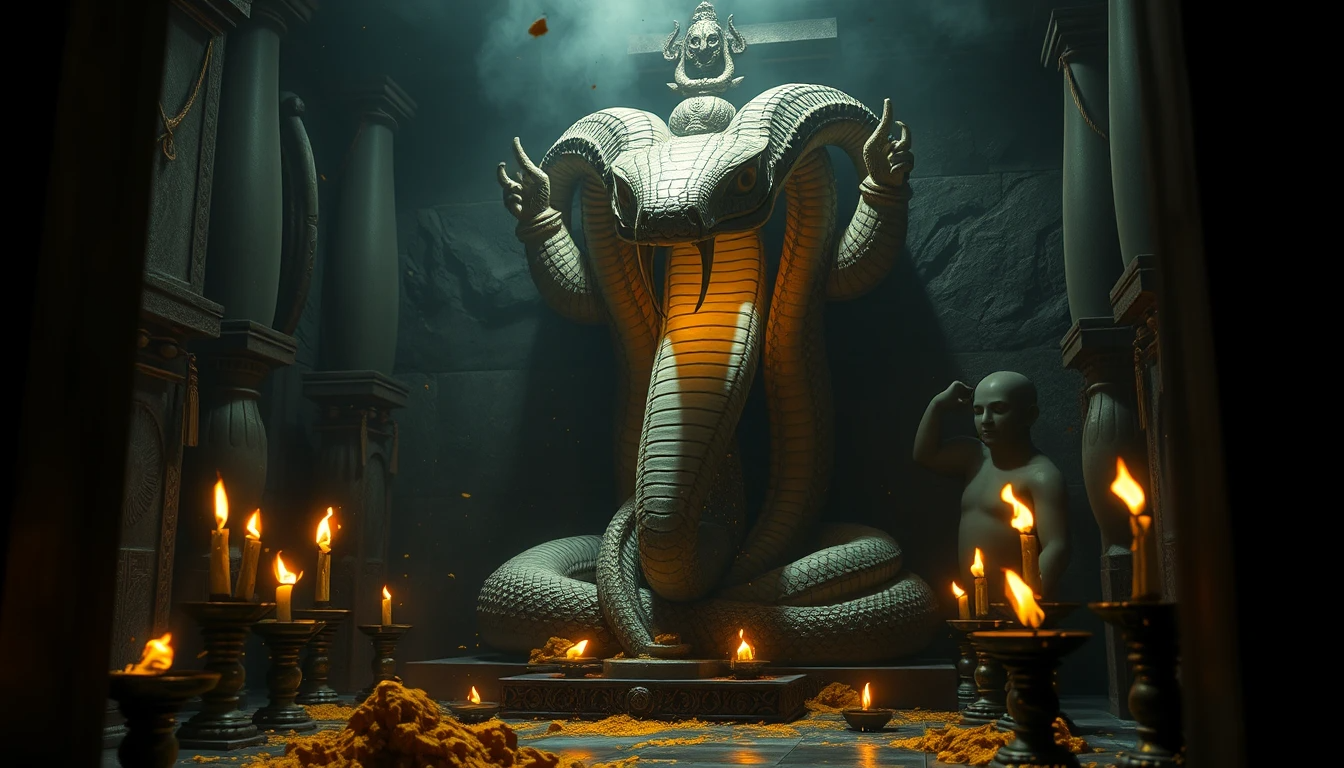
Mannarasala Temple isn’t just a place of worship — it’s a living enigma. Hidden deep in Kerala’s sacred groves, it stands as a bridge between the seen and the unseen, the physical and the mystical. From a serpent idol that grows mysteriously with time, to a forest of 30,000 snake idols watched over by unseen forces… every corner of this temple whispers secrets that logic cannot explain.
It’s a temple where a silent woman priestess communes with cosmic forces, where snakes appear before childbirth like divine guardians, and where, once the sun sets, even time dares not enter. Science may try to measure, but here, faith outweighs fact, and the forest breathes with ancient energy.
What makes Mannarasala truly unique is not just the rituals or the relics, but the living presence that devotees can feel—something sacred, something sentient, something… alive.
Maybe it’s not about solving the mysteries.
Maybe it’s about respecting a world older than our science, wiser than our doubts, and holier than fear.
Because in this forest of serpents, divinity doesn’t just dwell in stone—it slithers, watches, and waits.
And if you listen closely… it might speak to you too.
Mannarasala Temple FAQs
Where is Mannarasala Temple located?
Where is Mannarasala Temple located?
Mannarasala Temple, also known as Mannarasala Sree Nagaraja Temple, is located in Haripad, Alappuzha district of Kerala, India. It is a renowned center of serpent worship.
Who is worshipped at Mannarasala Temple?
Who is worshipped at Mannarasala Temple?
The temple is dedicated to Nagaraja (the Serpent King) and serpent deities. It is believed to be a powerful place for seeking protection, fertility blessings, and remedies for snake-related doshas.
What is the significance of Mannarasala Temple?
What is the significance of Mannarasala Temple?
Mannarasala Temple is unique because it is one of the largest snake temples in Kerala, with over 30,000 serpent idols. Devotees believe that worshipping here removes Naga Dosha and brings prosperity, fertility, and protection.
What are the temple timings of Mannarasala Temple?
What are the temple timings of Mannarasala Temple?
The temple is generally open from 5:00 AM to 12:00 PM and from 5:30 PM to 7:30 PM. Timings may vary during special festivals and rituals.
What are the main festivals of Mannarasala Temple?
What are the main festivals of Mannarasala Temple?
Ayilyam festival is the most important celebration, observed in the Malayalam month of Thulam (October-November). Thousands of devotees participate, offering special poojas and processions with serpent idols.
What are the unique rituals at Mannarasala Temple?
What are the unique rituals at Mannarasala Temple?
Unique rituals include offerings of turmeric, milk, and noorum palum (a mixture of rice powder and milk) to serpent idols. Childless couples often perform special poojas seeking blessings for children.
How can devotees reach Mannarasala Temple?
How can devotees reach Mannarasala Temple?
The temple is around 32 km from Alappuzha and 120 km from Kochi. The nearest railway station is Haripad, about 3 km away, and the nearest airport is Cochin International Airport, around 115 km from the temple.