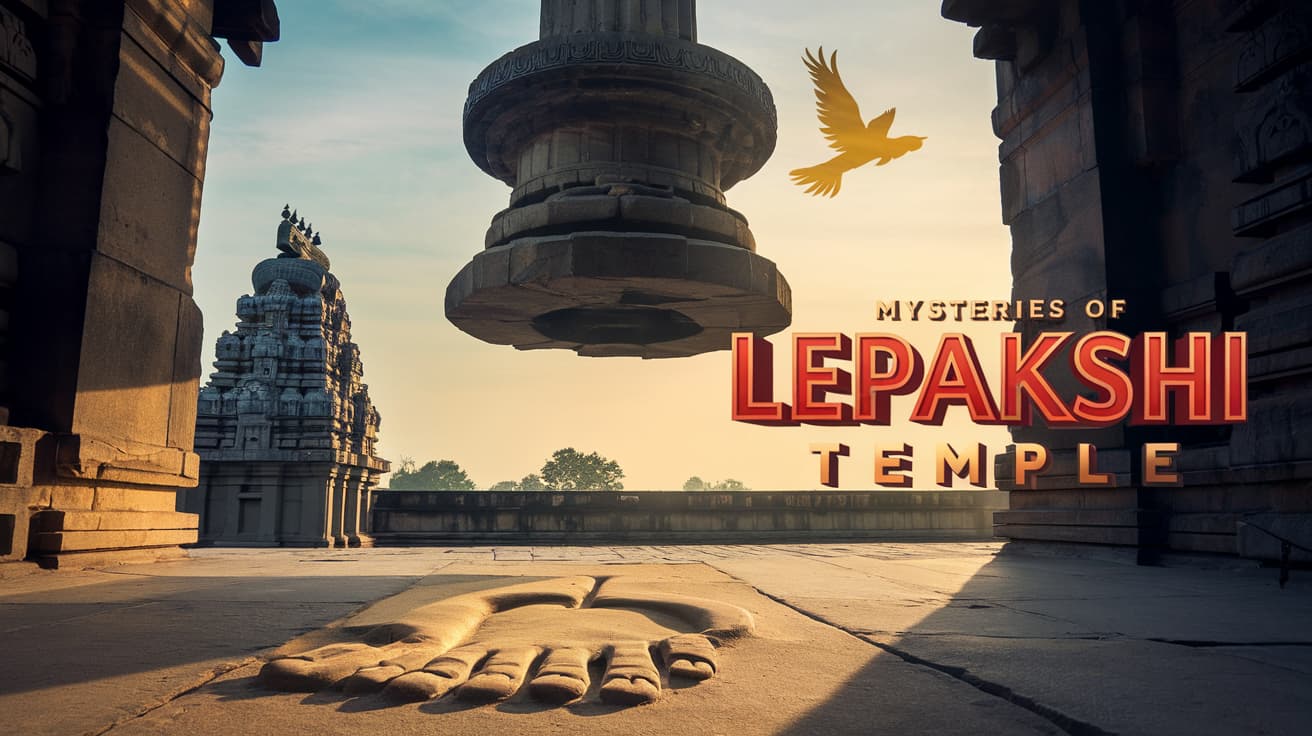
“There’s a temple in Andhra Pradesh where the deity actually drinks jaggery water… and stops when He’s had enough. Scientists tried to explain it — but no one ever could. This is not a myth. This is Mangalagiri — the Hill of the Divine Lion.”
The Divine Hill
Mangalagiri, literally meaning “The Auspicious Hill”, lies between Vijayawada and Guntur, in the heart of Andhra Pradesh. But unlike other pilgrimage spots, this is no ordinary temple — it is said to be one of the eight sacred places where Lord Vishnu appeared in person.
And the most mysterious part? The deity here, Lord Panakala Lakshmi Narasimha, is believed to drink jaggery water — Panakam — offered by devotees. Even today, you can watch it happen.
The Legend Behind the Hill
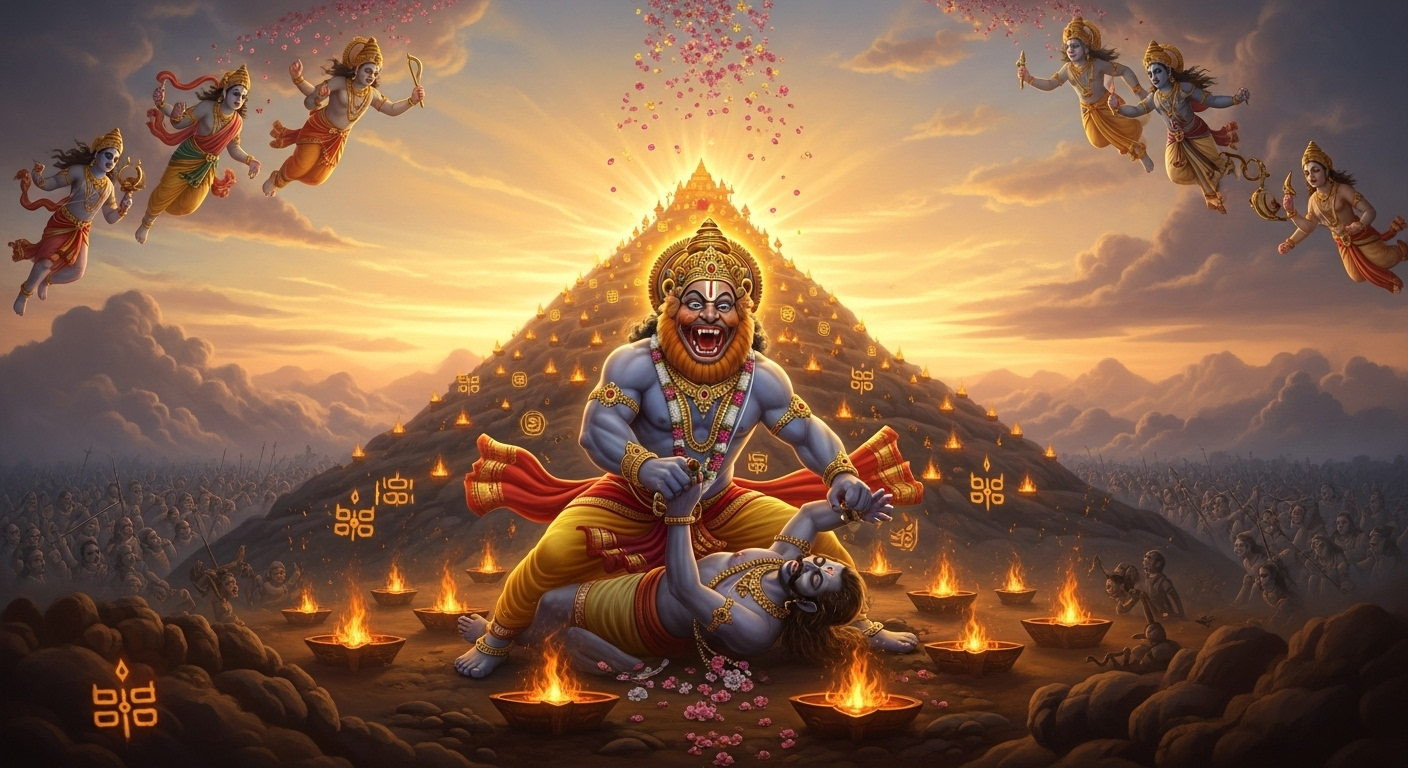
According to ancient scriptures, Mangalagiri is no mere mountain. Long ago, there lived a ferocious demon named Namuchi, a devotee of Lord Vishnu. But as with all beings overcome by pride, Namuchi’s devotion turned into arrogance. He began terrorizing sages and disturbing their penance.
When the Devas prayed for help, Lord Vishnu took the form of Narasimha — the man-lion, and appeared upon this very hill to destroy Namuchi. The hill, therefore, came to be called Mangalagiri — the Holy Hill where the Lord appeared for good fortune.
Three Temples, One Divine Connection
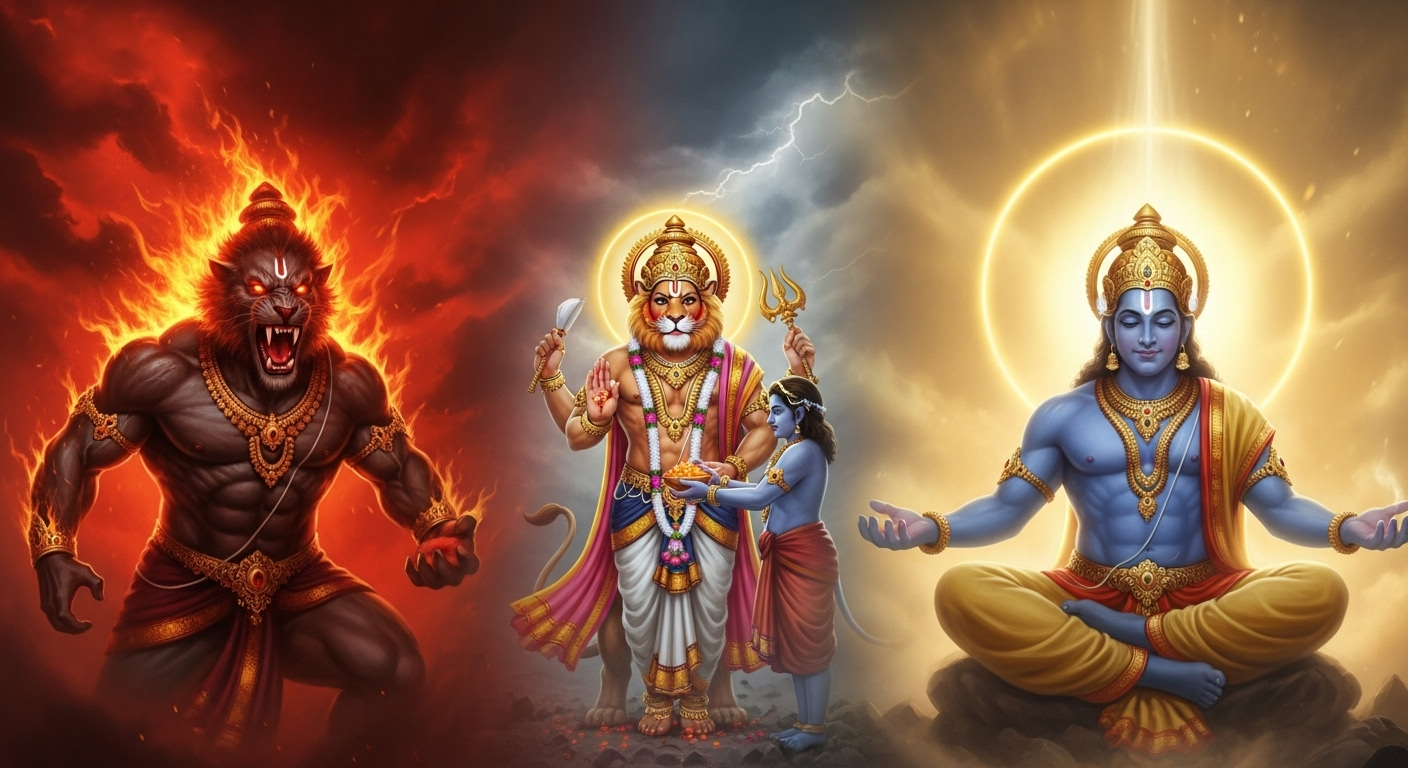
What makes Mangalagiri truly unique is that it isn’t one temple — but three, each revealing a different mood of the Lord.
- 1. Panakala Lakshmi Narasimha Swamy Temple – halfway up the hill. Here, the Lord drinks Panakam — the miraculous act that draws thousands every day.
- 2. Lakshmi Narasimha Swamy Temple – at the foot of the hill. Built during the glorious Vijayanagara Empire, its 153-foot-tall Gopuram still pierces the sky — one of the tallest in South India.
- 3. Gandala Narasimha Temple – at the top of the hill. Here, devotees light lamps of ghee, symbolizing light conquering darkness.
Each temple represents a phase of Narasimha’s nature — from fierce, to balanced, to peaceful. A divine evolution from anger to calm.
The Miracle of the Lord Who Drinks Panakam
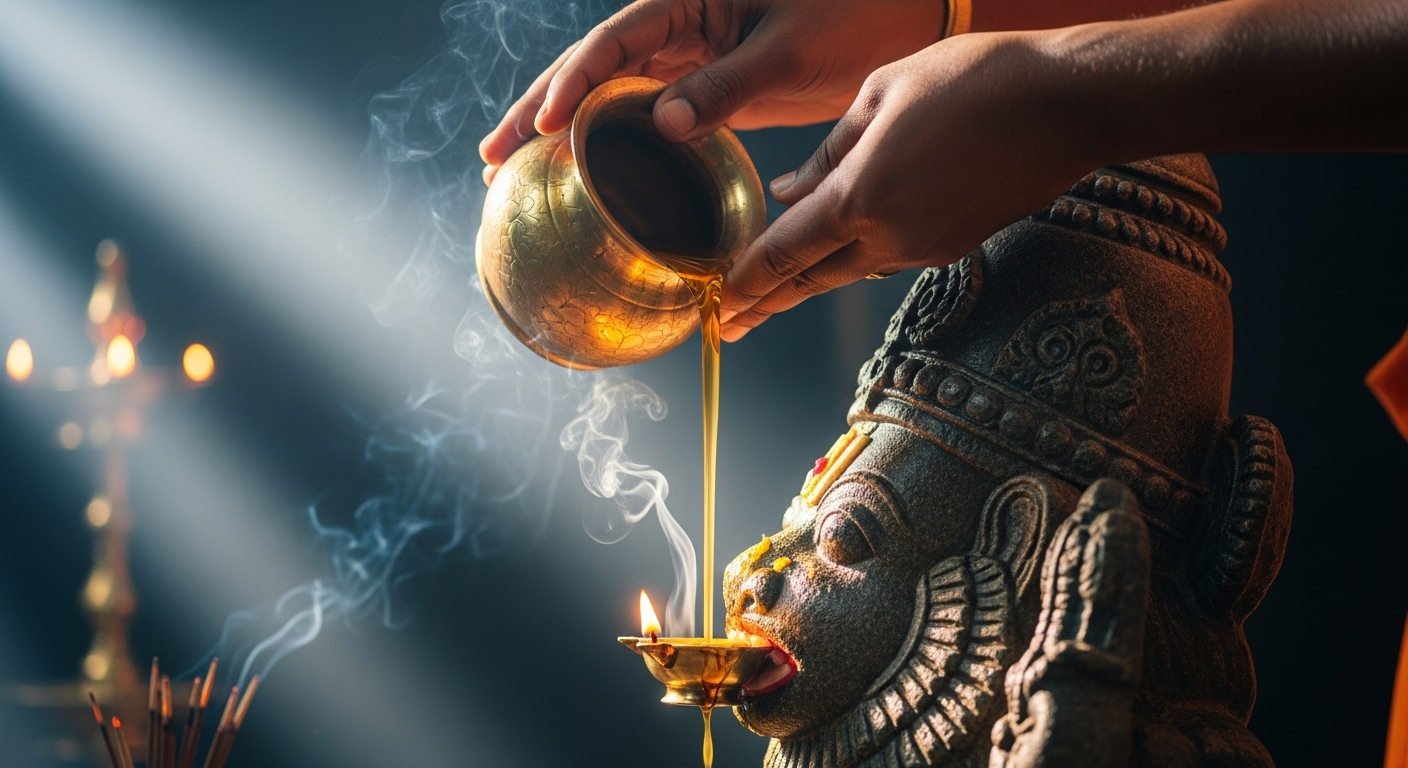
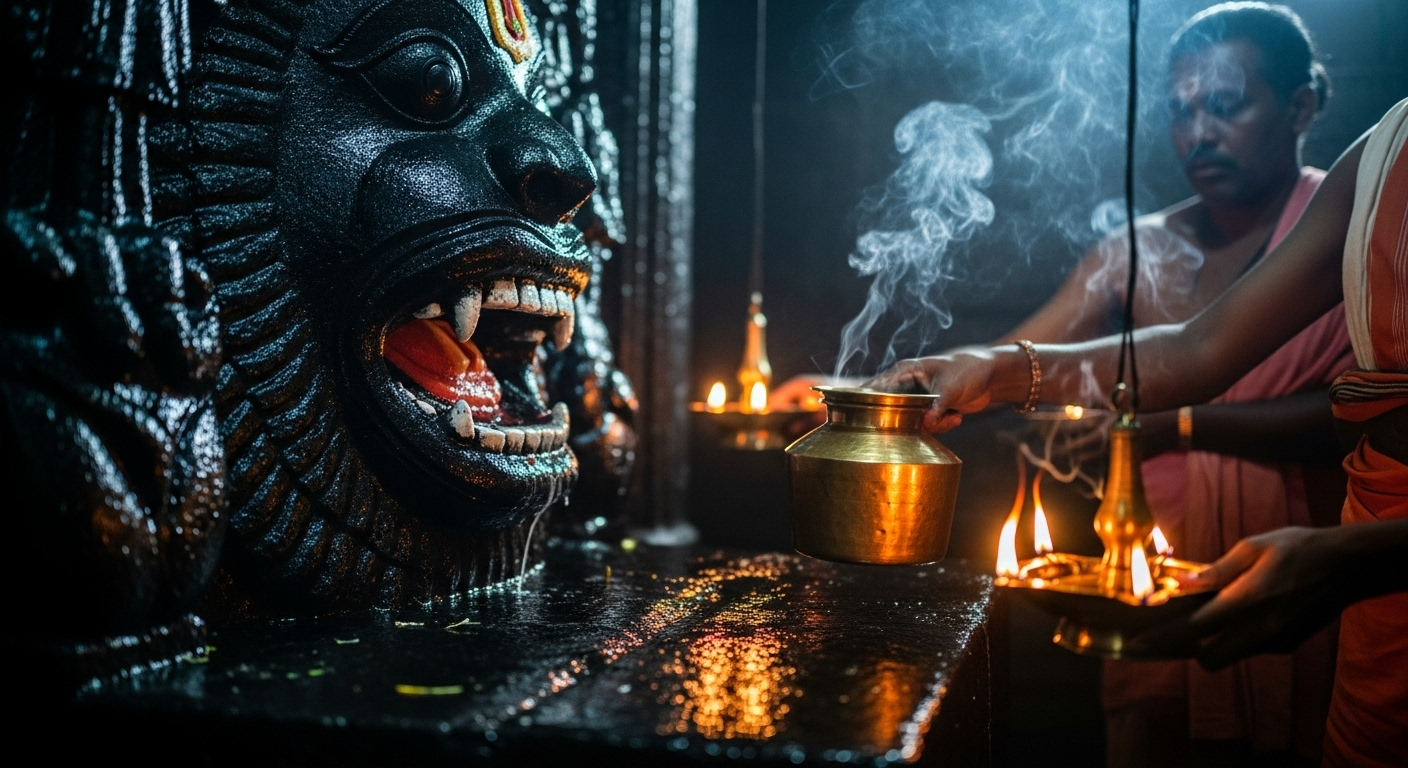
Now comes the part that defies logic — Every day, during the offering ritual, priests pour panakam — a mixture of jaggery, water, and a hint of cardamom — into the mouth of the deity, which is a small opening in the rock.
Here’s the shocking part: When the liquid is poured in, you can hear a distinct gulping sound. The liquid visibly disappears, as if someone is drinking it from inside. But only half of it goes in — the rest overflows.
Local belief says, “When the Lord has had enough, He stops drinking.”
What’s even stranger — when scientists tried to investigate, they found no outlet, no hollow cavity, no hidden mechanism. The hill rock is solid. No one knows where the liquid goes.
The Scientific Attempt
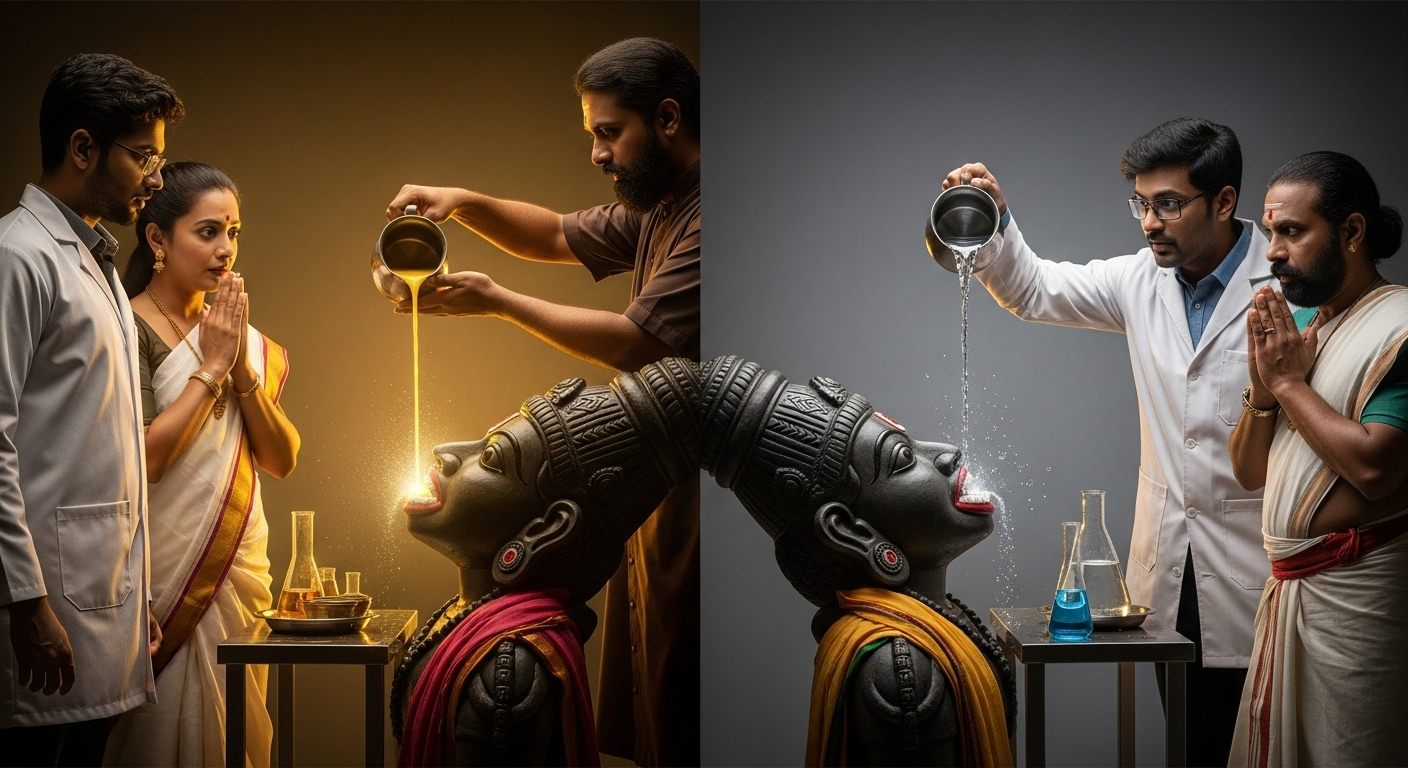
During British rule, curious officers and engineers tried to understand this phenomenon. They marked the level of liquid before and after the offering, and even used colored dyes to track the flow. But the result was always the same — the Panakam disappeared, without a trace.
Geologists later speculated that perhaps there were microscopic pores in the rock that absorbed the liquid. But then came the next twist: only the sweet Panakam disappears — when plain water is poured, nothing happens. No absorption. No gulping sound. Only silence.
Even modern researchers have admitted — “Something here defies explanation.”
The Spiritual Significance
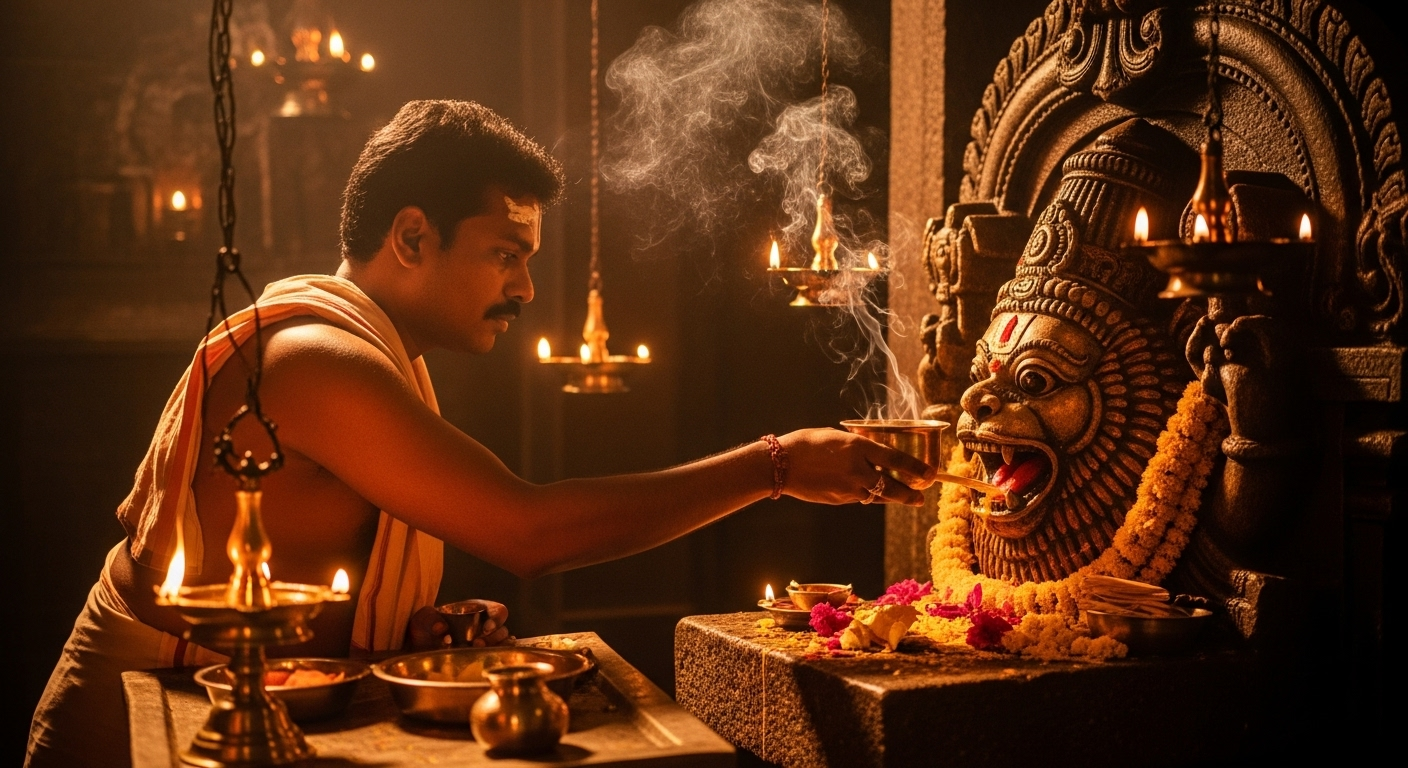
According to devotees, this phenomenon is not meant to be analyzed — but experienced. The Panakam represents human anger and ego — and Lord Narasimha, known for His fierce form, drinks it away, symbolically drinking our inner fire.
That’s why, unlike other temples, there’s no abhishekam (holy bath) with water or milk. Only jaggery water is offered — to cool the Lord’s fury.
Even the wind on the hill feels different — warm, dry, and mystical — as if carrying centuries of divine energy.
A Journey Through Time: The Temple’s History
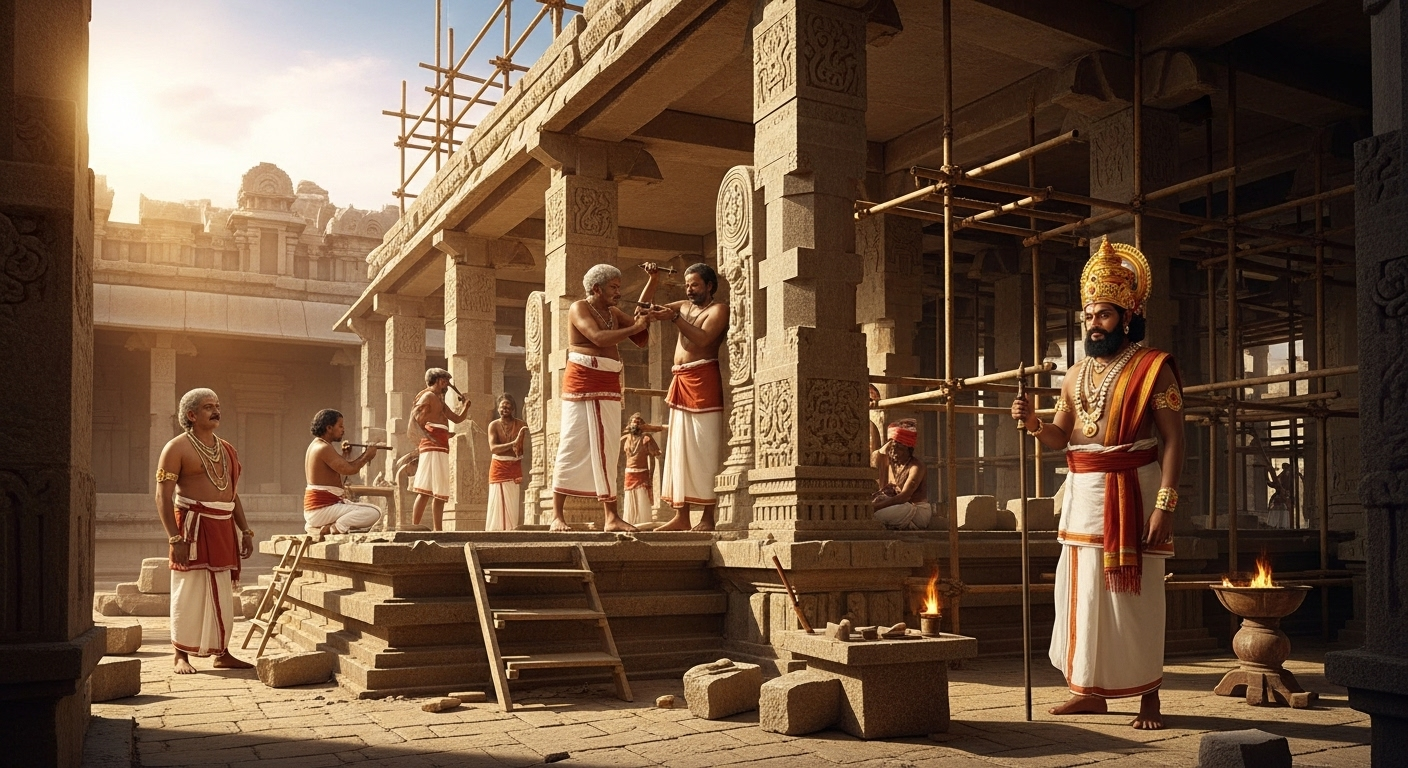
Historically, the Mangalagiri temple has been mentioned in texts like the Brahma Vaivarta Purana, Skanda Purana, and Vamana Purana. It’s believed that Lord Vishnu Himself performed penance here before taking the Narasimha Avatar.
The base temple, constructed in the 11th century by the Chola rulers, was later expanded by the Vijayanagara kings and Krishnadevaraya himself, who was a devout worshipper of Narasimha.
The magnificent Gopuram, 11 stories high, was completed in the 16th century. Each tier depicts scenes from the Narasimha Avatar, from Prahlada’s devotion to the destruction of Hiranyakashipu. The architecture is pure Dravidian brilliance — intricate carvings, massive pillars, and inscriptions that tell stories lost in time.
The Role of Lakshmi: The Divine Consort
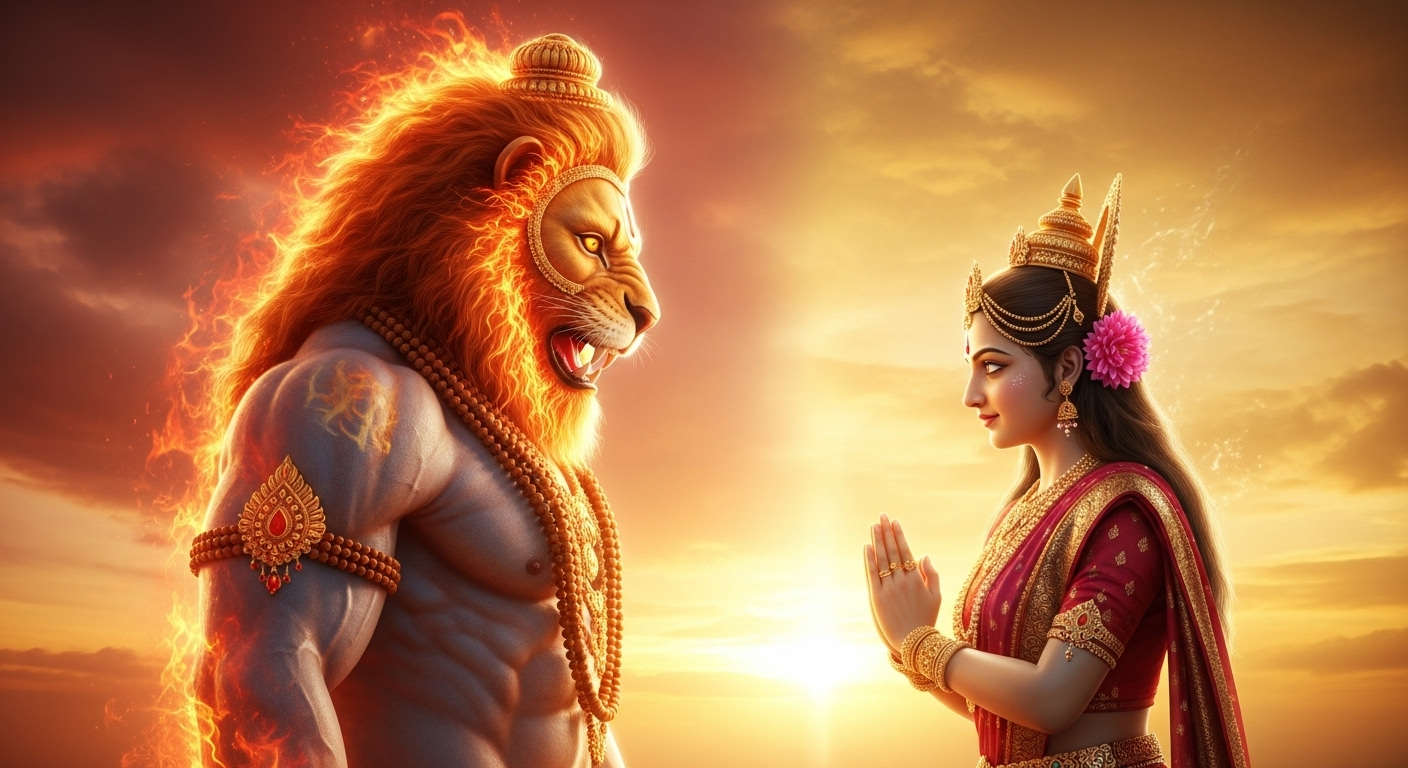
At the foot of the hill resides Goddess Lakshmi, worshipped as Mahalakshmi Devi. According to legend, She performed penance here to calm Narasimha’s anger after He destroyed Hiranyakashipu.
Moved by her devotion, the Lord took the form of Panakala Narasimha, a more peaceful aspect, and agreed to stay on the hill as protector of devotees. Thus, this temple unites power and compassion, anger and grace, Narasimha and Lakshmi — a balance that defines life itself.
Festivals and Living Tradition
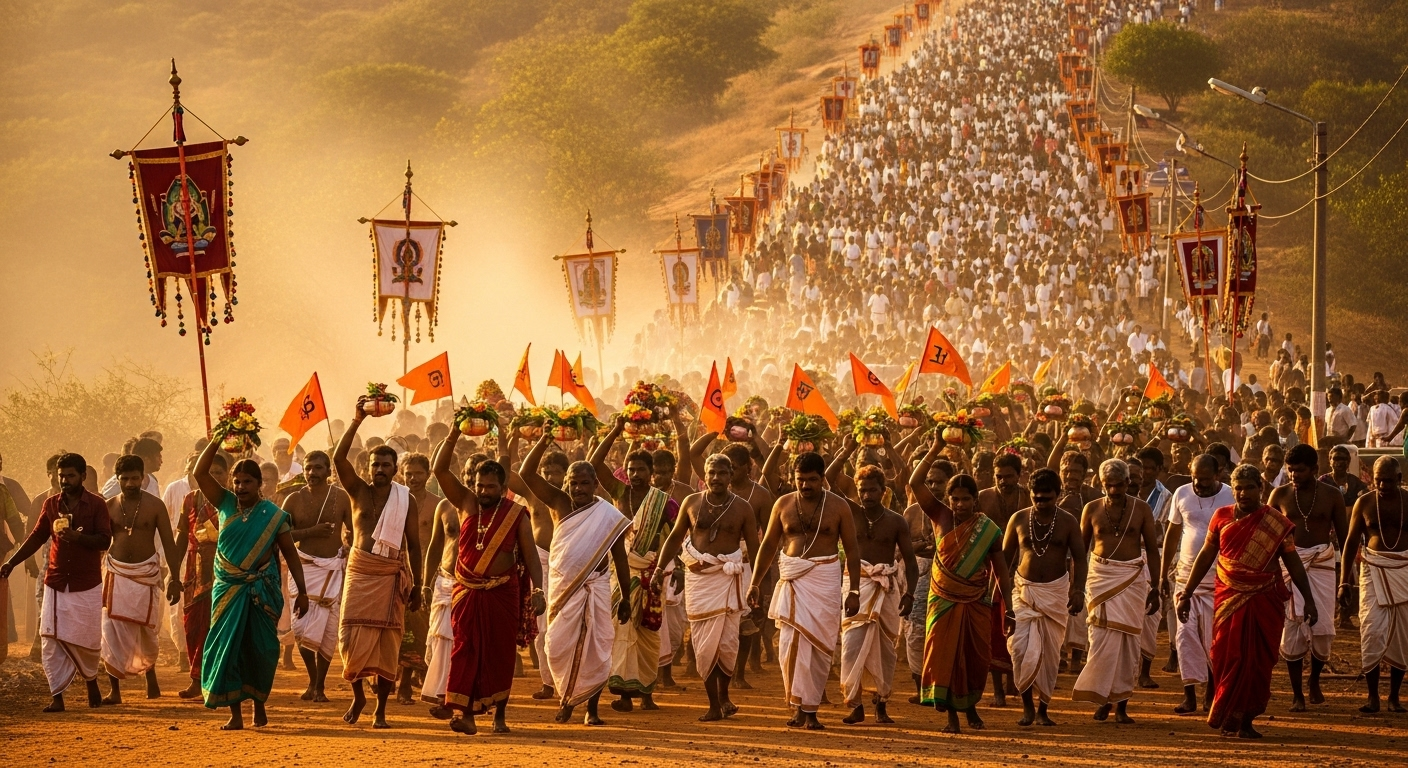
The most spectacular celebration here is Brahmotsavam, held every year during the Phalguna month (February–March). Devotees from all across Andhra Pradesh and Telangana climb the hill barefoot, chanting: “Jai Panakala Lakshmi Narasimha Swamy!”
The air fills with the aroma of jaggery, flowers, and burning camphor. Drums echo, conch shells roar, and the entire hill becomes alive with faith.
Another famous ritual is the Chandanotsavam, when the deity is covered entirely in sandalwood paste — a symbol of cooling and purification. The faith here is so deep that even non-locals and foreigners who visit describe feeling an unusual calm — a vibration that’s difficult to put into words.
Surprise Twist: The Hill That Breathes
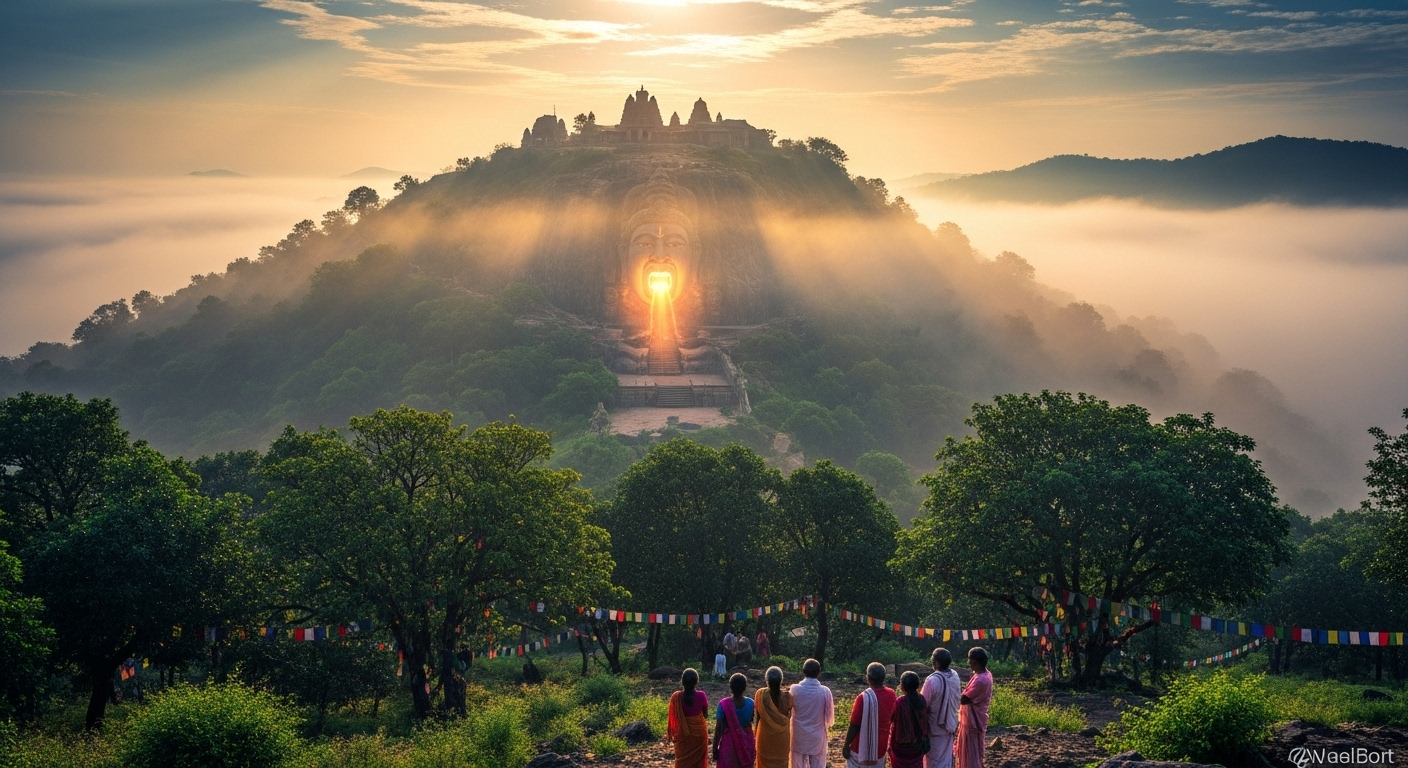
Local villagers claim that the hill itself breathes. During the daytime, warm air flows out of the mouth of the deity — and during night, cool air flows in. This natural breathing pattern has been observed for centuries.
Some scientists suggest it could be due to thermal pressure differences inside the rock, but devotees believe — “It is the Lord’s breath, reminding us that He is alive — even in stone.”
The Symbolism: Science Meets Faith
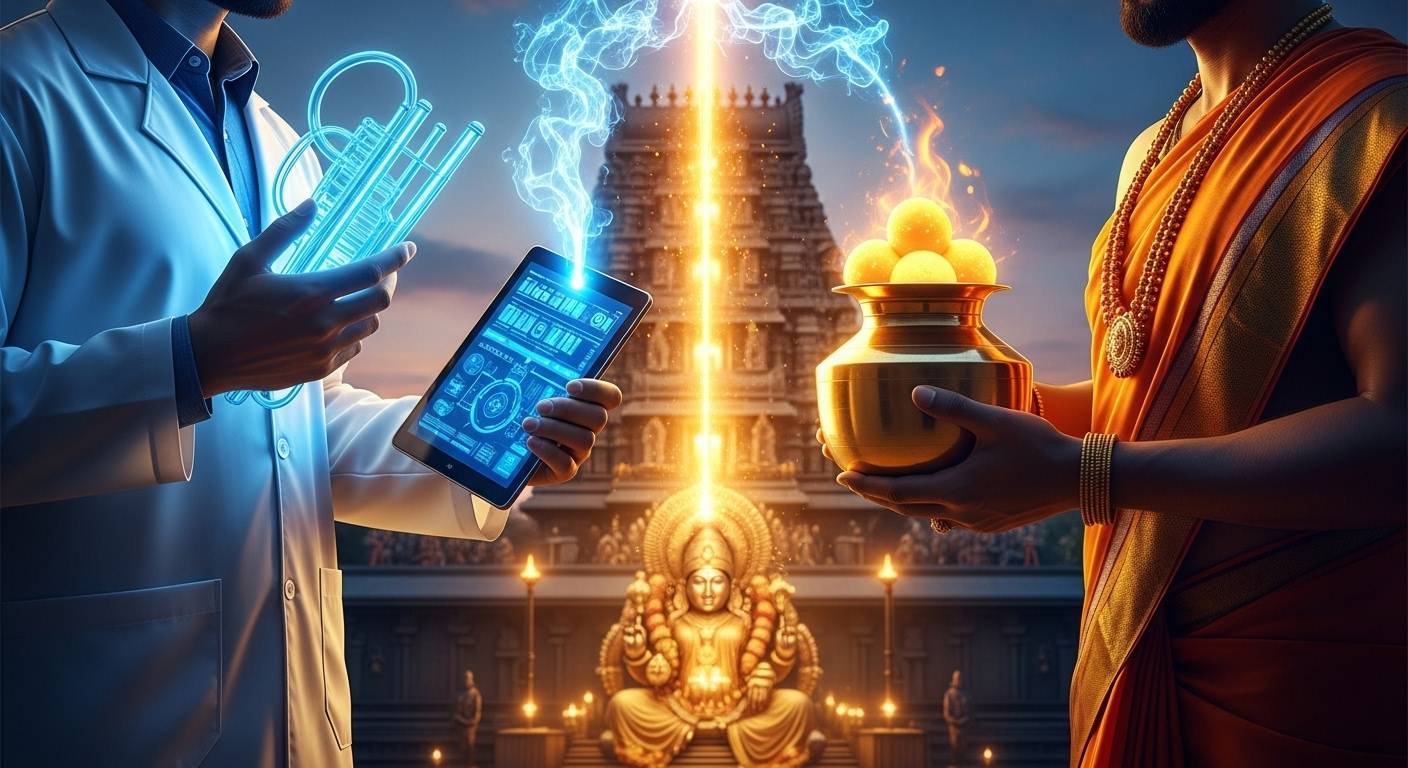
Whether you call it science or miracle, the message remains timeless. In a world driven by logic, Mangalagiri whispers a reminder — that there are forces beyond measurement, energies beyond equations.
The Panakam isn’t just jaggery water — it’s an offering of surrender. A symbol of how the divine consumes our impurities and returns peace. The hill isn’t just stone — it’s a living embodiment of faith that survived centuries, of a culture that blended devotion with mystery.
Final Thoughts
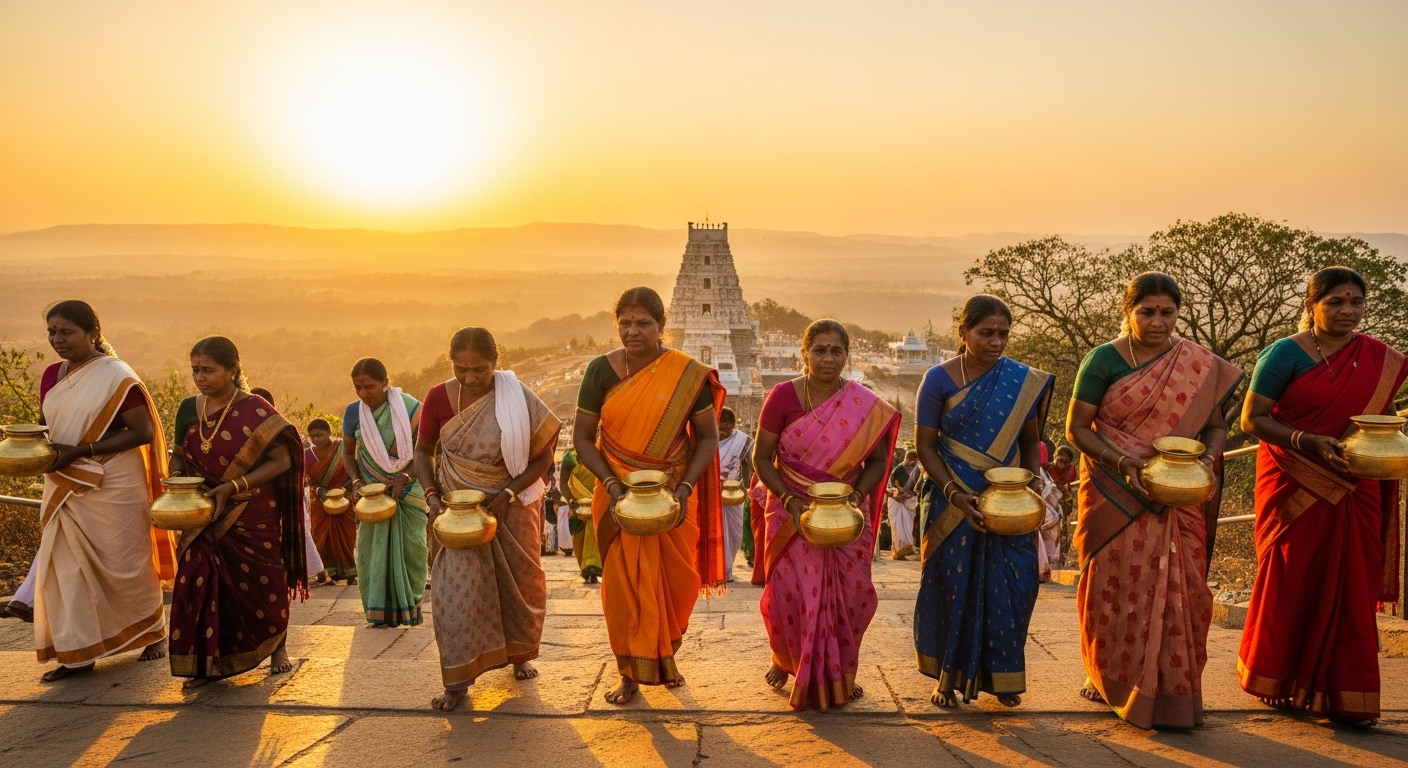
When you stand before the mouth of the deity, holding a pot of sweet jaggery water, you’re not just offering Panakam — you’re offering your anger, your ego, your pain. And when the liquid disappears, you feel a strange lightness — as if the Lord truly drank away everything that burdened you.
People walk down the hill smiling, not because of the miracle they witnessed — but because they felt something ancient, something pure.
“You don’t need to see the Lord drinking Panakam to believe it. You only need to open your heart. Because sometimes, faith doesn’t need proof — it just needs a moment of surrender.”
“Would you dare to witness it yourself? The place where God still drinks what we offer — Mangalagiri, the Hill of the Divine Lion.”
Mangalagiri Temple FAQs
Where is Mangalagiri Temple located?
Where is Mangalagiri Temple located?
Mangalagiri Temple is located between Vijayawada and Guntur in the state of Andhra Pradesh, India.
What is the mystery of Mangalagiri Temple?
What is the mystery of Mangalagiri Temple?
The main mystery is that the deity, Lord Panakala Lakshmi Narasimha, is believed to drink Panakam (jaggery water) offered by devotees, making a gulping sound, and stopping when He has had enough.
What is Panakam?
What is Panakam?
Panakam is a sweet drink made of jaggery, water, and cardamom, which is offered to the Lord at the temple.
Why is the hill called Mangalagiri?
Why is the hill called Mangalagiri?
Mangalagiri translates to "The Auspicious Hill." It is named so because Lord Vishnu appeared here to destroy the demon Namuchi, bringing good fortune.
Are there multiple temples at Mangalagiri?
Are there multiple temples at Mangalagiri?
Yes, there are three main temples: Panakala Lakshmi Narasimha Swamy (halfway up), Lakshmi Narasimha Swamy (at the foot), and Gandala Narasimha Temple (at the top).