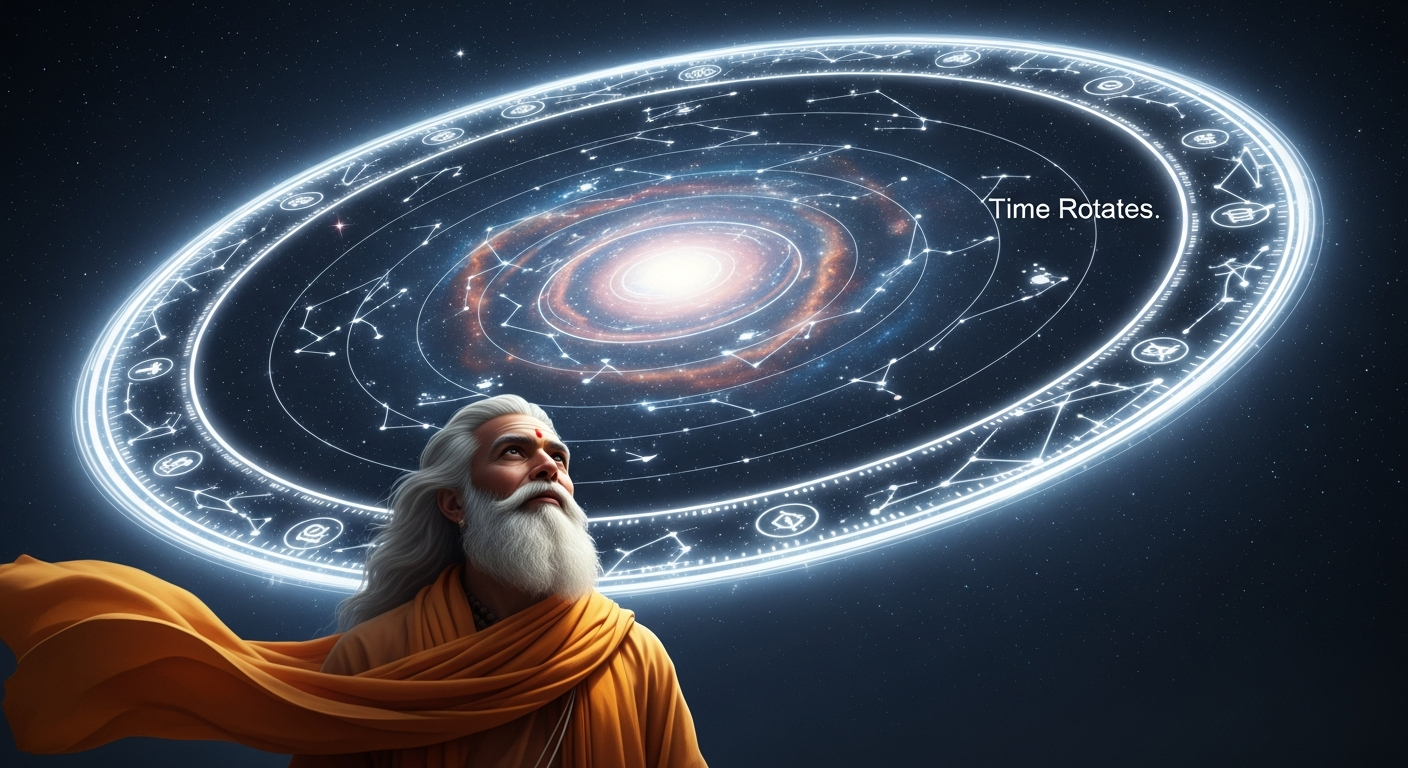
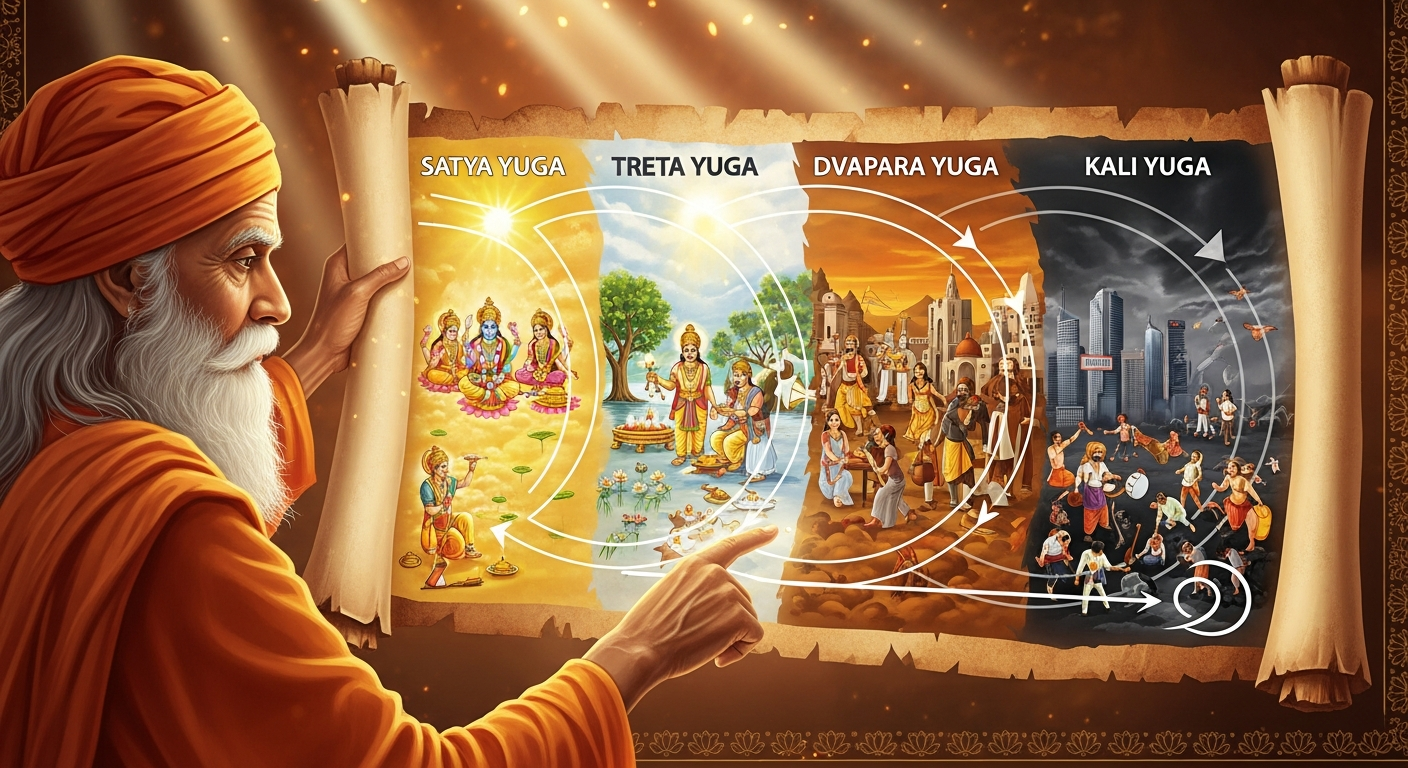
In Hindu cosmology, time flows in endless cycles, with each cycle representing the rise and fall of human civilization and morality. These cycles are known as Yuga Cycles (also called Chatur Yuga or Maha Yuga), which consist of four distinct ages: Krita (Satya) Yuga, Treta Yuga, Dwapara Yuga, and Kali Yuga. Each Yuga signifies a gradual decline in virtue, longevity, and spirituality. A complete Yuga Cycle spans 4,320,000 human years, or 12,000 divine years, and this cycle repeats continuously, symbolizing the eternal rhythm of creation, preservation, and destruction in the universe.
In this article, we will provide a broad overview of the four Yugas, their significance, and how they shape the cosmic order.
The Structure of the Yuga Cycle
The Yuga Cycle follows a 4:3:2:1 ratio in terms of duration, with each subsequent Yuga being shorter than the one before it. This pattern reflects the gradual decline in moral and spiritual order over time. Here is a breakdown of the time periods for each Yuga:
- Krita Satya Yuga: 1,728,000 years (4,800 divine years).
- Treta Yuga: 1,296,000 years (3,600 divine years).
- Dwapara Yuga: 864,000 years (2,400 divine years).
- Kali Yuga: 432,000 years (1,200 divine years).
In total, a Yuga Cycle, or Maha Yuga, lasts 4,320,000 years (12,000 divine years). After the end of Kali Yuga, the cycle restarts with Krita Yuga, signifying a return to purity and truth.
The Four Yugas: An Overview
1. Krita (Satya) Yuga – The Age of Truth and Perfection
Duration: 1,728,000 human years (4,800 divine years).
Characteristics:
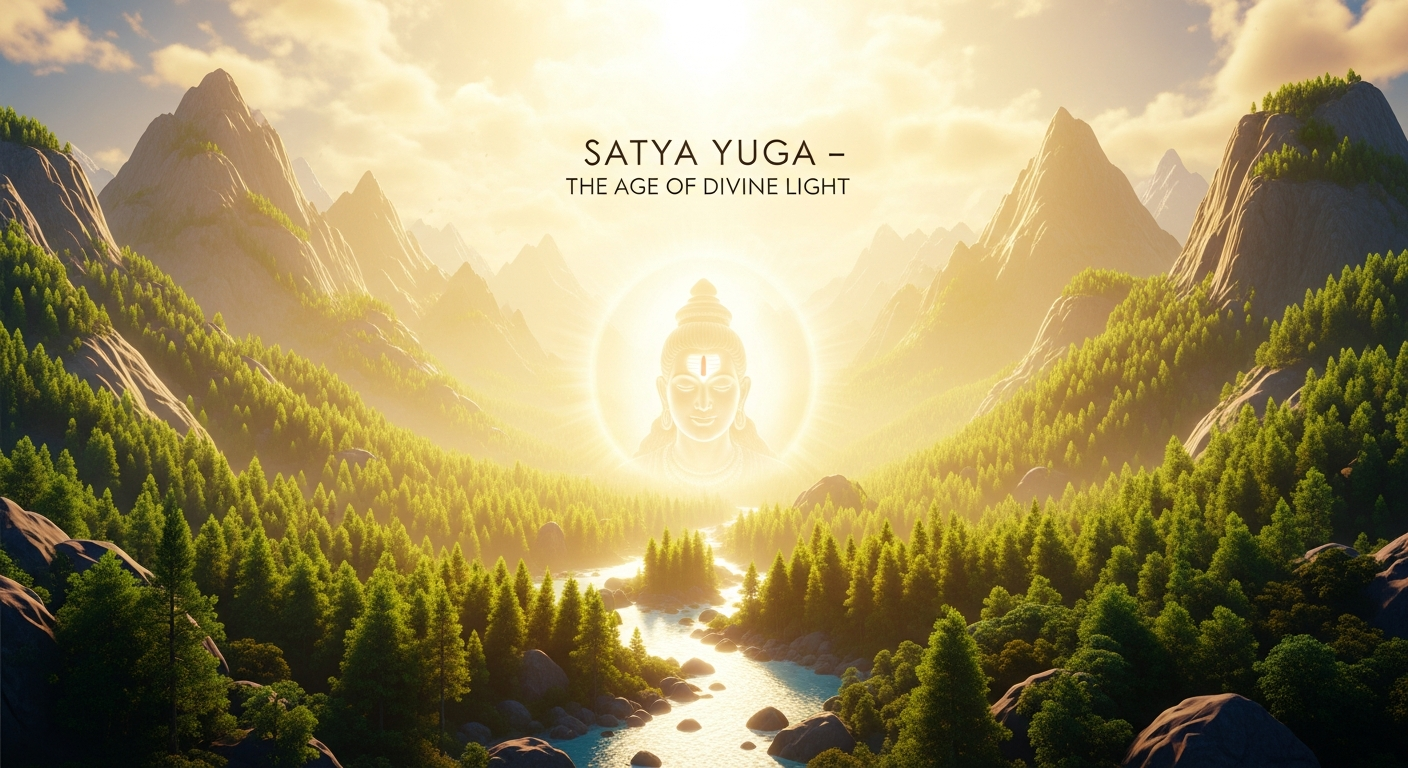
Krita Yuga, also known as the "Golden Age," is the first and most spiritually advanced of all Yugas. It is a time of perfection, where truth and righteousness prevail, and people live in complete harmony with one another and the natural world. Humanity is deeply attuned to spiritual wisdom, with no need for temples or rituals, as divinity is inherent in every action. In this age, there is no crime, poverty, or war—only peace and unity.
Key Elements:
- Dharma (righteousness) is fully intact, standing on all four legs, symbolizing absolute moral integrity.
- Humans are naturally virtuous, with no need for external laws or governance.
- Life spans are the longest, and there is no suffering, disease, or conflict.
- Spiritual knowledge is at its peak, and people are deeply connected to the divine.
- The environment is pure, and nature flourishes without exploitation.
2. Treta Yuga – The Age of Decline
Duration: 1,296,000 human years (3,600 divine years).
Characteristics:
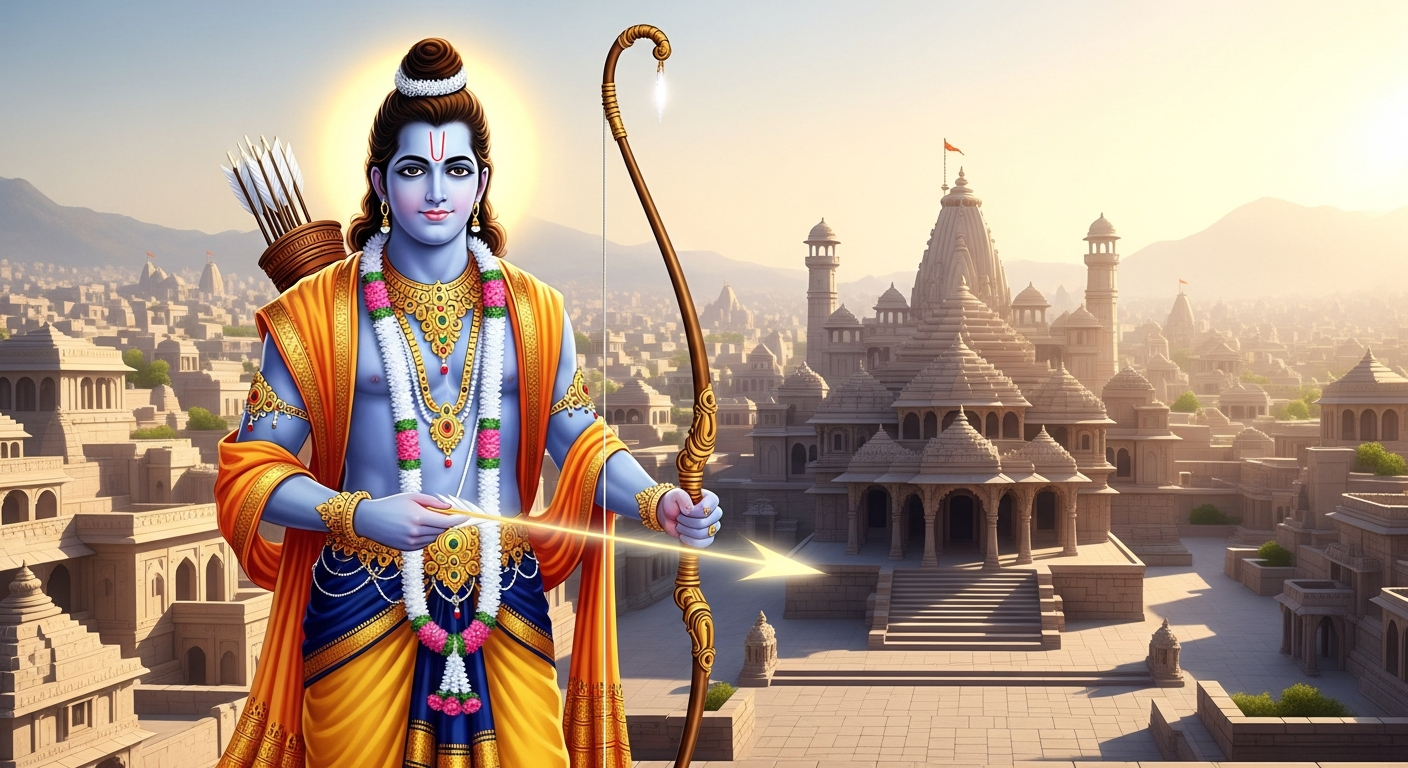
Treta Yuga marks the second phase of the Yuga Cycle and the beginning of the decline of human virtue. While still a time of great heroes and epic events like the Ramayana, moral integrity is no longer as universal as in Krita Yuga. Society begins to develop laws and governance systems to manage the emerging conflicts and inequalities. Dharma, though still prevalent, is weakened, and people must strive to maintain it. This Yuga highlights the challenges of balancing righteousness with growing human desires and the complexities of social order.
Key Elements:
- Dharma stands on three legs, signifying the beginning of moral decay.
- Heroic figures and incarnations of divinity, such as Lord Rama, appear to restore balance.
- Life spans shorten, and the physical and spiritual capacities of humans begin to diminish.
- Wars and conflicts arise, and society begins to experience divisions and social hierarchies.
- People become more materialistic, though virtue is still respected and practiced.
3. Dwapara Yuga – The Age of Duality
Duration: 864,000 human years (2,400 divine years).
Characteristics:
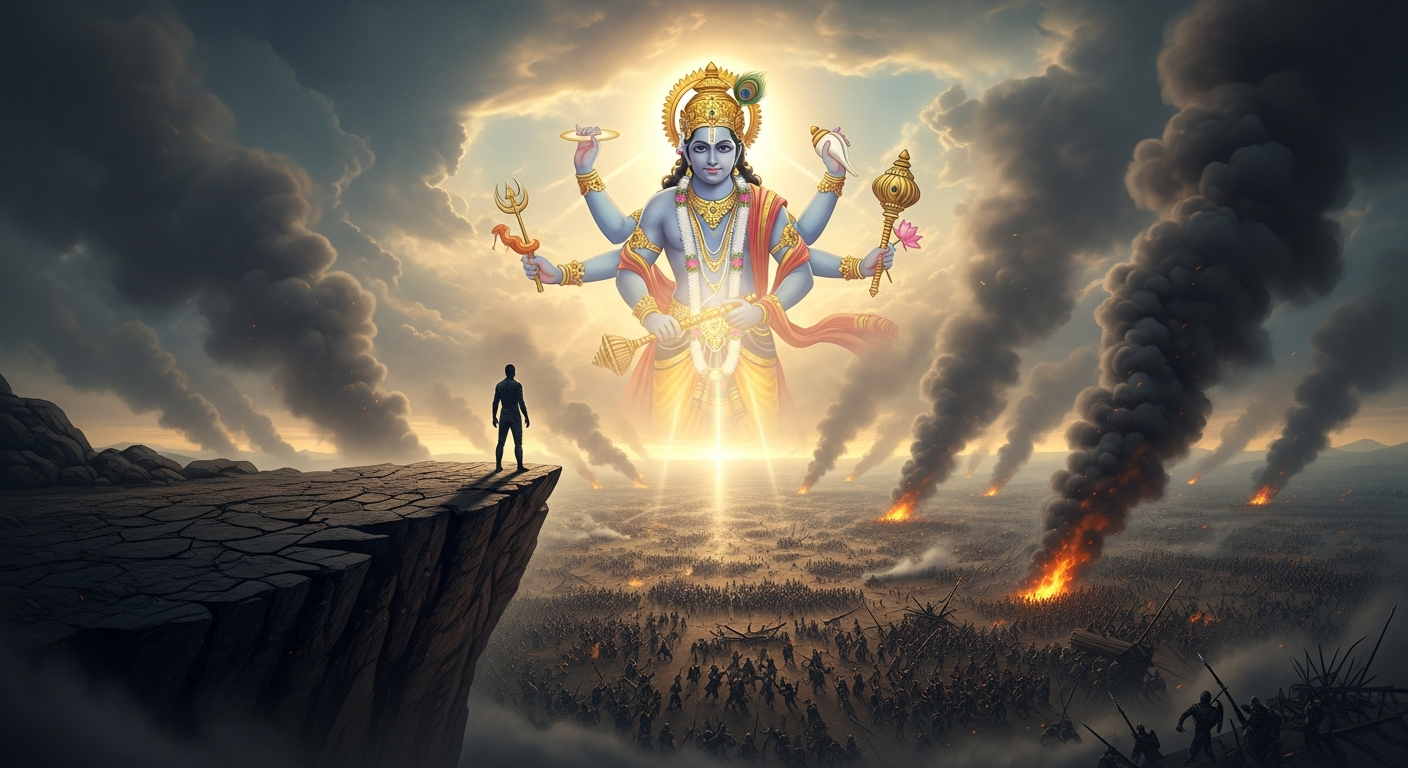
Dwapara Yuga is characterized by the growing presence of duality—where good and evil exist side by side, vying for dominance. Human society experiences more conflict and instability, as reflected in the Mahabharata, an epic that encapsulates the struggles of this age. While spirituality and righteousness still exist, they are more difficult to uphold, and the challenges of human desires, power struggles, and materialism increase. This Yuga represents the ongoing battle to maintain virtue in a world that is increasingly dominated by self-interest.
Key Elements:
- Dharma stands on two legs, signifying a further decline in morality and righteousness.
- The battle between good and evil intensifies, with both forces in equal measure.
- Notable events like the Mahabharata take place, where Lord Krishna plays a crucial role.
- Deception, treachery, and greed become more common, with human desires becoming harder to control.
- The rise of disease, suffering, and shorter life spans becomes apparent.
4. Kali Yuga – The Age of Darkness
Duration: 432,000 human years (1,200 divine years).
Characteristics:
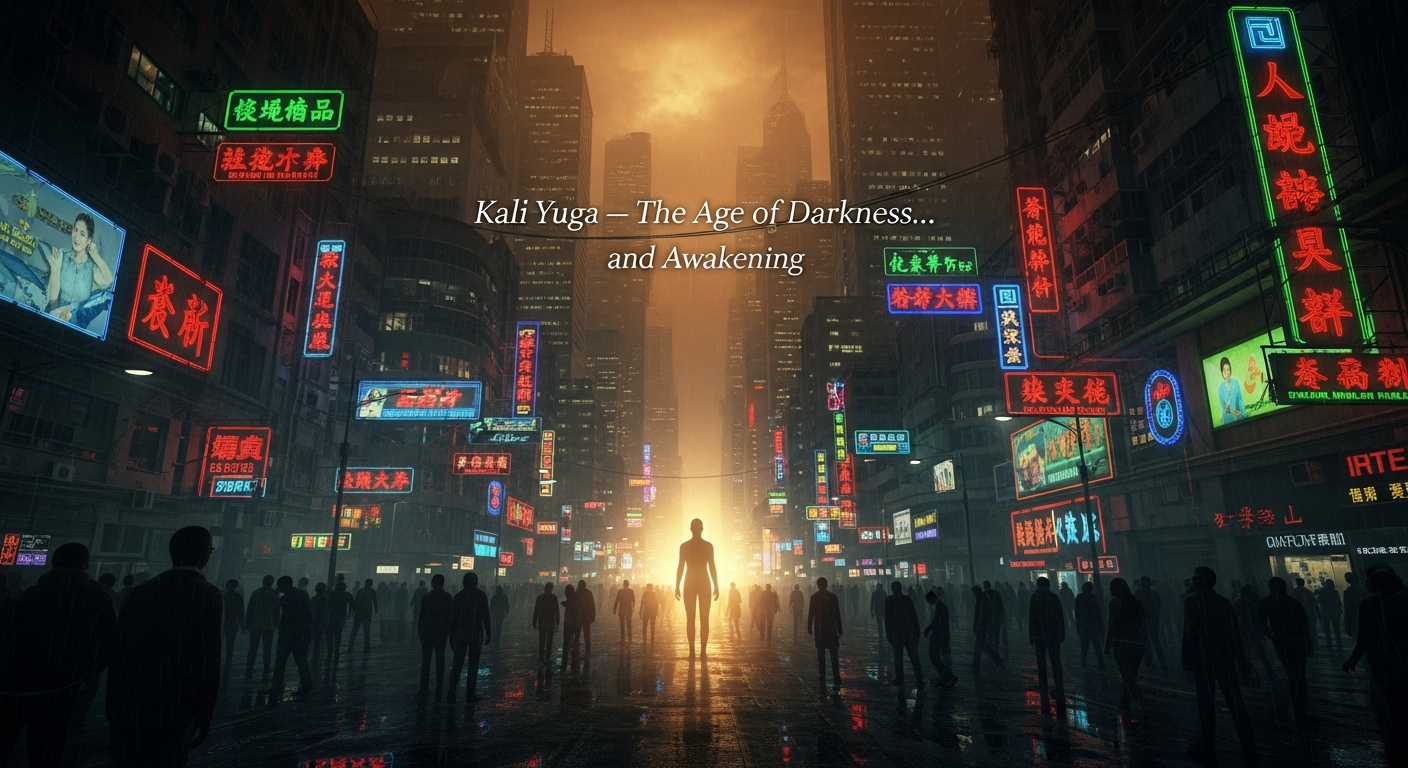
Kali Yuga, the current and final Yuga, is often called the "Age of Darkness" due to its association with moral decline and spiritual ignorance. Greed, selfishness, and materialism have overtaken the values of previous ages, and humanity has lost its deep connection to the divine. The conflicts of this age are not only external but also internal, as individuals struggle with desires, confusion, and a lack of purpose. However, it is also prophesied that Kali Yuga will eventually end with a new Krita Yuga, bringing renewal and the restoration of righteousness.
Key Elements:
- Dharma stands on only one leg, symbolizing the near-total collapse of moral and spiritual values.
- Greed, corruption, and materialism dominate society, and spiritual wisdom is rare.
- Human life spans are the shortest, and suffering, disease, and strife are rampant.
- The rise of ignorance and a lack of respect for tradition, spirituality, and divine wisdom.
The Relevance of the Yuga Cycle to Modern Life
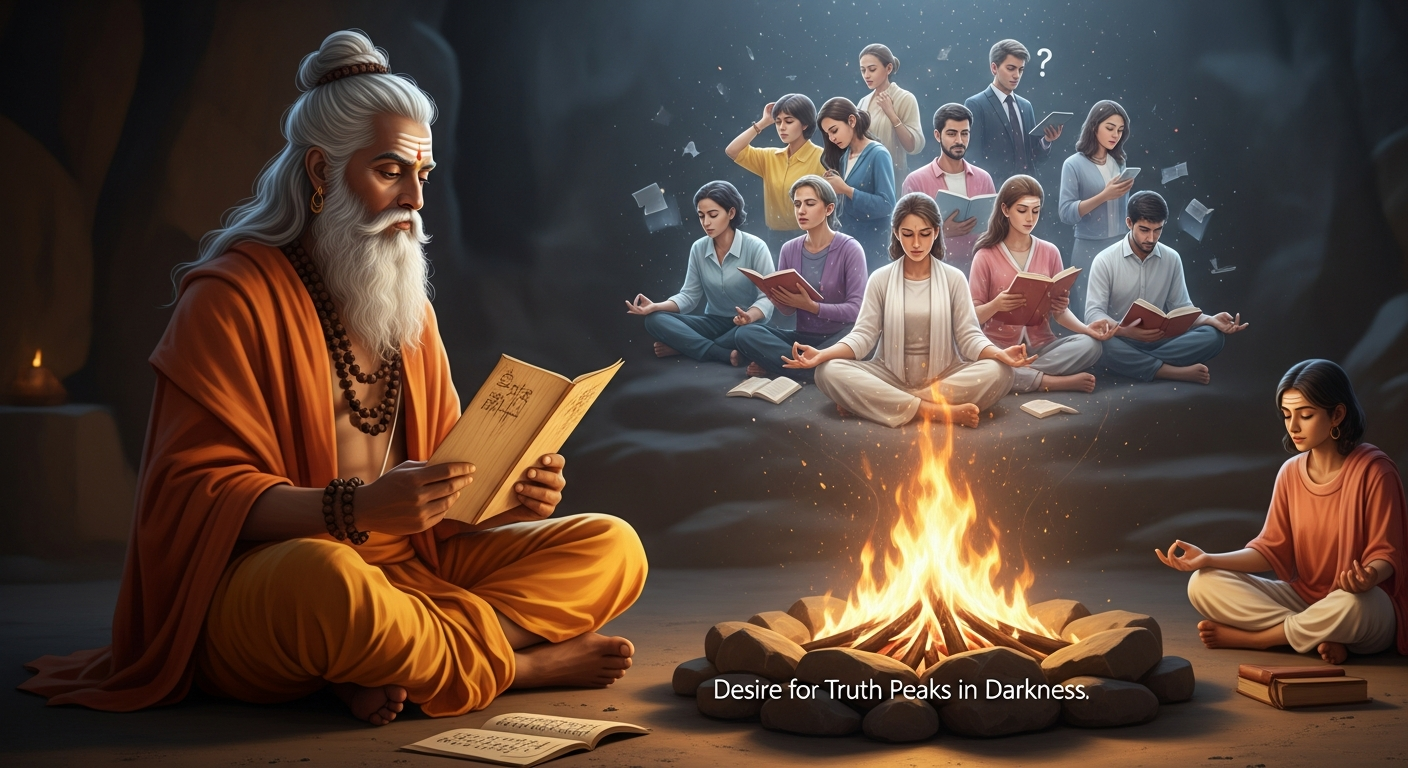
The Yuga Cycle, though rooted in ancient cosmology, holds profound relevance for understanding the challenges of modern life. In Hindu philosophy, we are currently living in Kali Yuga, the "Age of Darkness." Many of the issues we face today—such as moral decay, social unrest, environmental degradation, and the rise of materialism—can be seen as direct reflections of the characteristics of this era.
- Moral Decline: The ethical erosion in society, where dishonesty, selfishness, and corruption are often normalized, mirrors the weakening of Dharma in Kali Yuga. Individuals struggle with inner conflicts and external pressures, leading to a loss of purpose, increased stress, and societal dysfunction.
- Materialism and Spiritual Disconnection: Modern life is heavily focused on consumption, status, and wealth, often at the expense of spiritual growth and inner fulfillment. The Yugas teach that excessive attachment to materialism is a hallmark of Kali Yuga, leading to a deeper sense of dissatisfaction and alienation.
- Social and Environmental Crises: As seen in Kali Yuga, the world experiences increasing conflicts, inequality, and environmental destruction. The disregard for nature and exploitation of resources can be linked to the lack of reverence for the earth seen in this age, contributing to the global environmental crisis and climate change.
Understanding the Yuga Cycle allows us to reflect on the patterns of history and human behavior, providing insight into the present condition of society. While Kali Yuga is a time of great challenges, the teachings of the Yugas remind us that this is also an opportunity for self-awareness, spiritual awakening, and the pursuit of righteousness despite external chaos.
Hope and Transformation in Kali Yuga
Despite the darkness associated with Kali Yuga, Hindu philosophy offers a message of hope. The cyclical nature of time means that after every period of decline, there is a renewal of purity and truth. Kali Yuga, while marked by suffering and ignorance, also provides a unique opportunity for spiritual growth and transformation.
- Spiritual Growth in Dark Times: It is said that in Kali Yuga, even small acts of devotion and goodness carry great weight. Since the world is steeped in darkness, the effort to live a righteous life becomes even more significant, and spiritual practices like meditation, yoga, and acts of kindness are seen as powerful tools for personal and collective transformation.
- Prophecy of Renewal: The end of Kali Yuga is believed to herald the dawn of a new Krita Satya Yuga, the return of the Golden Age. This prophecy symbolizes the eventual triumph of light over darkness and the restoration of Dharma. It serves as a reminder that even in the darkest times, the cycle of time ensures that renewal and balance will eventually be restored.
This understanding provides a framework for navigating the complexities of modern life. While the challenges of Kali Yuga are undeniable, the Yuga Cycle teaches us that our actions, however small, contribute to the larger cosmic order, and that there is always hope for a brighter, more harmonious future.
Conclusion: The Endless Cycle of Time
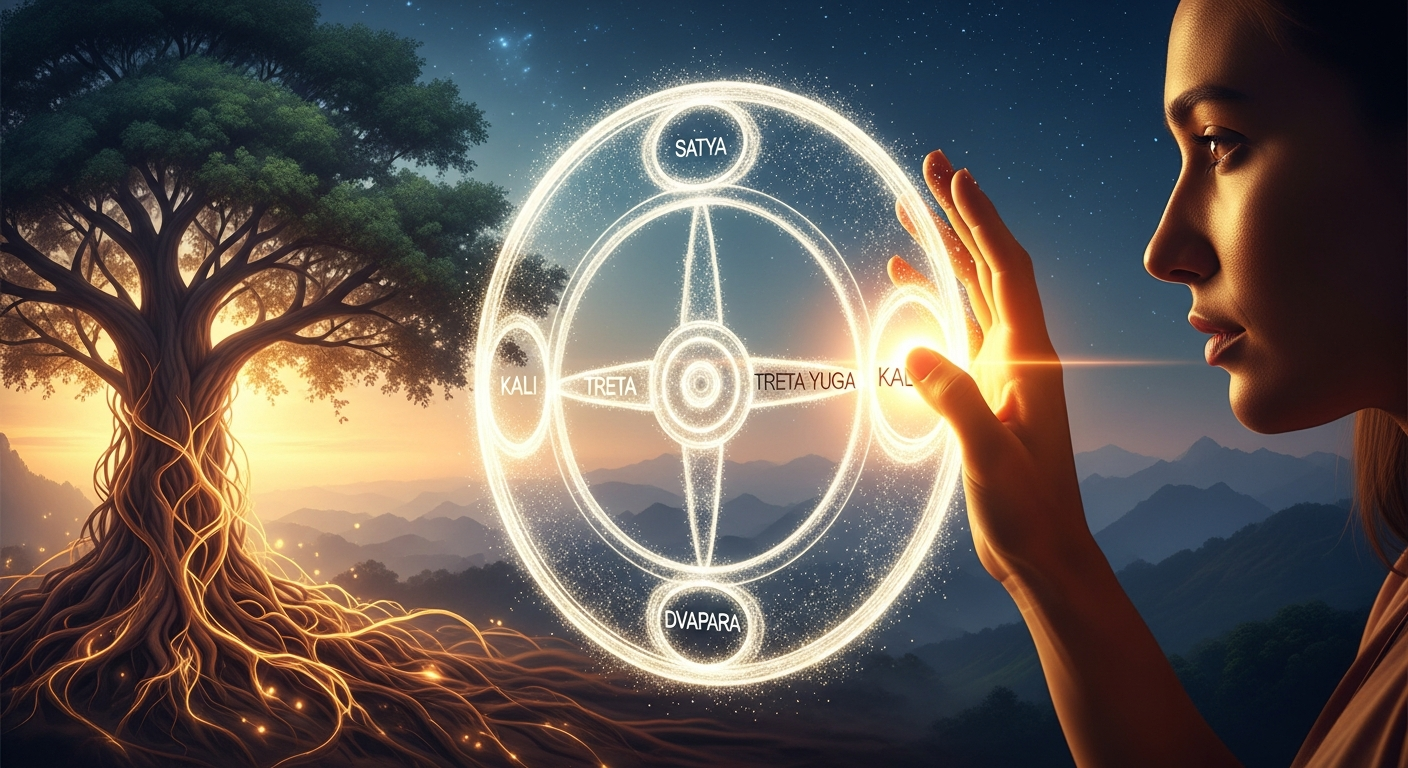
The Yuga Cycle presents a profound understanding of time and human evolution, where each era reflects the rise and fall of virtue, morality, and spiritual awareness. From the divine harmony of Krita Yuga to the moral chaos of Kali Yuga, this cycle is an ongoing process that shapes the universe and human life. The Yugas remind us that history is not linear but cyclical, and that after every period of darkness, there is a return to light and order.