Imagine this… The universe is not controlled by one god… but by three cosmic forces working together every second— creating, preserving, and transforming everything from galaxies to your heartbeat.
The shocking part? This idea is not modern. It is written clearly in Hindu scriptures thousands of years ago. Today, you will understand Brahma, Vishnu, and Shiva exactly as explained in the original texts— without confusion, without myths, without complicated philosophy.
1. Before the Universe Was Created (Upanishads & Puranas)
According to the Vedas and Upanishads, before creation: There was no sky. No earth. No stars. No time. No life. Only a silent energy called Brahman existed. The Mundaka Upanishad calls it: “The eternal, formless source.”
When this supreme source wished to create, a movement started inside that silence— a vibration. The ancient rishis said the first vibration was: “Om.” This is not superstition. Modern science also says the universe started with a single vibration or fluctuation.
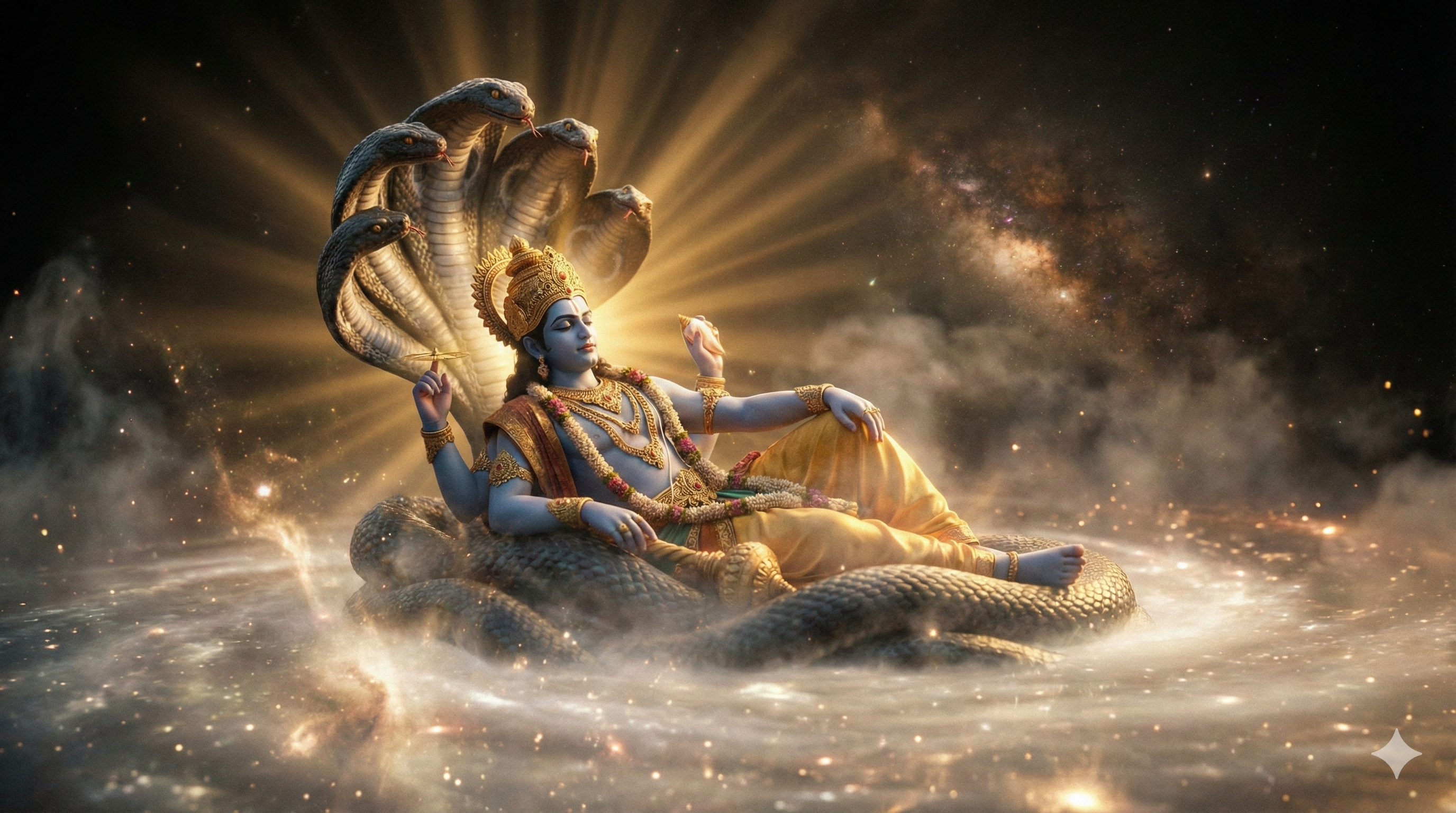
From that energy, a cosmic ocean appeared, called Ksheer Sagar in the Puranas. Upon this ocean, Vishnu appeared in a state of deep yoga. From Vishnu’s navel a lotus grew. On that lotus sat Brahma. This entire description comes from the Bhagavata Purana.
2. Who is the Real Controller? (Vedic Truth)
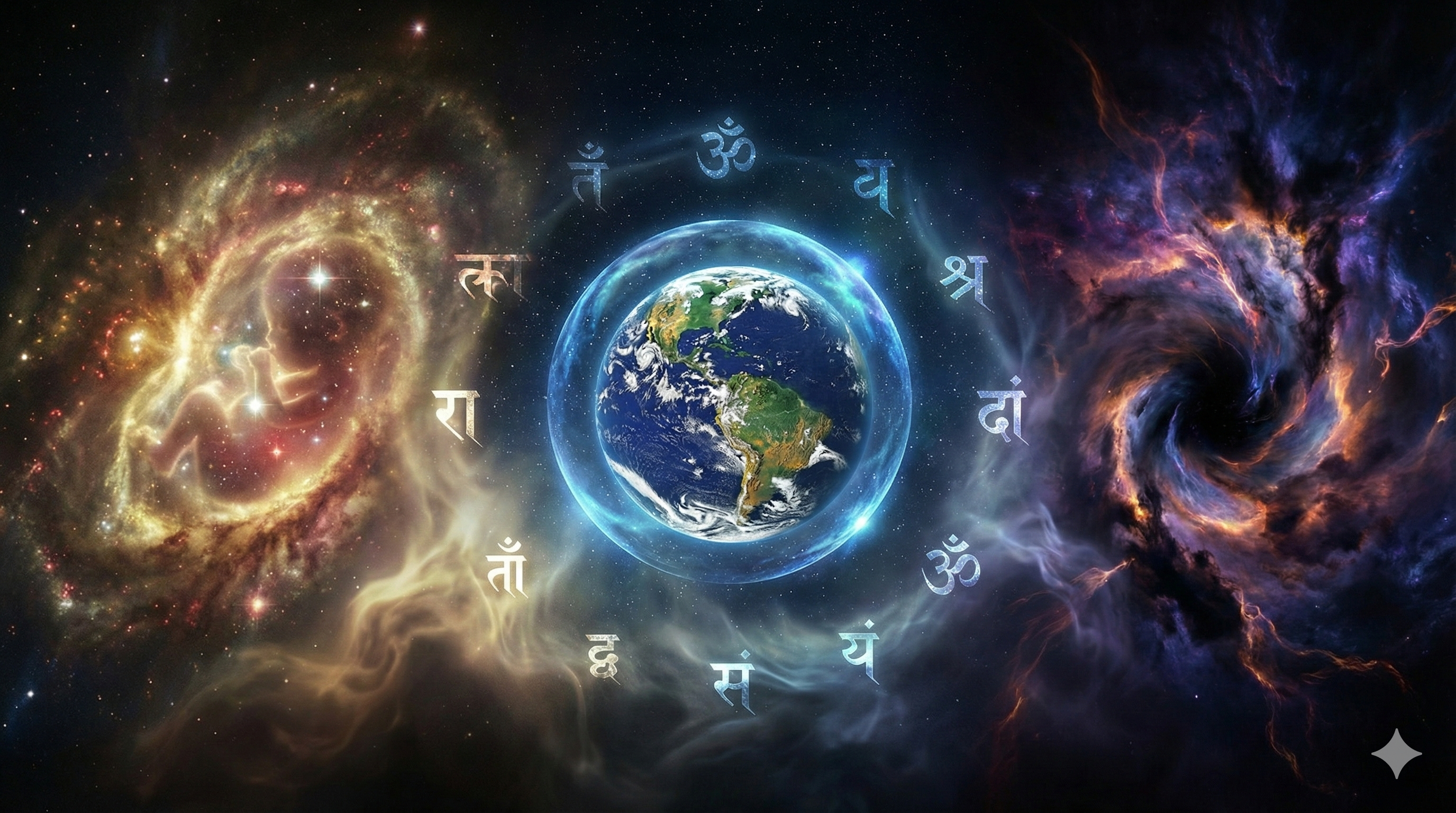
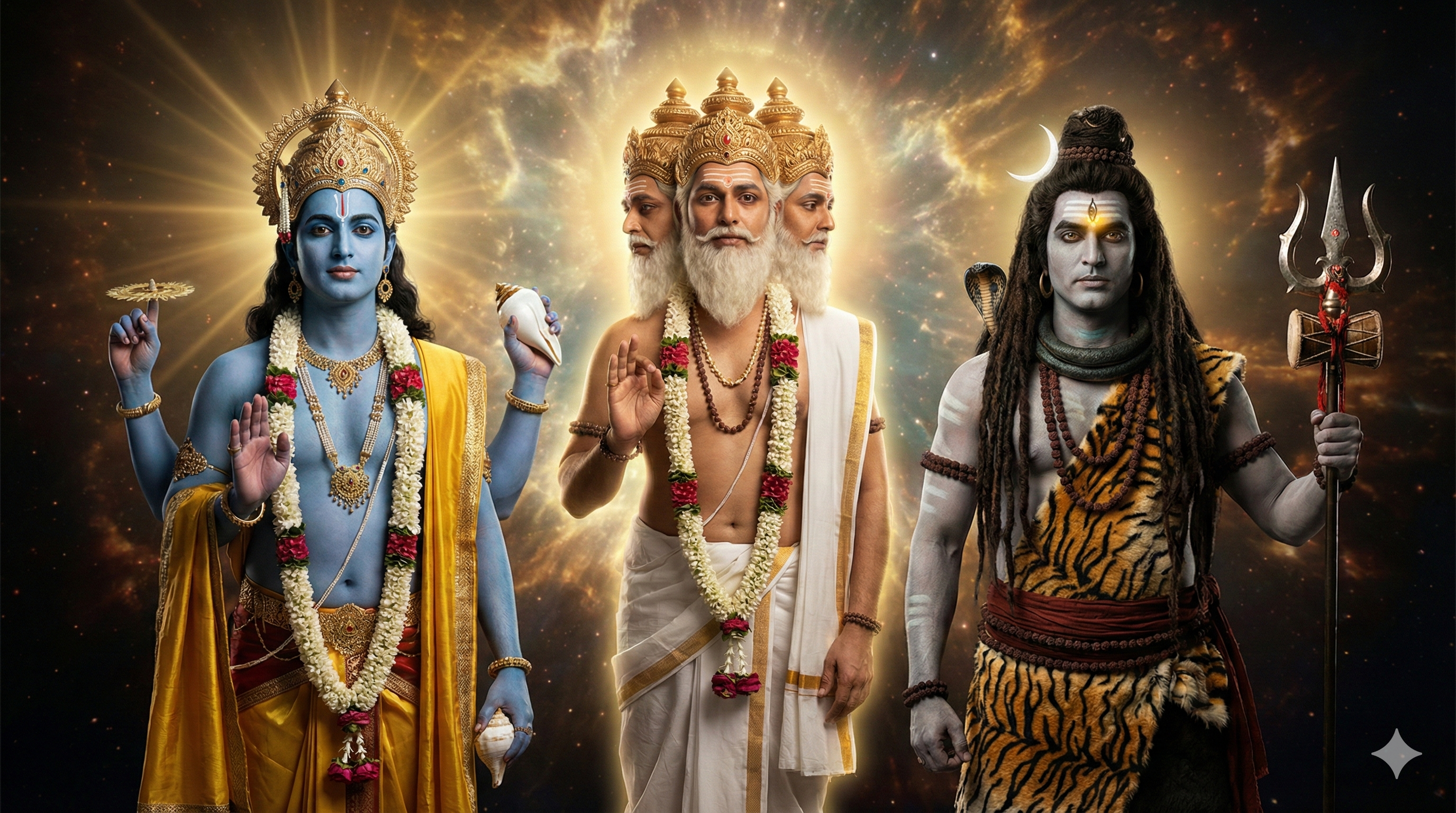
According to the Vedas, there is only ONE ultimate reality— called Brahman. But to run the universe, this one truth expresses itself in three different functions: Brahma – Creation, Vishnu – Preservation, Shiva – Transformation.
This is written in the Shvetashvatara Upanishad: “One becomes three for the sake of creation, maintenance, and dissolution.” So, Brahma, Vishnu, Shiva are not three competing gods. They are three natural processes working in harmony.
Just like: Birth, Life, Death. Or like in nature: Seed, Tree, Fertilizer (from dead leaves). In science: Formation, Sustenance, Breakdown. This is the simplest and most accurate way to understand the Trinity.
3. Brahma: The Creator (Bhagavata Purana)
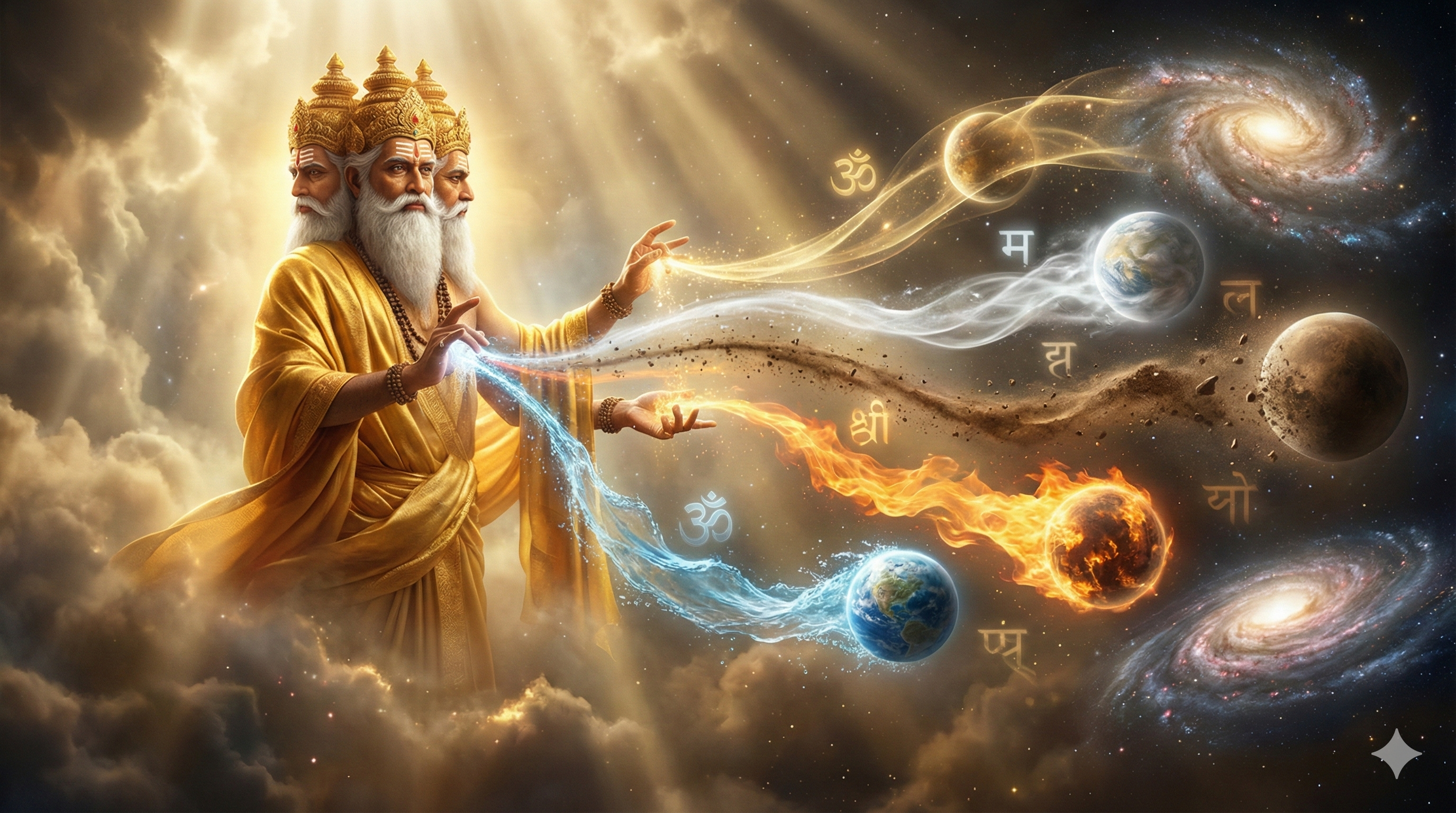
In the Bhagavata Purana (Canto 3), Brahma wakes up and sees darkness everywhere. He does not know who he is, or why he exists. He meditates deeply. The scripture says: “By meditation on the Supreme, Brahma obtained the power to create.”
Meaning: Creation starts with consciousness, not with hands. According to the Purana, Brahma then creates: Space, Time, The five elements (earth, water, fire, air, space), Planets, Life forms, Society and knowledge.
But here is the real truth: Brahma is NOT worshipped widely because creation is temporary. Everything Brahma creates will one day dissolve again. The scriptures also say Brahma’s lifespan is 100 Brahma years, which equals 311 trillion human years. This number comes from the Surya Siddhanta, a respected ancient astronomy text. This is real scriptural content, not imagination.
4. Vishnu: The Preserver (Vishnu Purana)
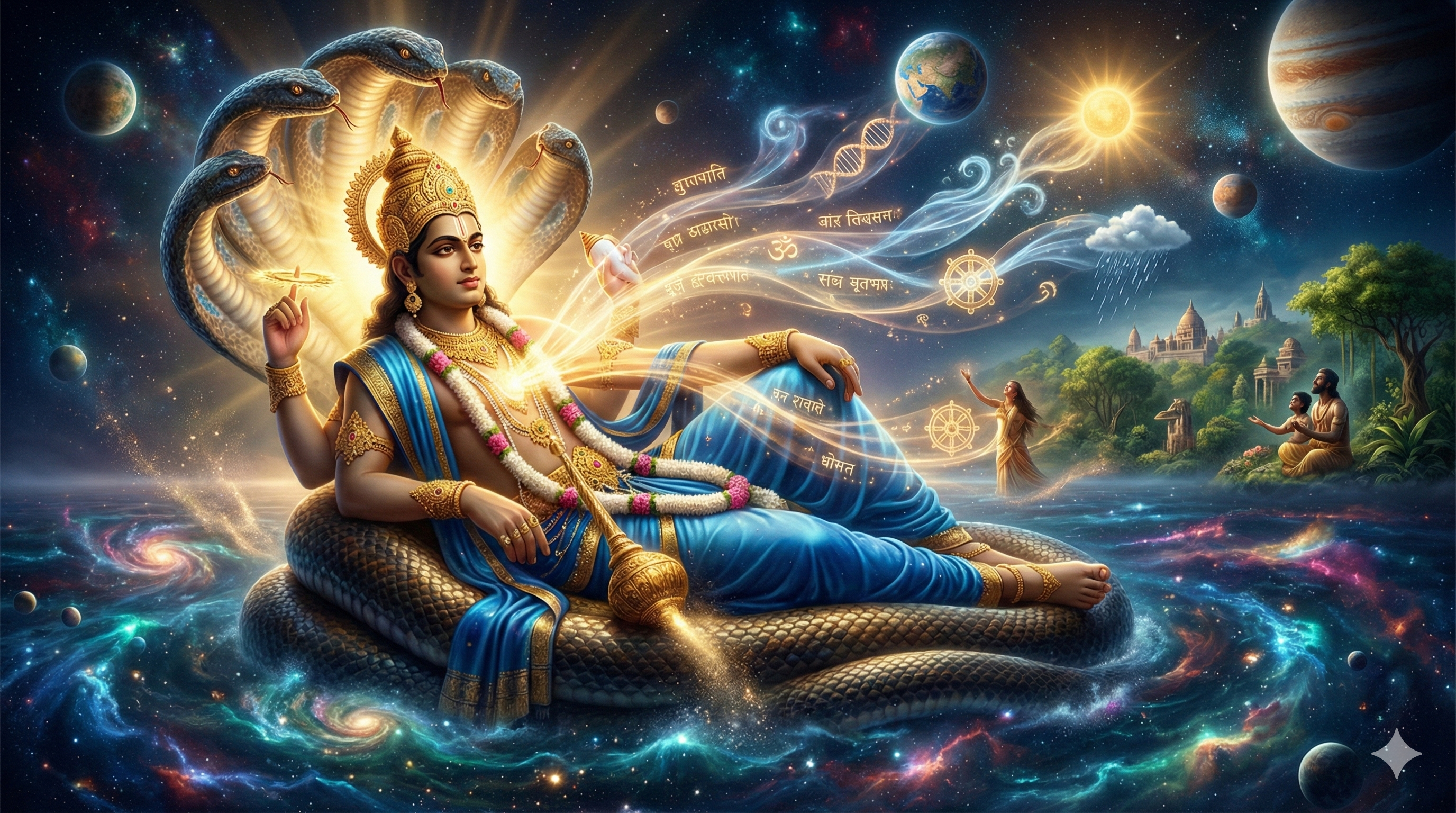
The Vishnu Purana explains Vishnu’s role very clearly: “Vishnu sustains everything that has been created.” This means: Gravity holding planets — Vishnu, DNA passing life — Vishnu, Air, sunlight, rain cycle — Vishnu, Dharma, morality, balance — Vishnu.
In simple words: Vishnu is the stabilizing force of the universe. Whenever the balance of the world is disturbed, the Purana says Vishnu takes avatars. Real sources list 10 main avatars, including: Matsya, Kurma, Varaha, Narasimha, Vamana, Rama, Krishna, Kalki (yet to appear).
These avatars are recorded in: Bhagavata Purana, Vishnu Purana, Mahabharata, Ramayana. Whenever the world hits a crisis—moral, social, or natural— Vishnu restores harmony. That is why Vishnu is the most worshipped across India.
5. Shiva: The Transformer (Shiva Purana)
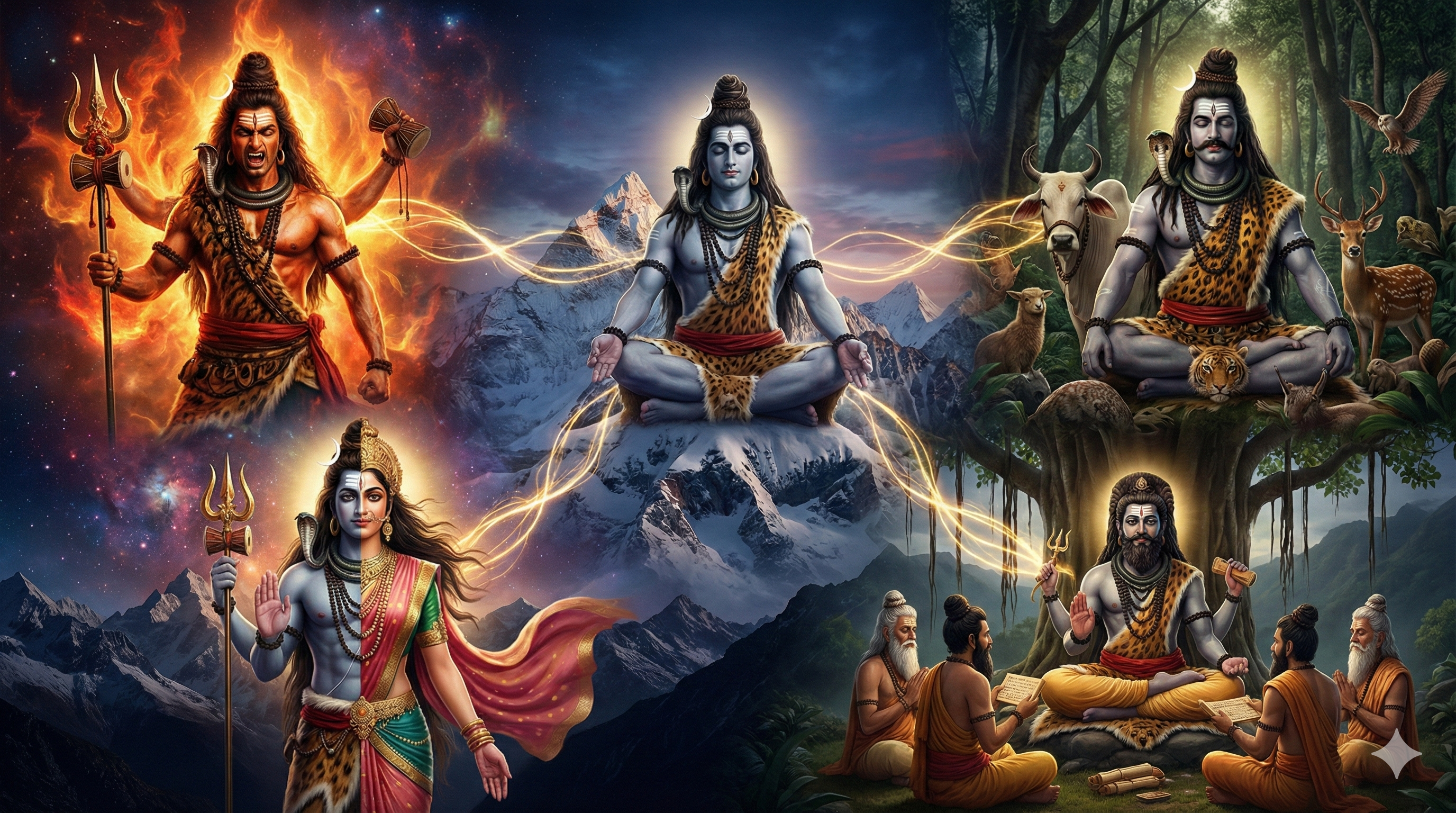
Many people say Shiva is the god of destruction. But the Shiva Purana clearly says: “Shiva destroys only to recreate.” He does not end things in anger. He ends things so something better can begin.
In nature, this happens every day: Old cells die, new cells are born, Forests burn, new plants grow, Stars explode, new galaxies form.
The Nataraja form of Shiva represents this cycle. Even CERN — the world’s largest physics lab — keeps a Nataraja statue because his cosmic dance represents particles constantly appearing and disappearing. This is written in the Ananda Tandava Stotram and aligns with modern quantum physics.
Shiva is transformation. Not destruction. He is also worshipped as: Mahadeva, Rudra, Pashupati, Ardhanarishvara (symbol of balance), Dakshinamurthy (guru of knowledge). Shiva represents: Deep meditation, Inner stillness, Ending of ego, Real freedom (moksha).
6. Why Three Gods Are Needed (Upanishads)
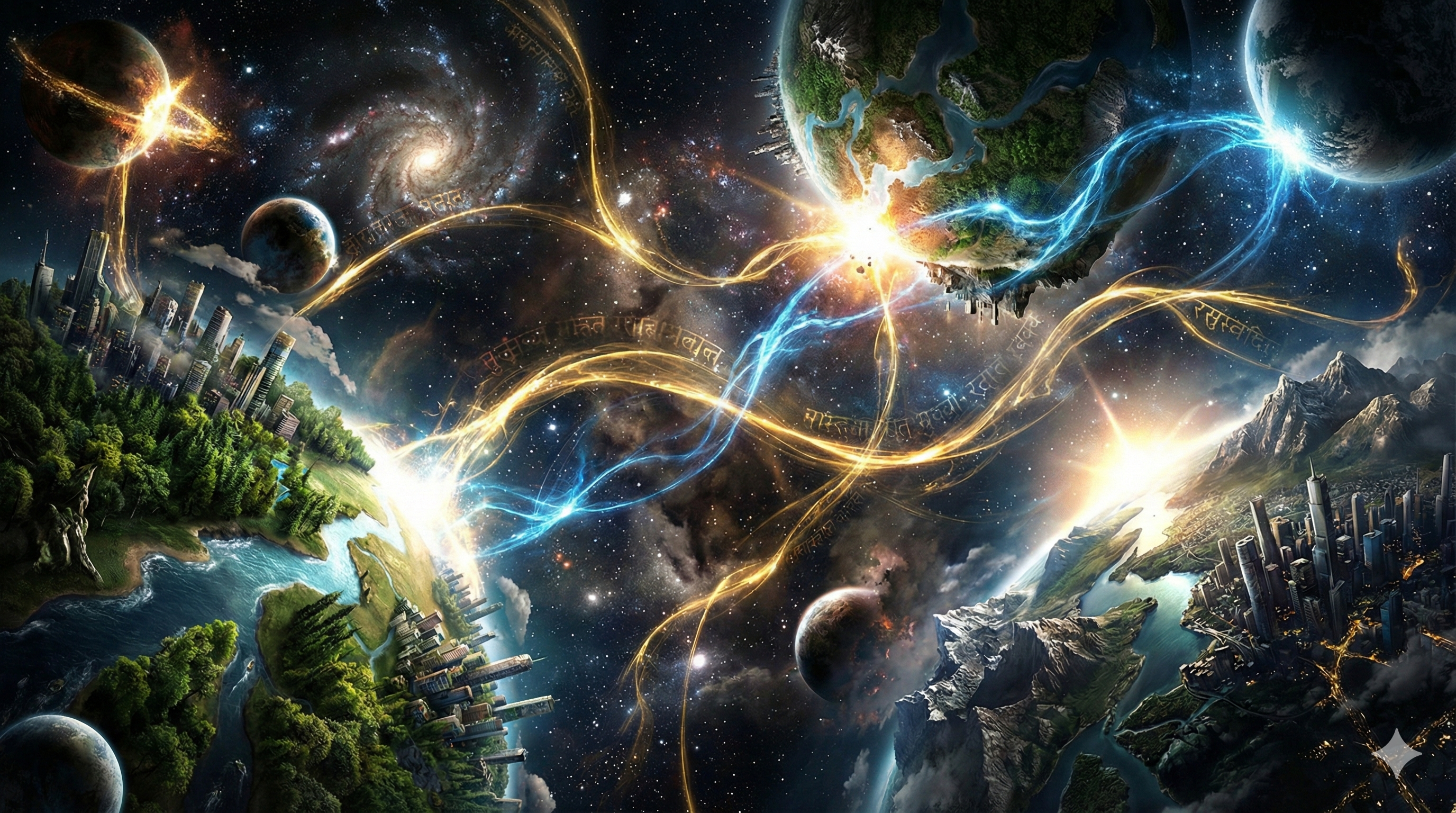
Many people wonder: why can’t a single god handle everything? The answer comes from the ancient Upanishads. The universe is delicate and runs on balance. If there is only creation, everything would grow uncontrollably—chaos would reign. If there is only preservation, nothing would evolve—stagnation would take over. If there is only destruction, life itself would vanish—emptiness everywhere.
To maintain harmony, the Supreme Reality wisely spreads its functions into three forms: Brahma to create, Vishnu to preserve, and Shiva to transform. This trinity ensures that life, nature, and cosmic order continue in perfect balance, without chaos or void.
7. The Untold Truth: They Are Not Different (Vedanta)
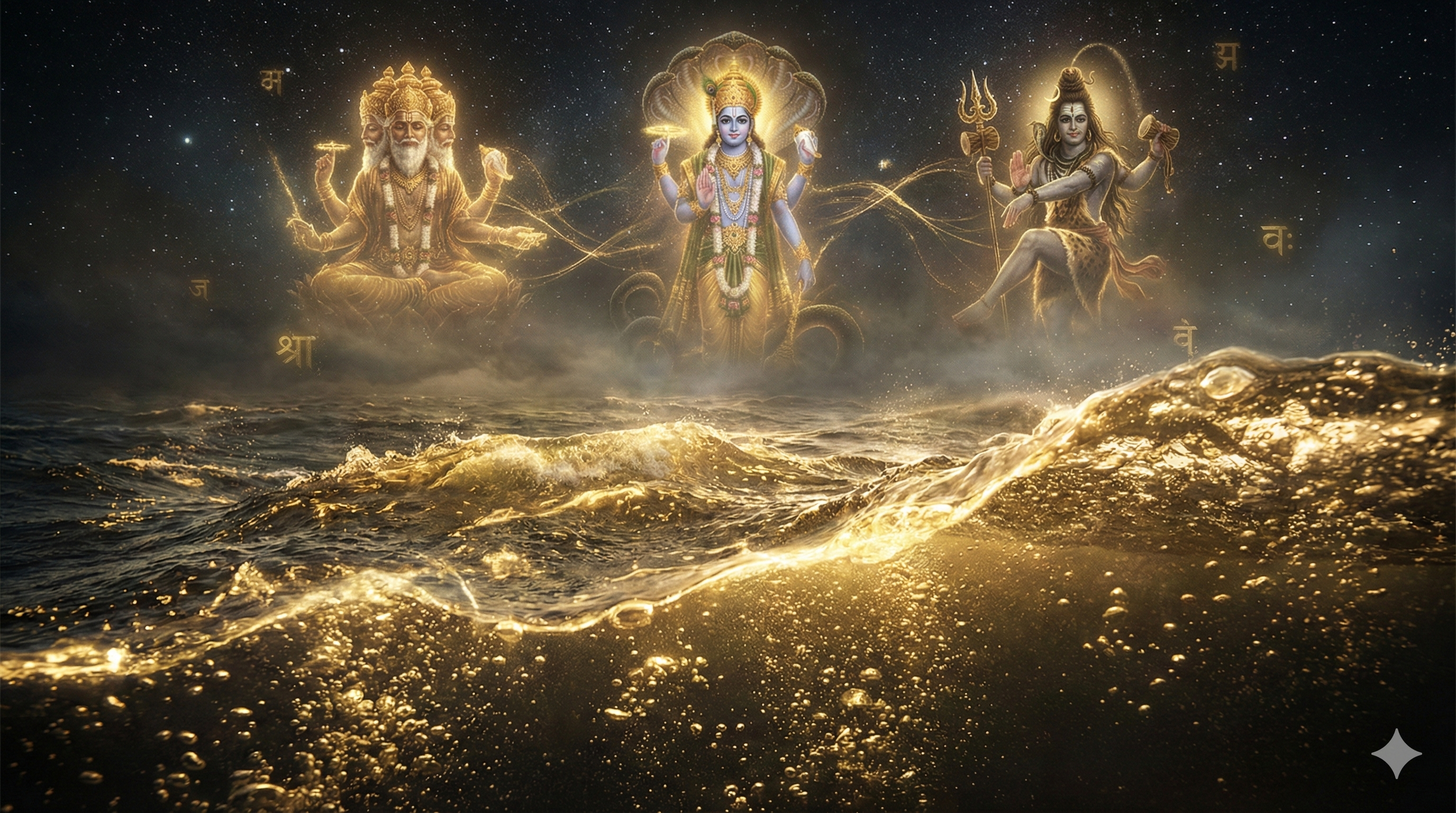
The deepest secret of the universe comes from the Mandukya Upanishad. It explains that Brahma, Vishnu, and Shiva are not separate gods—they are like waves, foam, and bubbles, all made of the same water. Each of them performs different duties: creation, preservation, and transformation.
Devotees perceive them as three distinct deities, yogis understand them as three cosmic energies, but the rishis see the ultimate reality: Brahman alone is real. The Trinity is simply the working form of the one supreme energy, showing us how the cosmos functions. In essence, creation, preservation, and transformation are just the different expressions of the same eternal source.
8. Real-Life Evidence in Nature
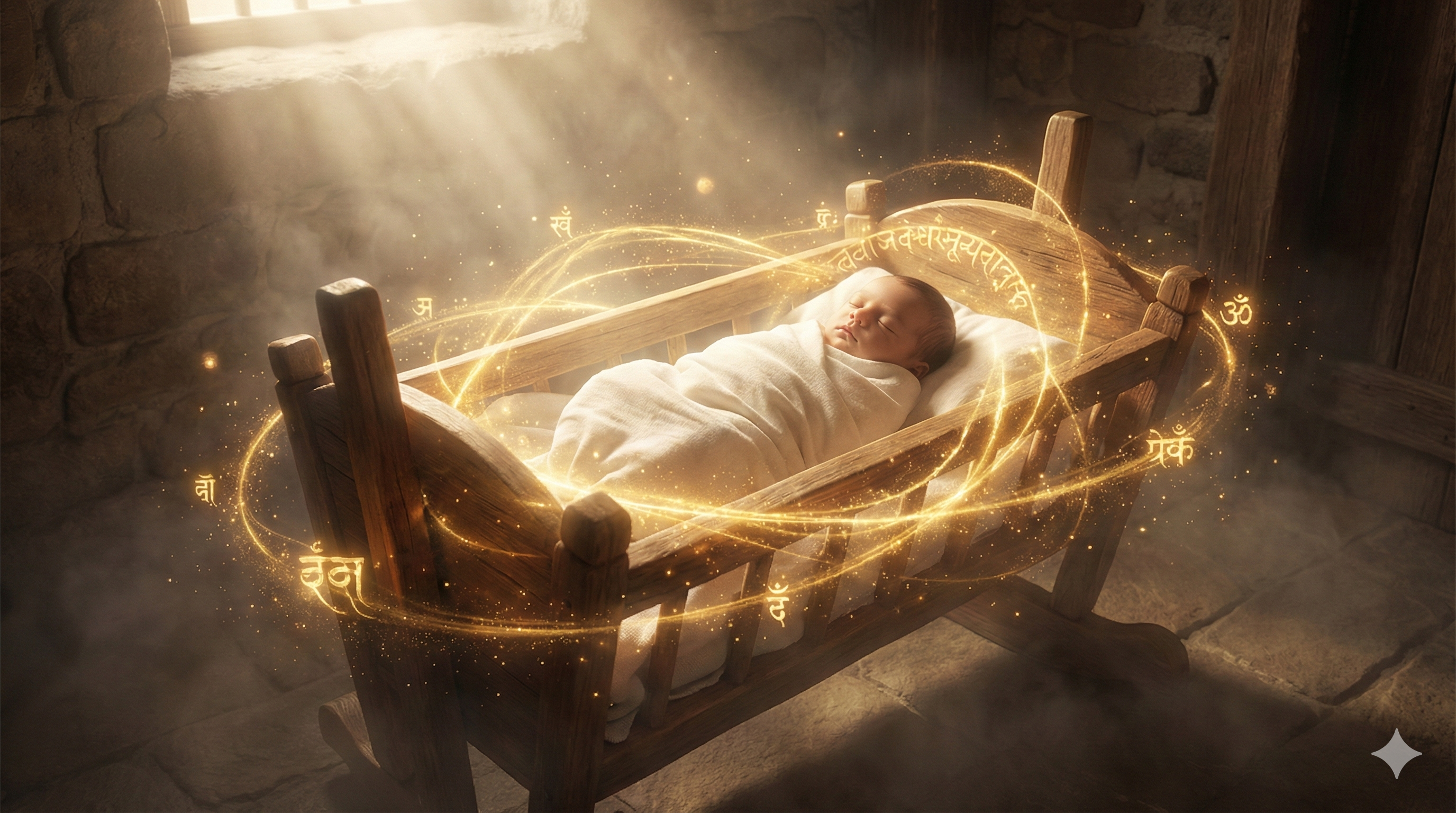
The cosmic truth of the Trinity is visible in everyday life. When a baby is born, Brahma’s energy is at work, creating new life. As the child grows, learns, and survives, Vishnu’s energy preserves and maintains that life. When a person dies, Shiva’s energy transforms the body, returning it to nature so something new can grow.
Even inside your body, the same cycle happens every second: 50 million new cells are created (Brahma), 50 million cells are maintained (Vishnu), and 50 million old cells die (Shiva). The scriptures emphasize that the Trinity exists inside every living being, connecting the cosmos and life intimately.
9. The Cosmic Cycle (Bhagavata Purana)
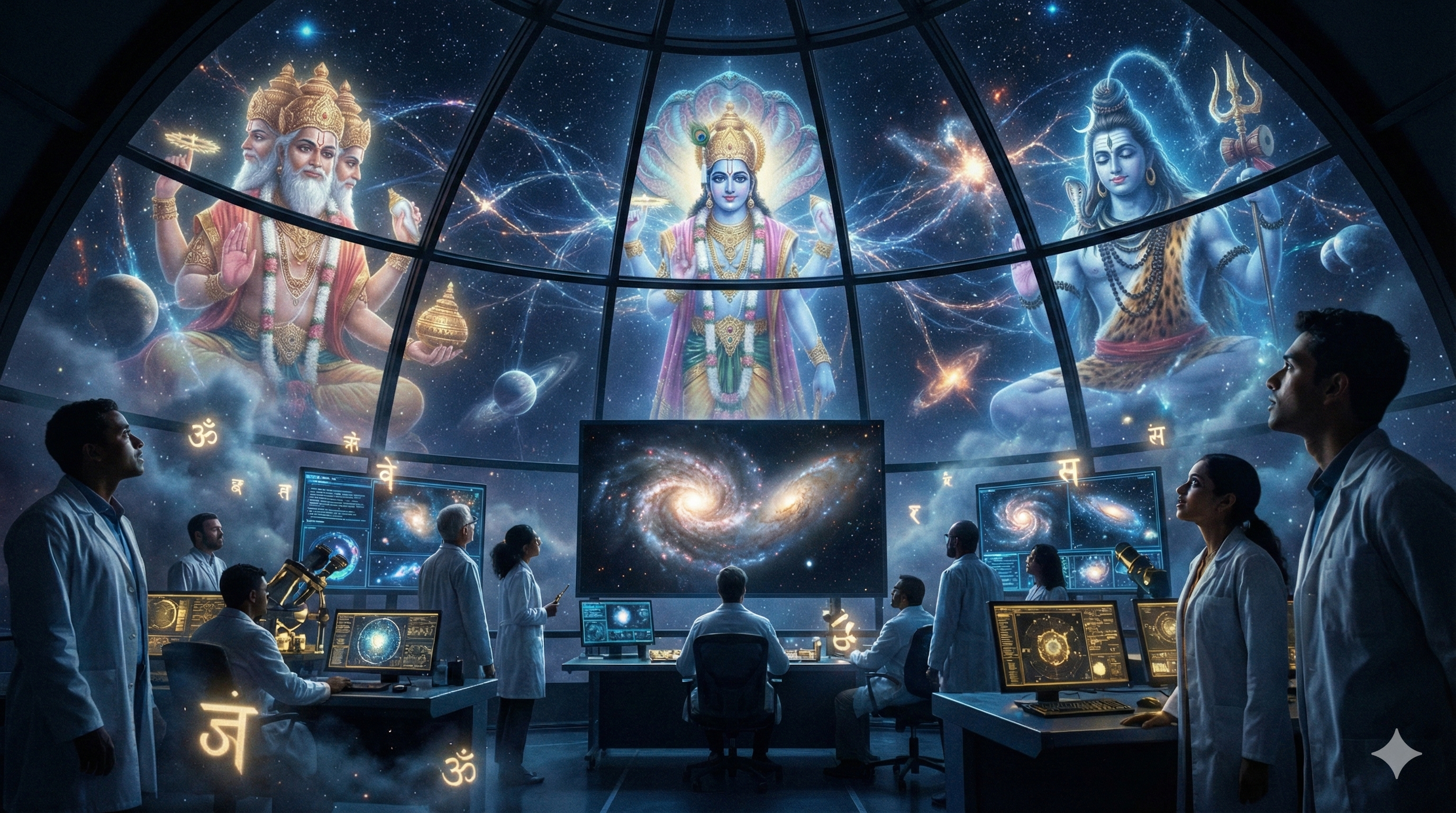
The Bhagavata Purana explains the universe as a great, endless cycle. Everything is created, maintained, and eventually dissolved. This cycle has three stages: Srishti (creation) by Brahma, Sthiti (preservation) by Vishnu, and Laya (dissolution) by Shiva. After dissolution, the cycle begins again.
Just like the seasons—spring, summer, autumn, and winter—nothing truly ends or stays the same forever. Galaxies form and fade, stars are born and die, rivers flow and dry, life begins and transforms. This ancient understanding is incredibly scientific, showing that change and transformation are natural laws of the cosmos. The universe is not static; it is alive, dynamic, and governed by the balanced energies of the Trinity, repeating endlessly without a final beginning or end.
Ending — The Question
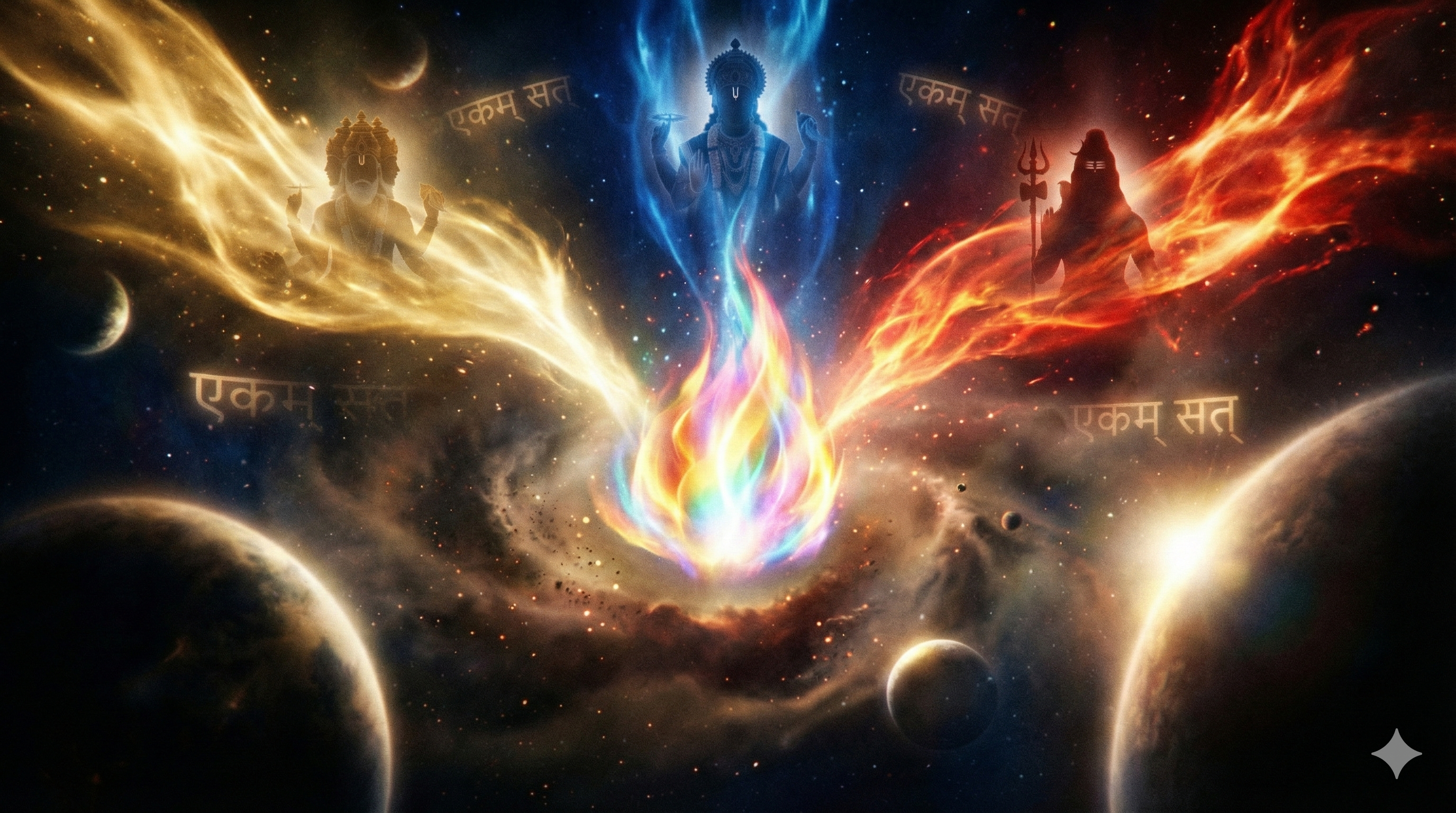
So… Who controls the universe? Is it Brahma? Is it Vishnu? Is it Shiva? The scriptures say: They are three hands of one supreme truth. Three functions of one cosmic intelligence. Three lights of one eternal flame.
But here is the real question… If the universe works only because these three forces stay in balance— creation, preservation, and transformation— Are we keeping these forces balanced inside our own lives?
Are we creating something new? Are we preserving what is good? Are we letting go of what holds us back? This is the true meaning of the Trinity. It is not only about the universe. It is also about you.