Setting The Mystery
When modern science talks about the universe, it speaks about Big Bang, expansion, and heat death. But thousands of years before telescopes, Indian rishis were already asking:
- How is the universe born?
- How long does it live?
- Who controls time?
- And what happens after destruction?
The answers were written clearly in Rig Veda, Bhagavata Purana, Vishnu Purana, and Mahabharata. Not as myths… but as cosmic time calculations so large, even modern scientists feel shocked today. Let us start this journey slowly… like a mystery unfolding layer by layer.
Part 1: The Universe Is Alive – Not A Machine
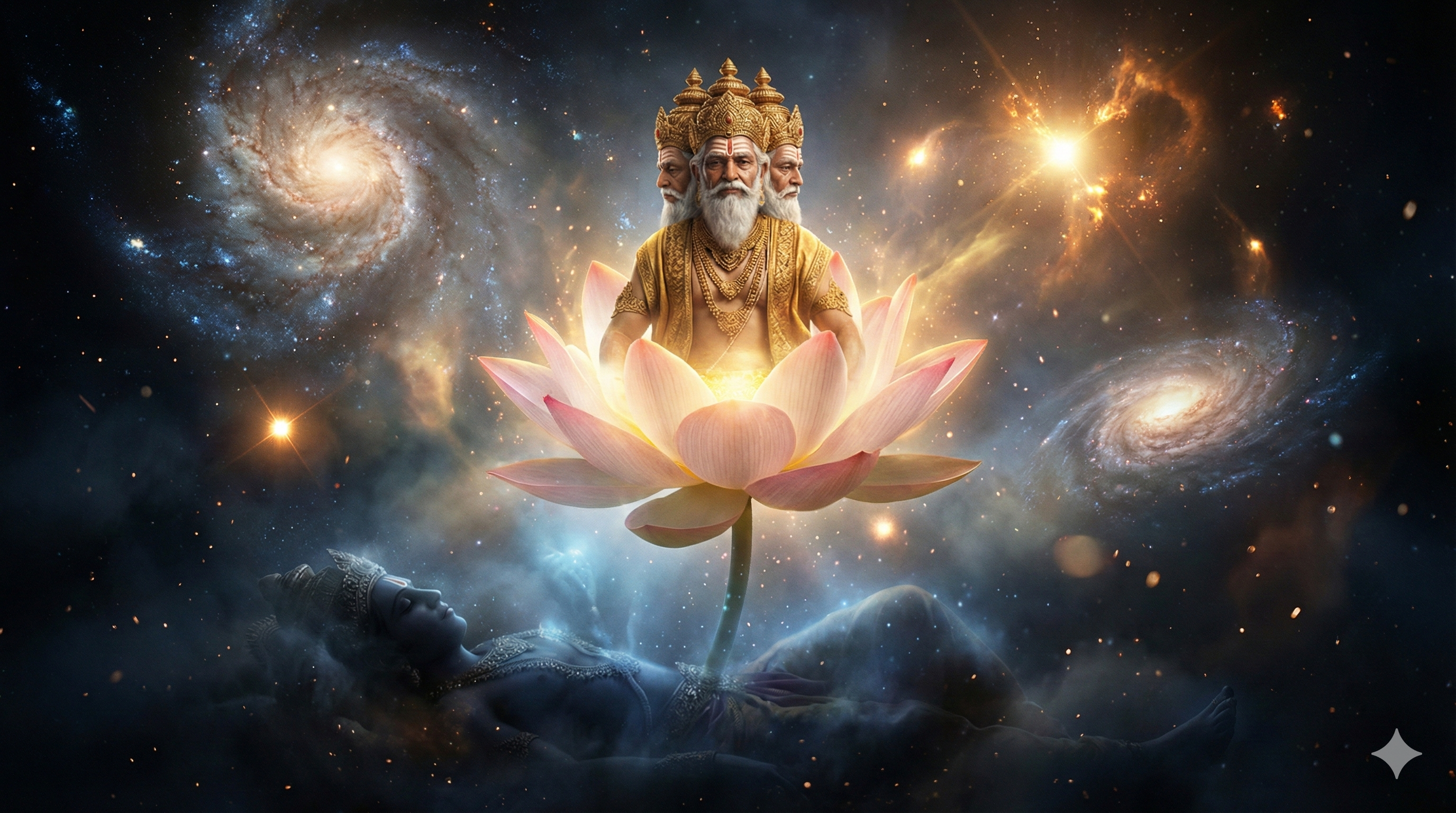
According to Hindu cosmology, the universe is not a dead object. It is alive.
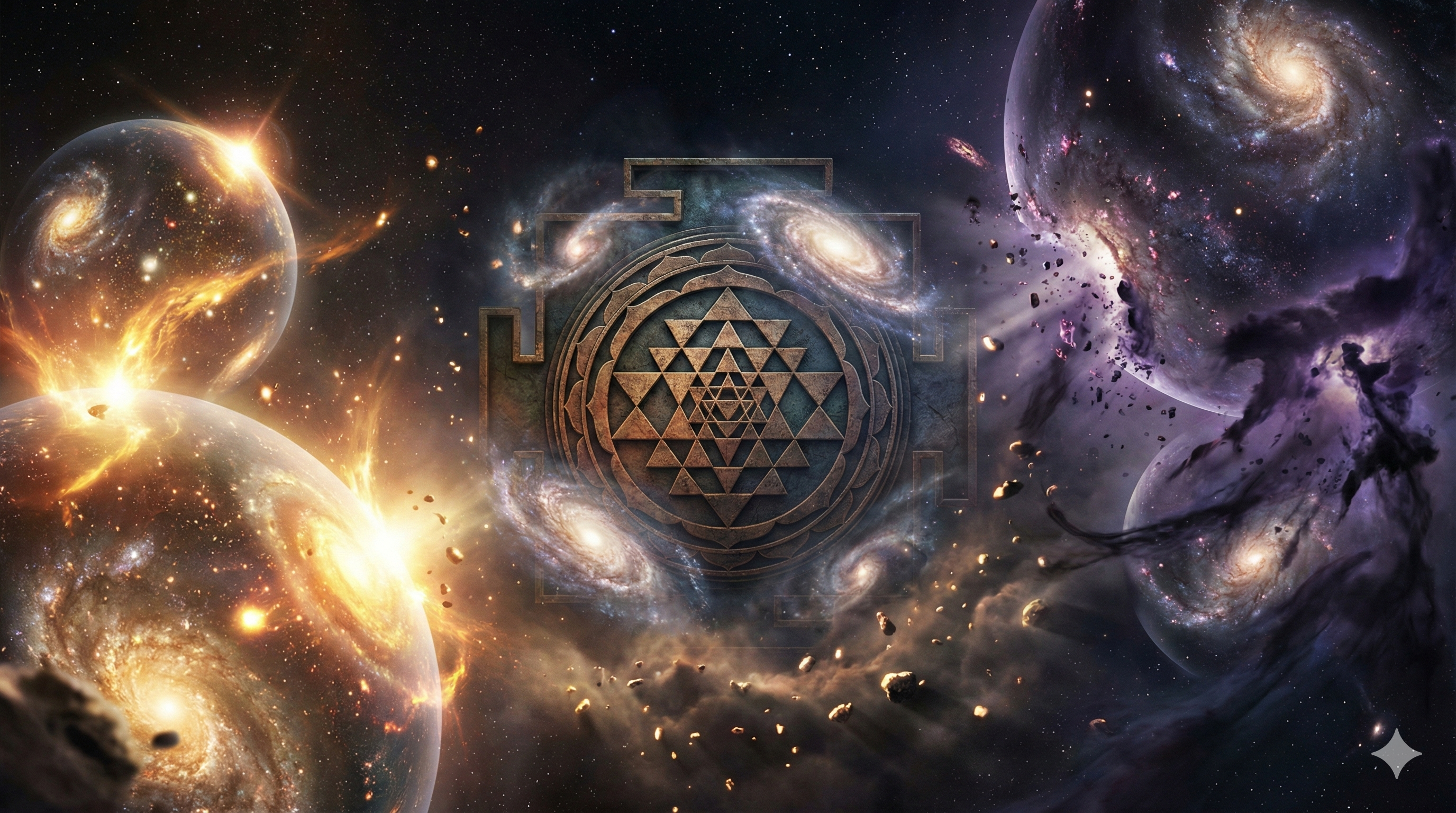
In Rig Veda, creation begins with a deep silence — “Na asat, na sat” (There was neither existence nor non-existence).
From this silence arose Brahman — the infinite consciousness. Later Purāṇas explain creation happens when Lord Vishnu rests on the cosmic ocean, and from His navel arises Brahma, the creator.
This is not a cartoon story. It symbolises:
- Consciousness first
- Matter later
- Time activated only after creation
Even modern physics says: Time began with the universe. Coincidence?
Part 2: Time Is Not Linear – It Is A Cycle
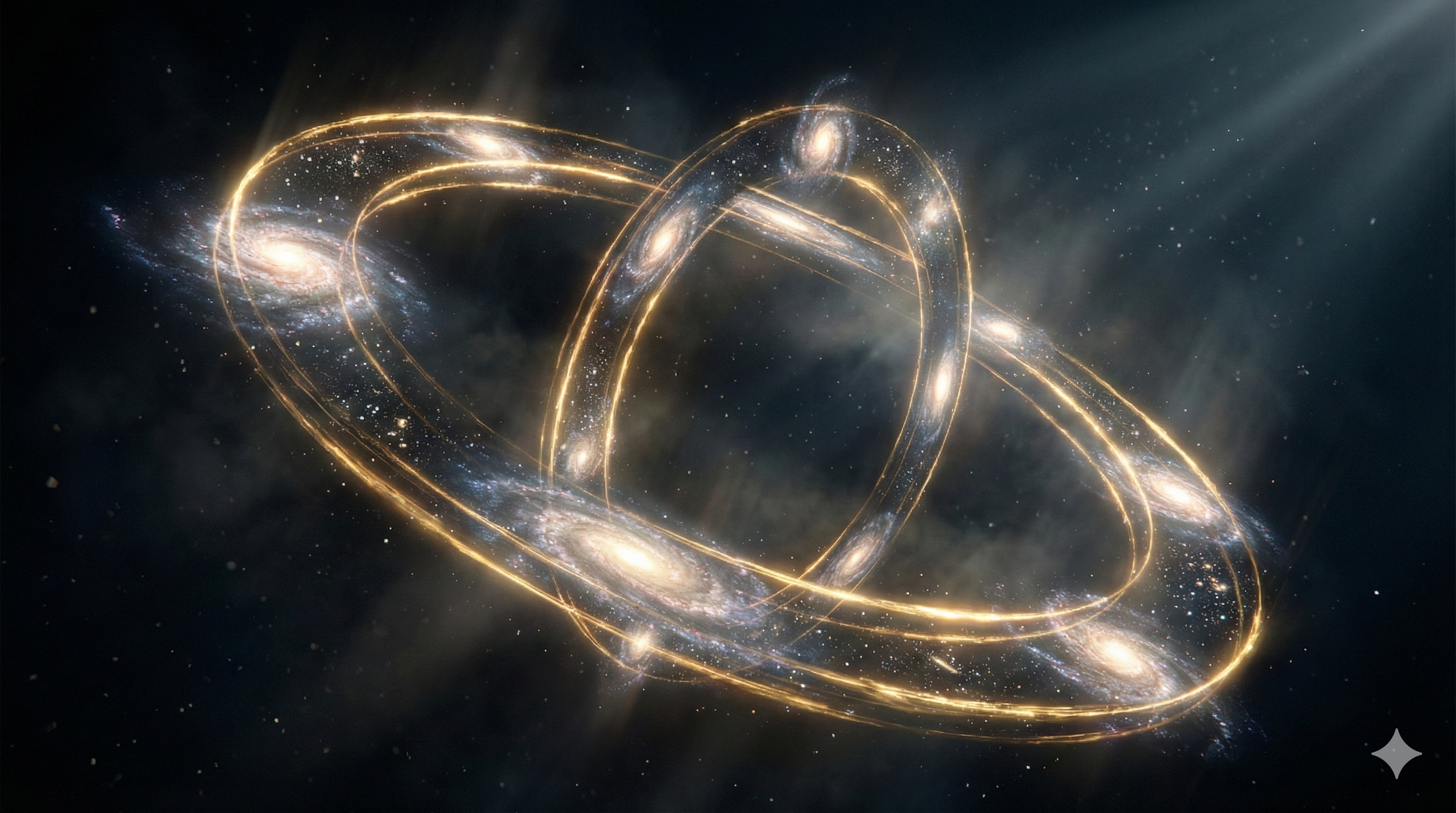
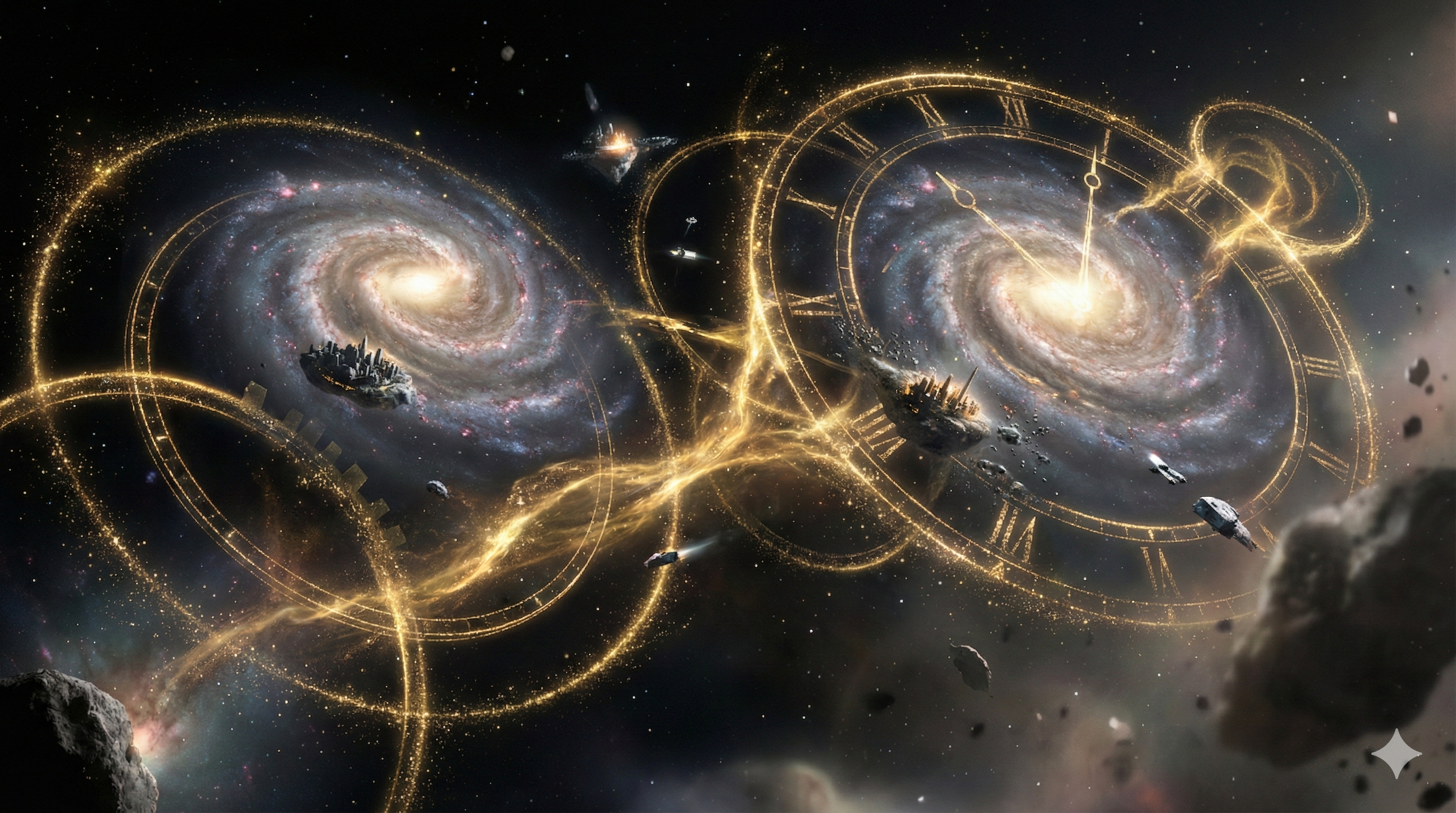
This is where Hindu cosmology becomes truly mind-blowing. In Hinduism, time is a wheel, not a straight line. This wheel is called Kāla Chakra. Just like:
- Day and night
- Seasons
- Birth and death
The universe also follows cycles: Creation → Sustenance → Destruction → Rest → Creation again.
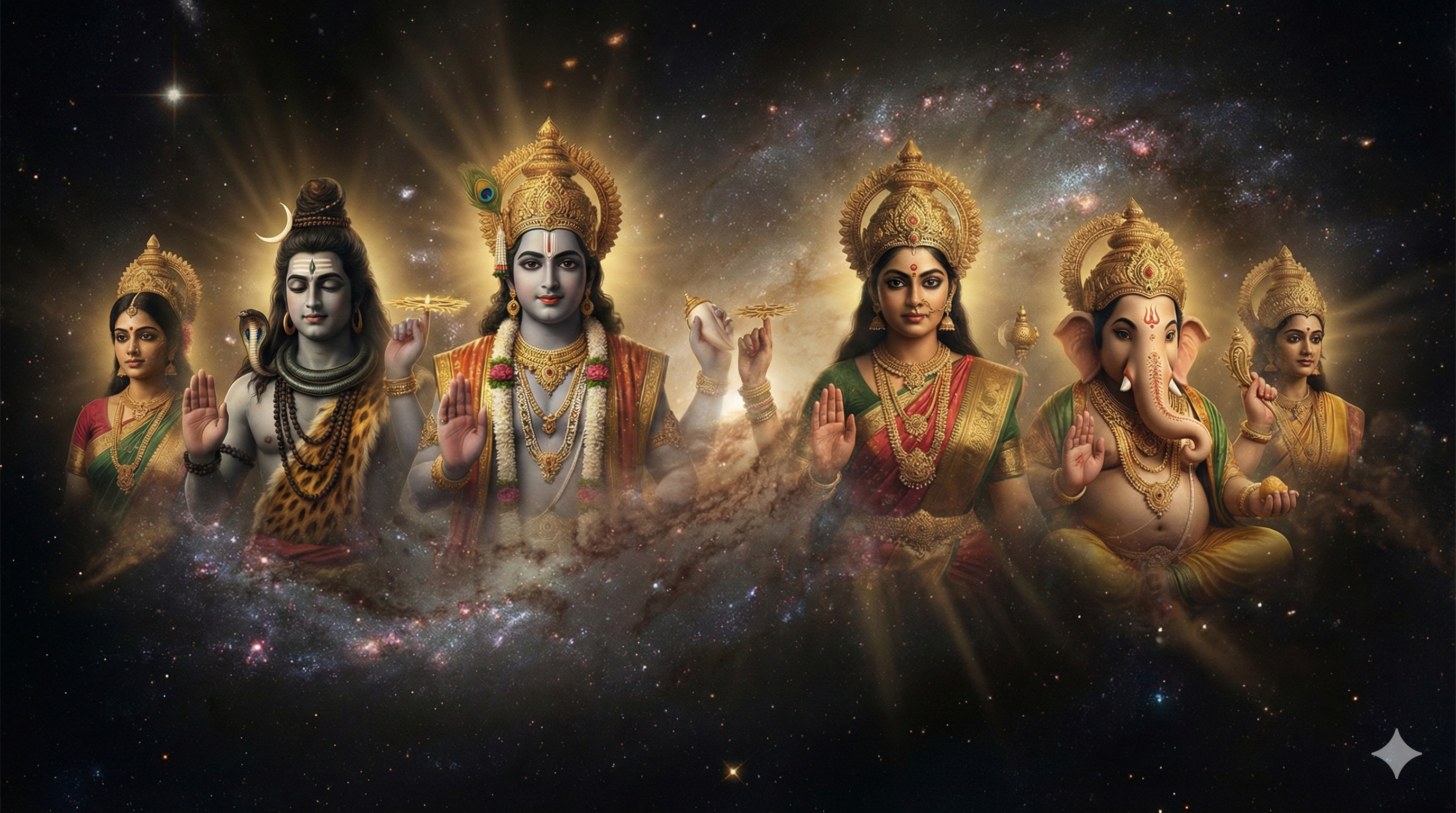
This cycle is controlled by the Trimurti:
- Brahma creates
- Vishnu sustains
- Shiva dissolves
No permanent beginning. No permanent end. Only rhythm.
Part 3: The Four Yugas – Time On Earth
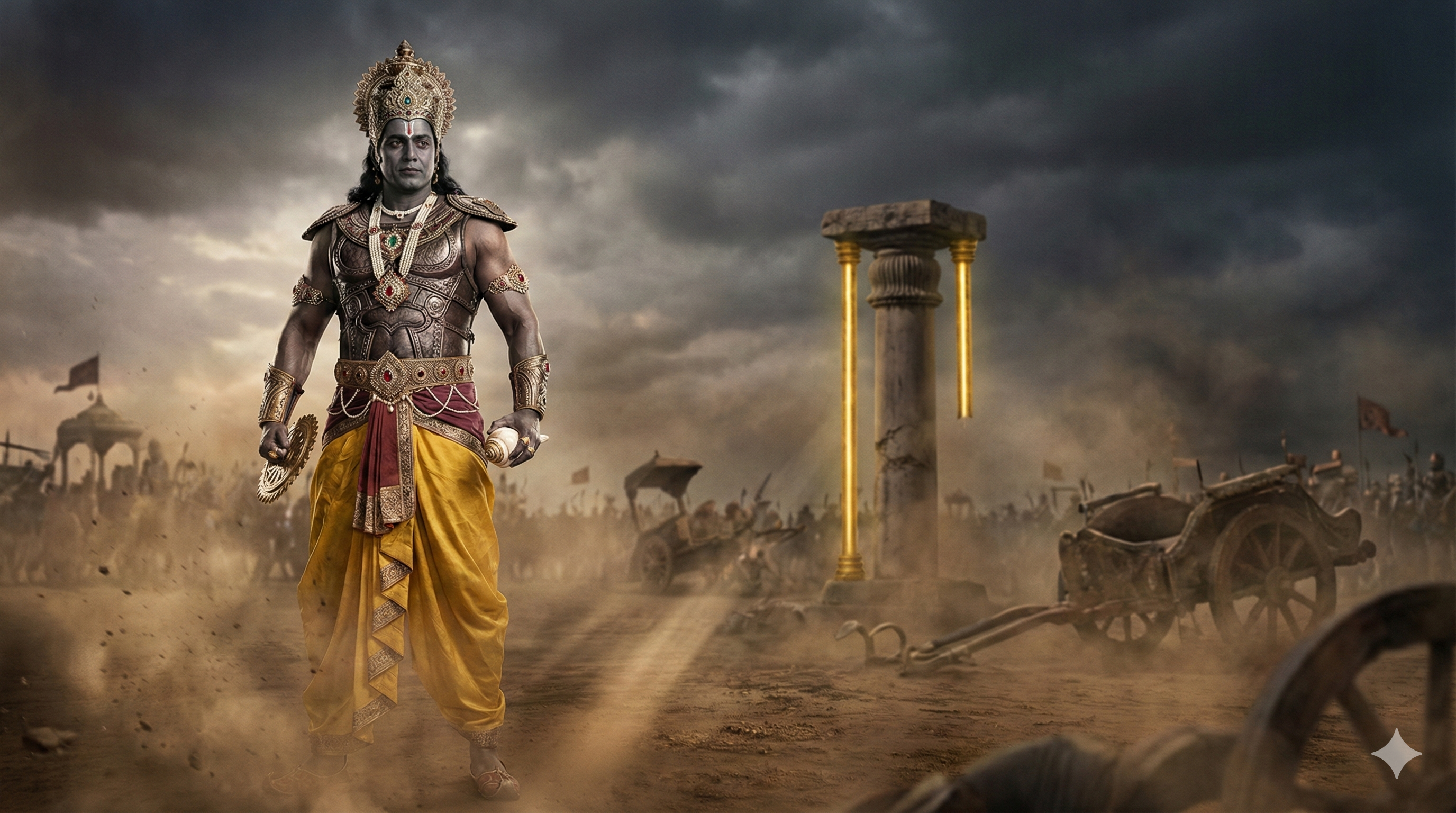
Now let us zoom into human time. According to Mahabharata and Vishnu Purana, time on Earth is divided into four Yugas:
1. Satya Yuga
Age of truth. Dharma on four legs. Humans lived thousands of years. No disease, no hatred.
2. Treta Yuga
Dharma on three legs. Lord Rama appears. Good and evil begin to separate.
3. Dvapara Yuga
Dharma on two legs. Lord Krishna appears. Ego, war, confusion increase.
4. Kali Yuga (Our time)
Dharma on one leg. Short life. Stress, greed, fear. Truth becomes weak.
Bhagavata Purana clearly says Kali Yuga began after Krishna left Earth. We are living in Kali Yuga right now.
Part 4: The Shocking Time Calculations
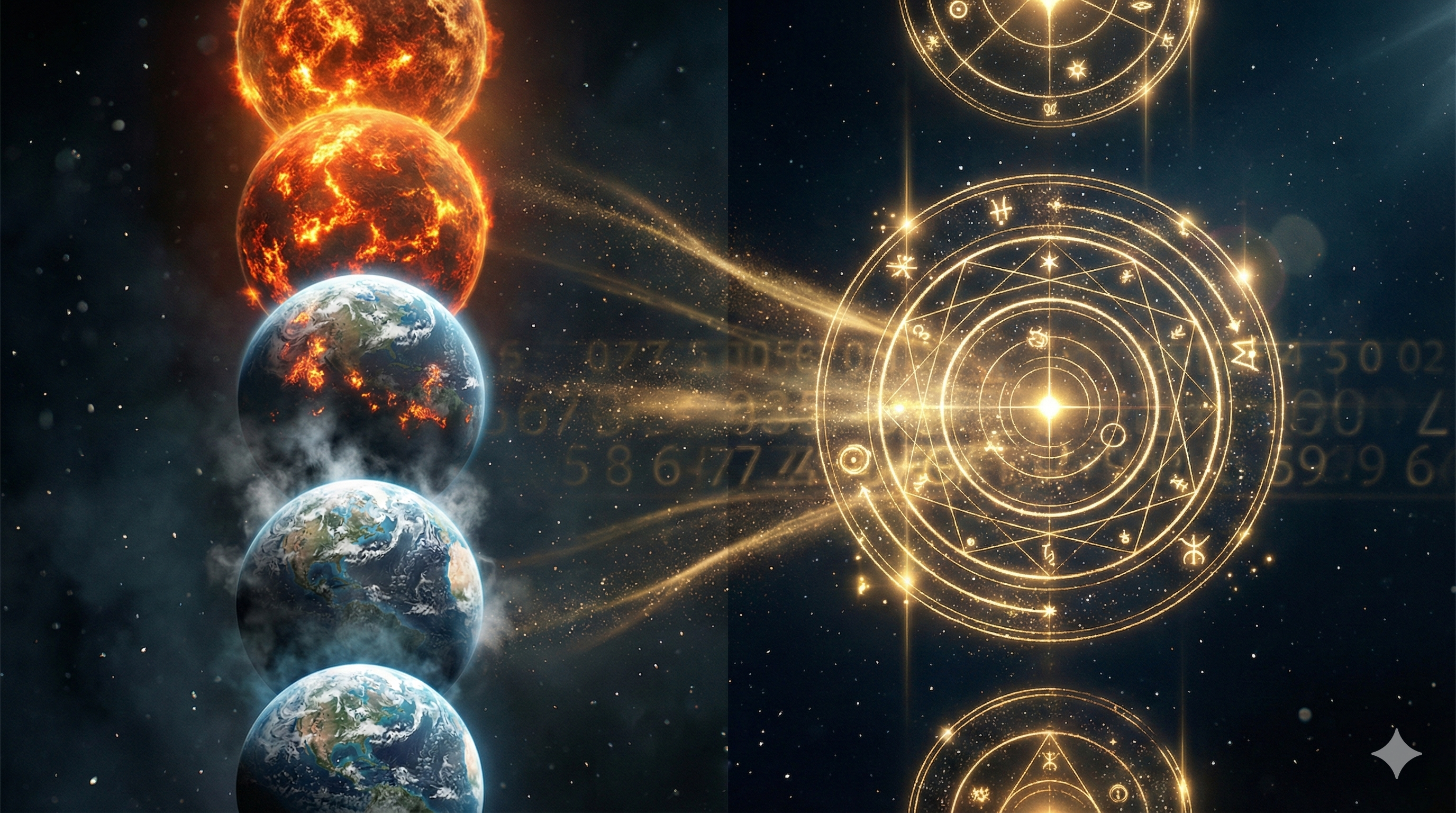
Now comes the part that shocks scientists. Let us talk numbers. One full cycle of four Yugas is called a Maha Yuga.
Duration of one Maha Yuga: 4.32 million years.
Now listen carefully.
1,000 Maha Yugas = ONE DAY OF BRAHMA
That means: One day of Brahma = 4.32 billion years.
Modern science says: Age of Earth ≈ 4.54 billion years.
Is this coincidence… or ancient knowledge?
Part 5: Day and Night of Brahma
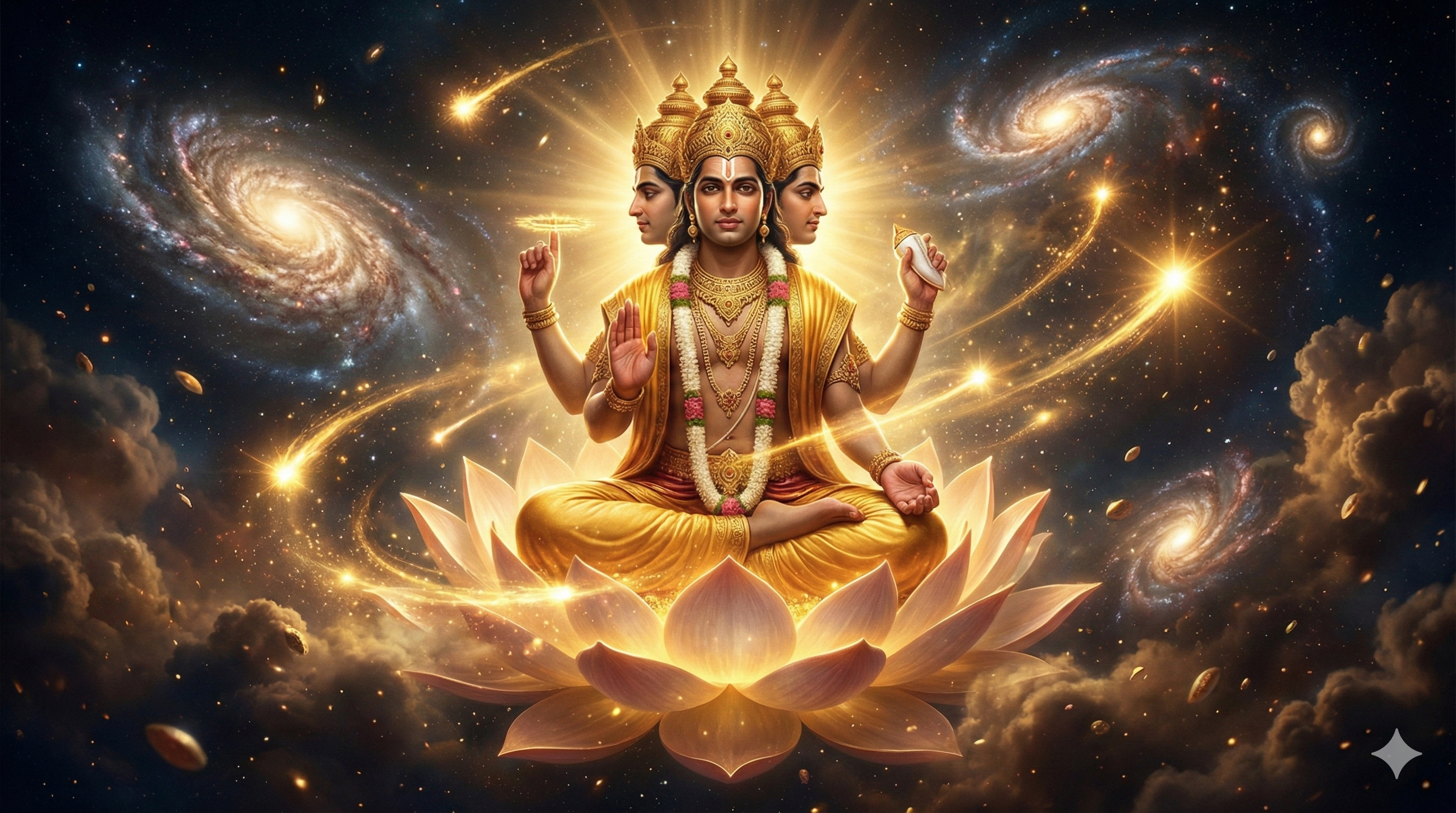
Brahma’s day = Creation and activity. Brahma’s night = Partial destruction (Pralaya).
During night: Universes dissolve, Souls rest in unmanifest form, Vishnu remains. This is called Naimittika Pralaya.
When Brahma wakes up again, creation starts again. Just like: You sleep → wake up → work → sleep again. The universe does the same.
Part 6: The Life of Brahma – Bigger Than Big Bang
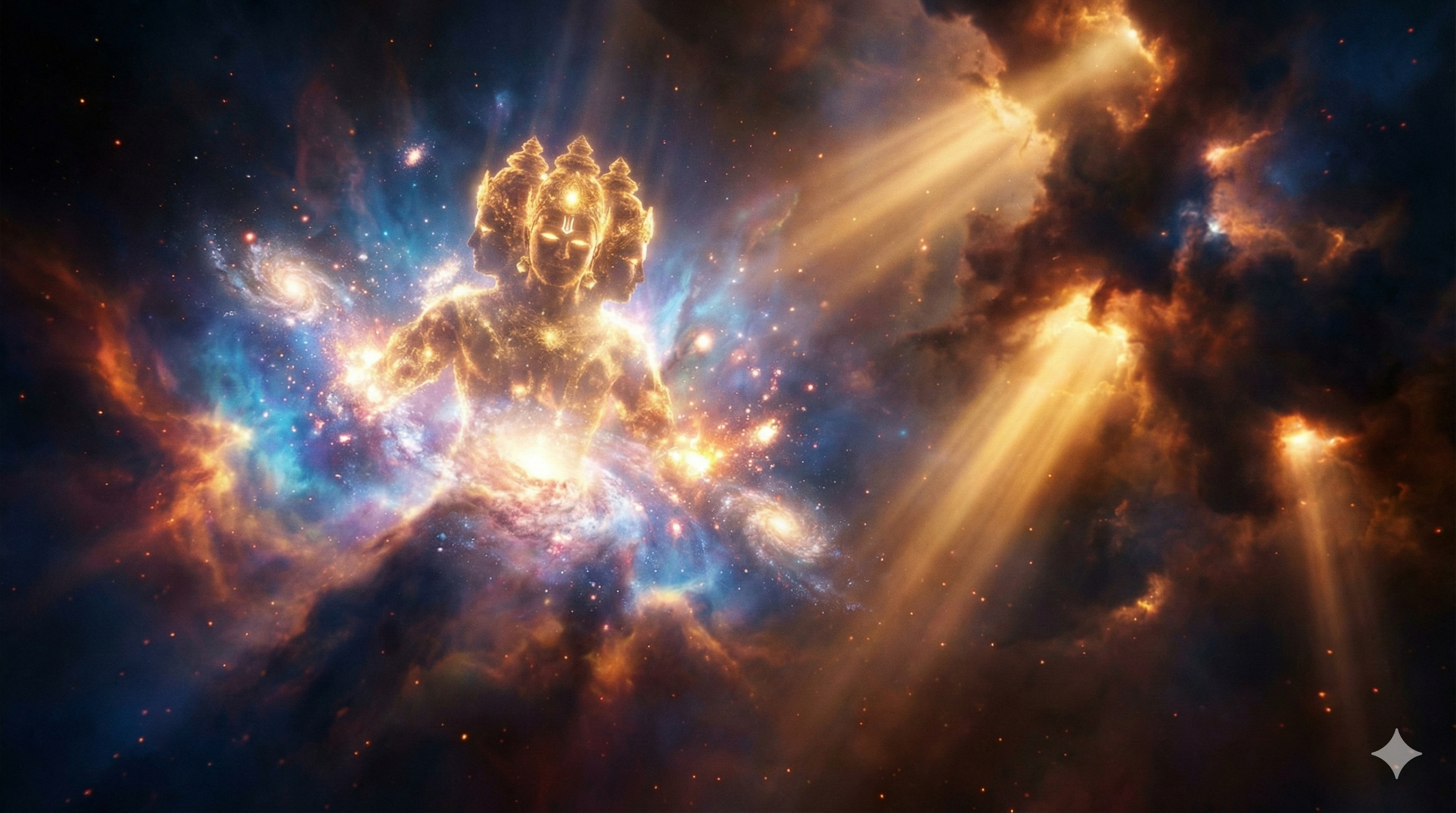
Now prepare yourself. Brahma lives for 100 Brahma years. One Brahma year = 360 days and nights of Brahma.
Total lifespan of Brahma = 311 trillion human years.
After that… Mahā Pralaya happens. Everything dissolves: Space, Time, Matter, Even gods. Only Brahman remains. Then… a new Brahma is born. A new universe begins. Endless cycle.
Part 7: Science Is Slowly Catching Up
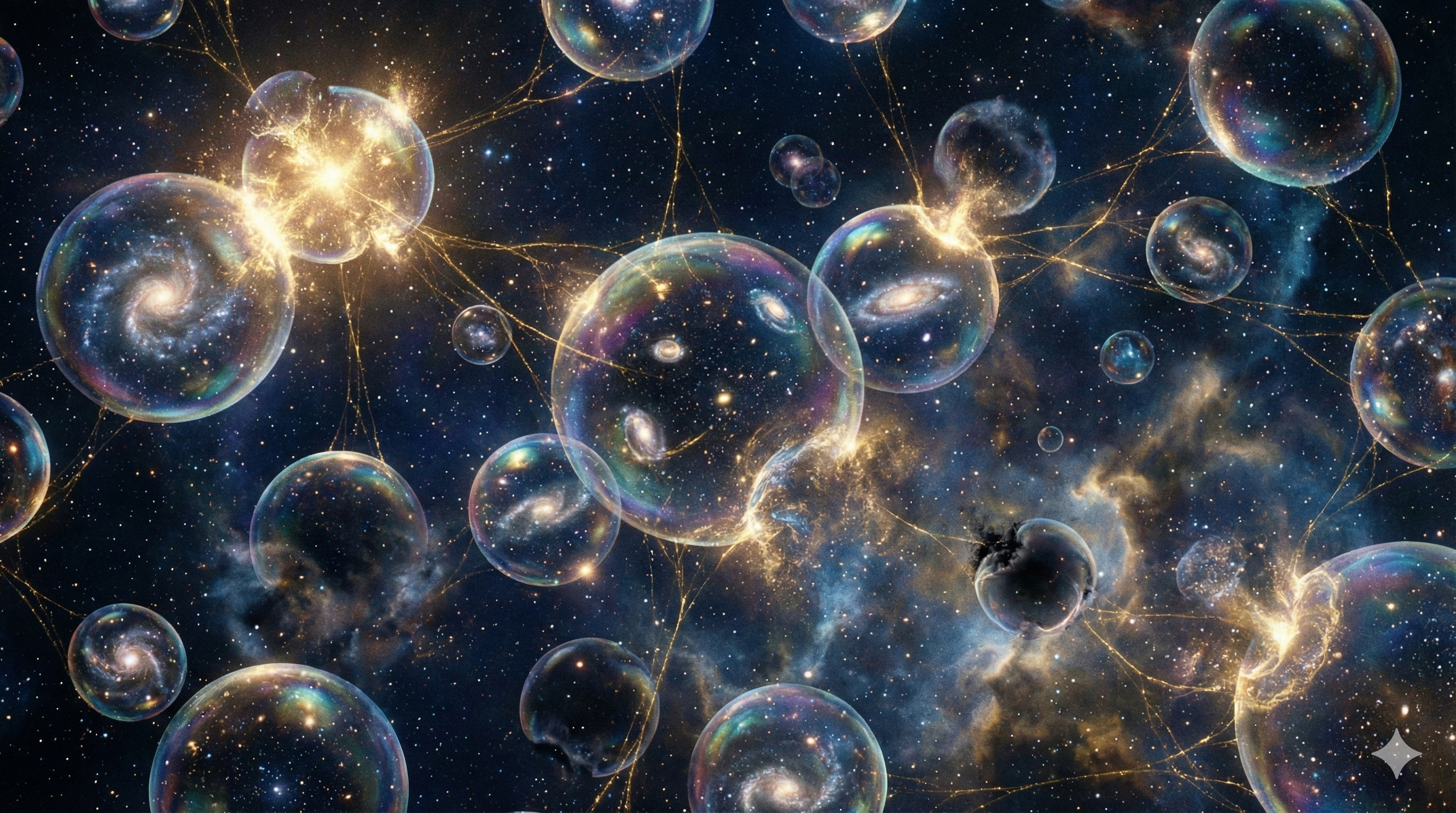
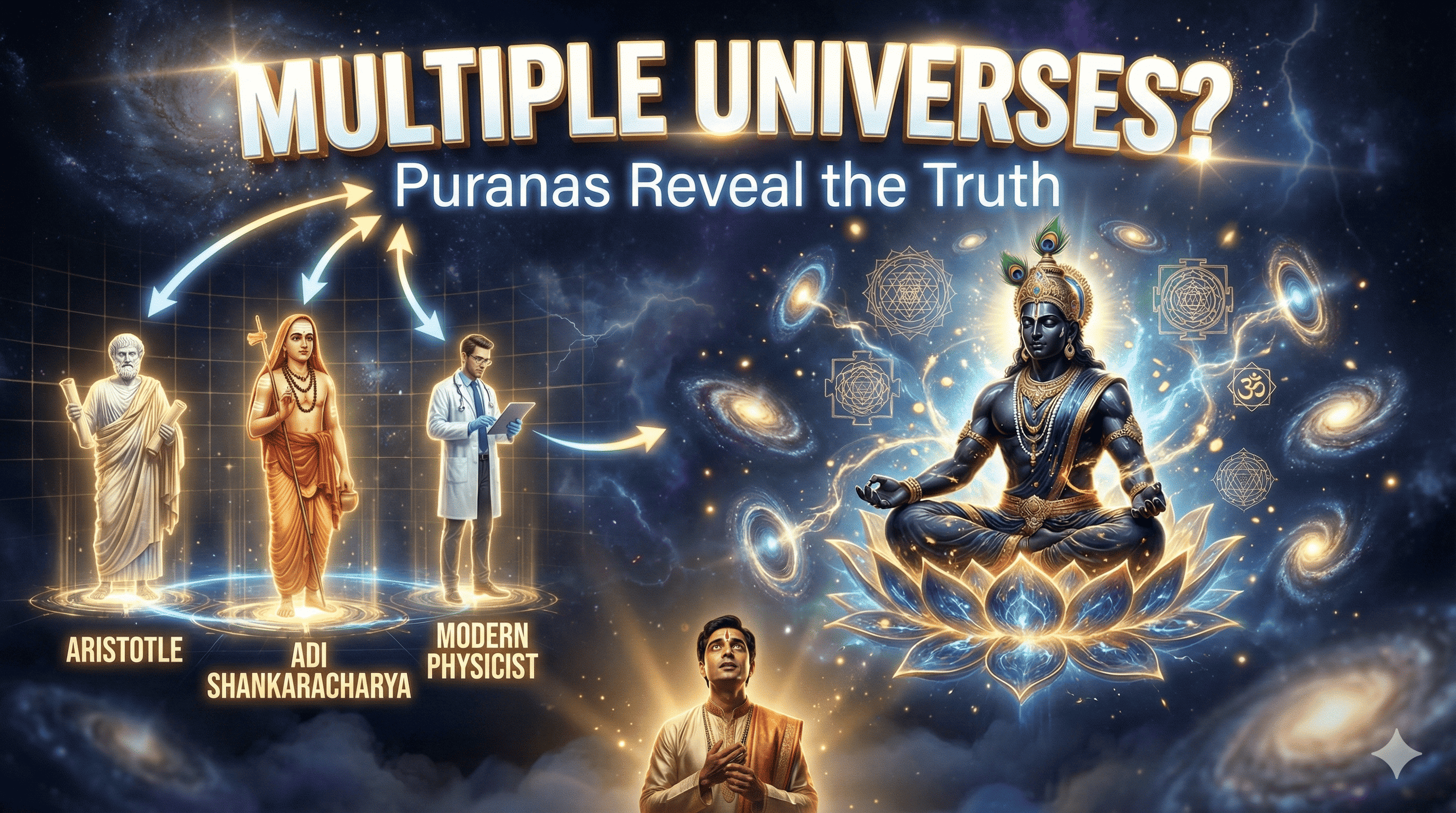
Modern science now talks about: Oscillating universe, Big Crunch, Cyclic cosmology, Multiverse theory.
Scientists like Roger Penrose and Paul Steinhardt say: Universe may expand, collapse, and reborn again.
Hindu cosmology said this thousands of years ago. Without telescopes. Without satellites. Only through deep meditation and observation.
Part 8: Why This Knowledge Matters To You
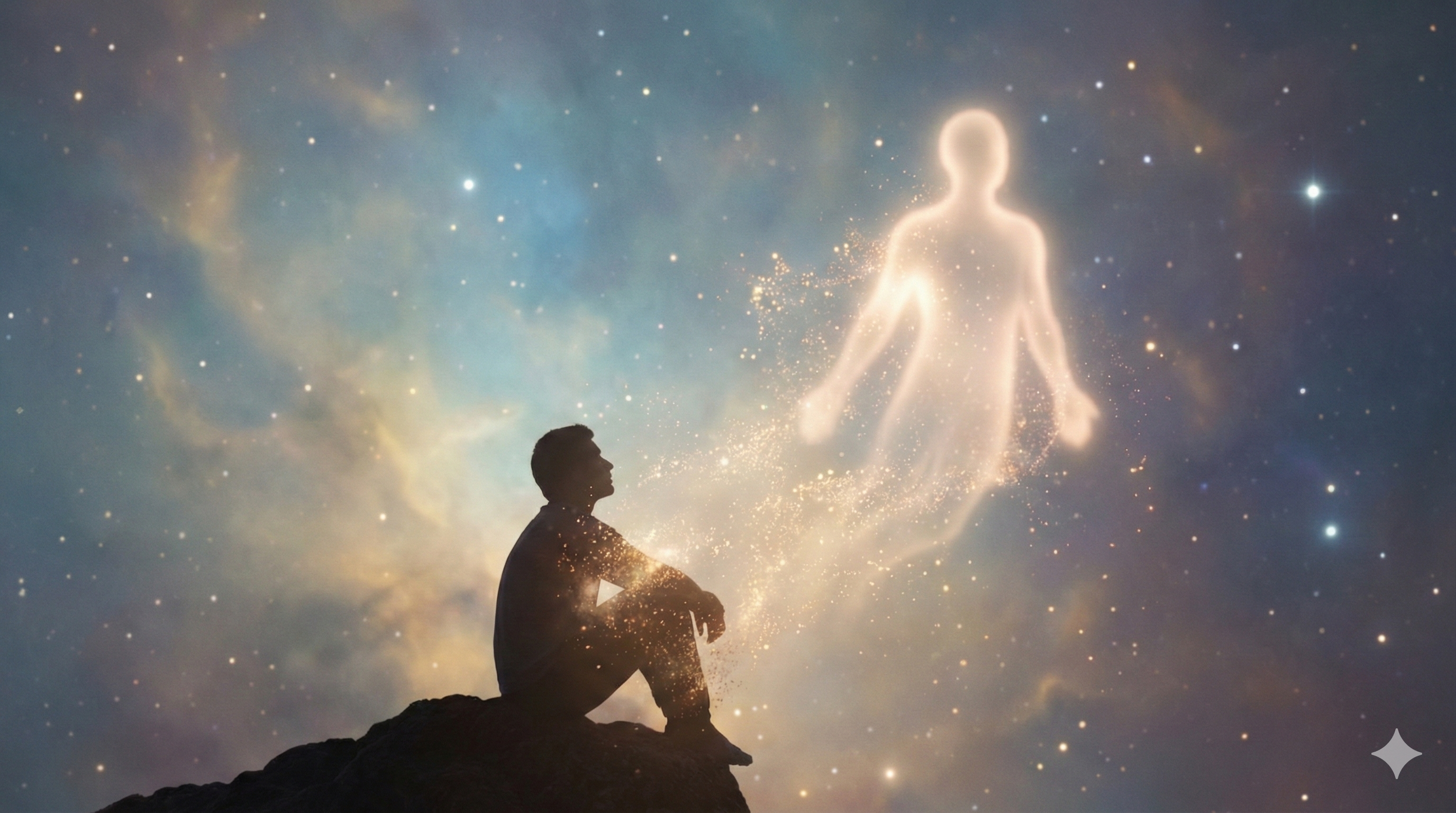
Now you may ask: “Why should I care?”
Because Hindu cosmology teaches one powerful truth:
- You are not small.
- Your soul is eternal.
- Death is not the end.
Just like universes are reborn, you are reborn too. This gives: Fearlessness, Responsibility, Detachment, Purpose. Life is not meaningless. You are part of a cosmic rhythm.
Part 9: The Emotional Truth
Imagine this. Billions of universes rise and fall. Gods come and go. Stars explode. Time resets. Yet… your soul continues its journey.
That is how valuable you are. Bhagavad Gita says: “Na jāyate mriyate vā kadāchit” (The soul is never born, never dies). You are not here by accident.
Part 10: The Final Secret — Liberation Beyond The Universe
Hindu cosmology does not end with creation or destruction. It ends with liberation. Beyond all universes, beyond Brahma’s lifespan, there exists Moksha — freedom from the cycle itself.
Bhagavata Purana and Upanishads say: Those who realize the true nature of the Self are no longer bound by Yugas, Pralayas, or rebirth. While universes rise and fall, the liberated soul rests in eternal awareness.
This is the final goal — not heaven, not power, not immortality… But freedom from time itself.
Now the question is: Do we want to repeat the cycle… or rise beyond it?
Powerful Question
If the universe itself follows Dharma, rhythm, and balance… Then ask yourself:
- Are we living in harmony with this cosmic order?
- Or are we forgetting who we truly are?
If ancient sages understood the universe without machines… what else have we forgotten?
Comment below what shocked you the most. Share this with someone who thinks Hinduism is only mythology. And remember… This universe may end one day… but your journey does not.
Hari Om Tat Sat. Har Har Mahadev.