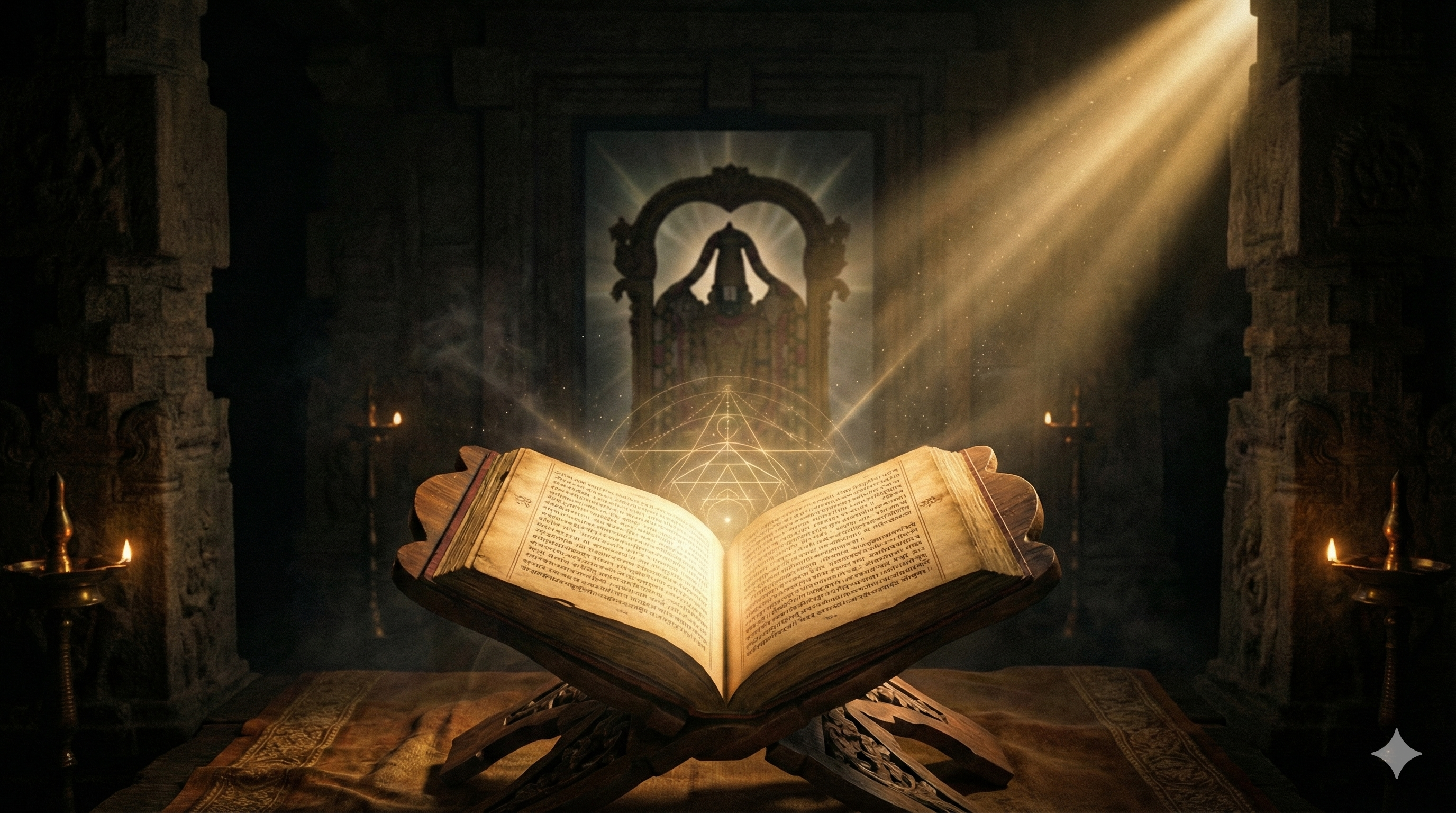
Voice-over (slow, deep): “What if I told you… there is a temple where the deity is said to be still living on Earth, where time, rituals, and even cosmic duties are still continuing… Not a story. Not imagination. This is written in ancient Puranas.”
1. Why Lord Vishnu Is Still Said to Live on Tirumala (Varaha Purana)

According to the Varaha Purana, Lord Vishnu declared that Kali Yuga would be extremely difficult for humans, and He chose Tirumala Hill as His permanent earthly residence to guide and protect devotees.
“In Kali Yuga, I shall reside on Venkatadri for the welfare of all beings.” — Varaha Purana
This is not symbolic language. The Purana clearly states that Lord Venkateswara did not return to Vaikuntha and continues His divine presence on Tirumala. This belief explains:
- Why daily rituals are done as if serving a living presence
- Why food offerings are treated as real meals
- Why temple rules are followed with extreme discipline
The mystery is this: 👉 No other Vishnu temple claims continuous physical presence in Kali Yuga.
2. The Deity Faces South – Against Normal Temple Tradition
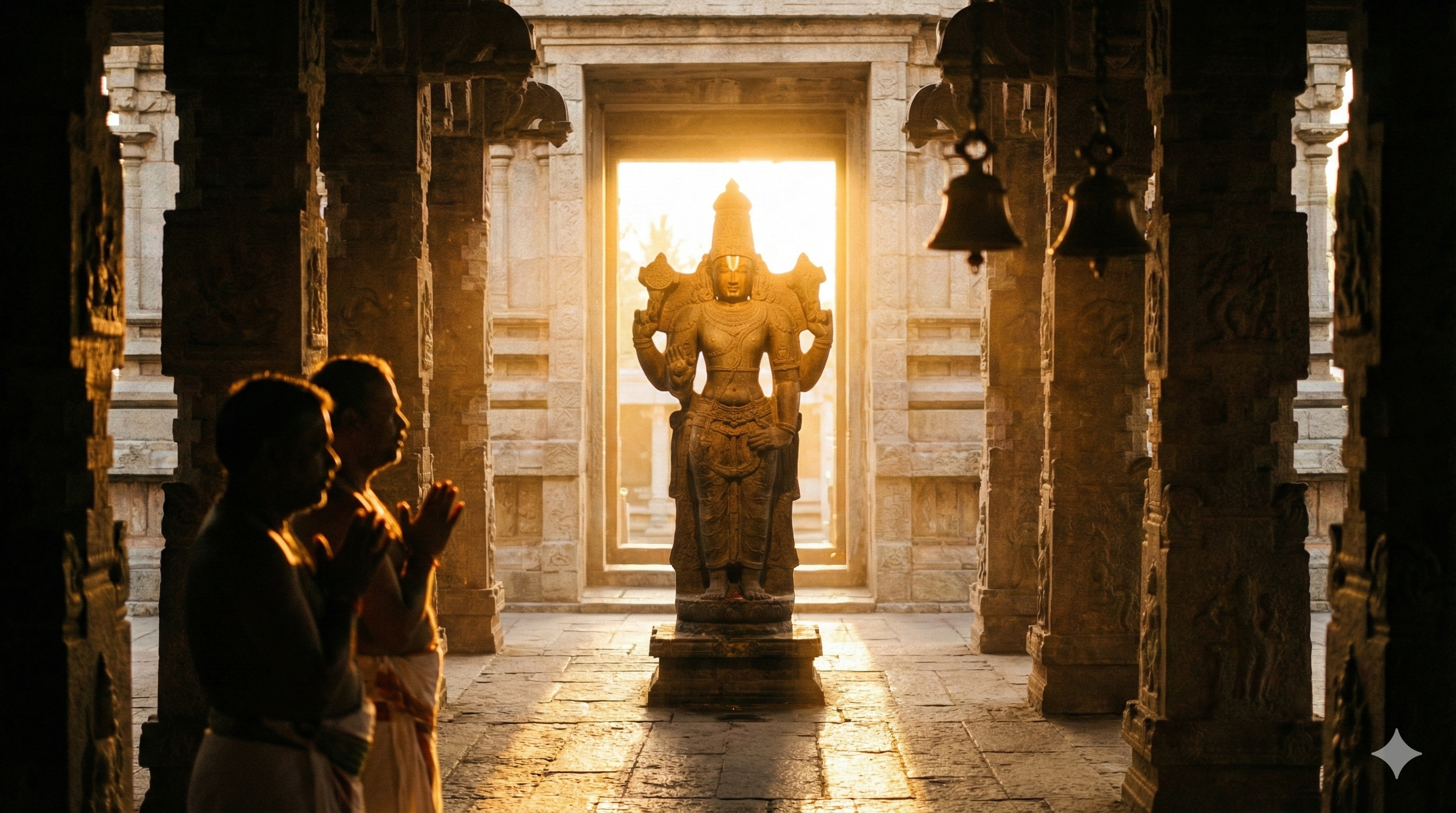
In most Vishnu temples across India, the deity traditionally faces east, welcoming the rising sun, which symbolizes life and knowledge. But at Tirumala, Lord Venkateswara’s divine presence is oriented towards the east-south direction, a rare and deliberate deviation from standard temple rules.
According to the Brahmanda Purana, this orientation was chosen with purpose, not accident. In Vedic tradition, the south is associated with Yama, the cosmic force governing time, death, and life’s final journey. By facing this direction, Lord Venkateswara is believed to stand as a protective guardian, shielding devotees from untimely suffering and fear of death. Ancient temple architects followed Agama Shastra with absolute discipline, so breaking this rule suggests one powerful truth — the orientation was divinely instructed, not architecturally mistaken.
3. The Divine Debt of Lord Venkateswara (Bhavishyottara Purana)
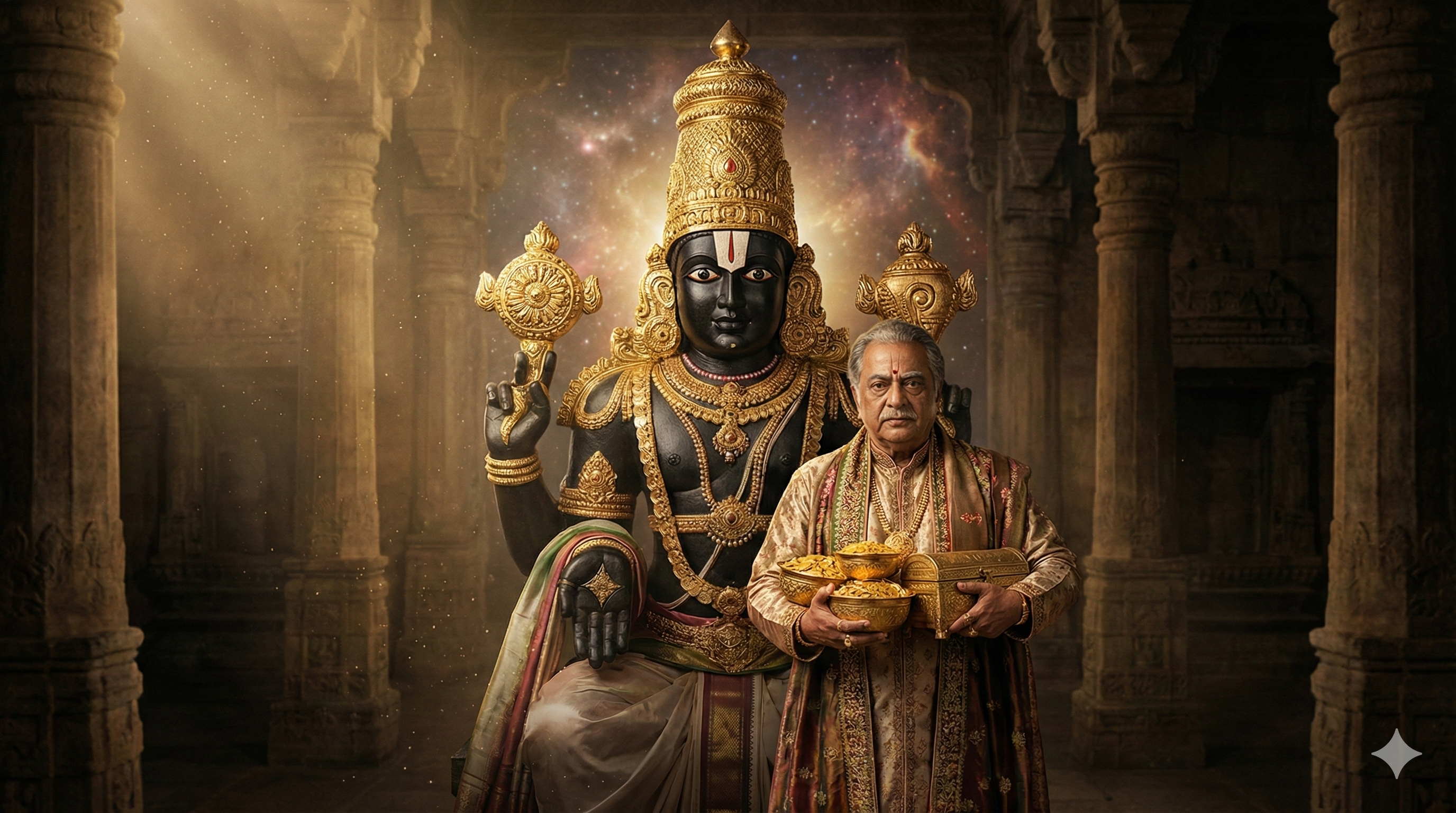
One of the most discussed yet deeply misunderstood aspects of Tirumala comes from the Bhavishyottara Purana, which records that Lord Venkateswara accepted wealth from Kubera, the cosmic guardian of riches, to sustain His presence on Earth during Kali Yuga.
This act was not out of need, but to demonstrate a universal principle — that even the divine follows cosmic law and balance. Because of this, devotees at Tirupati offer money along with devotion, believing their donation helps repay this sacred debt. Temple tradition holds that the debt is still ongoing, which explains the continuous flow of offerings. This is why Tirupati became the world’s richest temple — not due to greed, but due to faith in dharma, accountability, and divine order.
4. Why No One Sees the Deity Fully (Varaha & Garuda Purana)
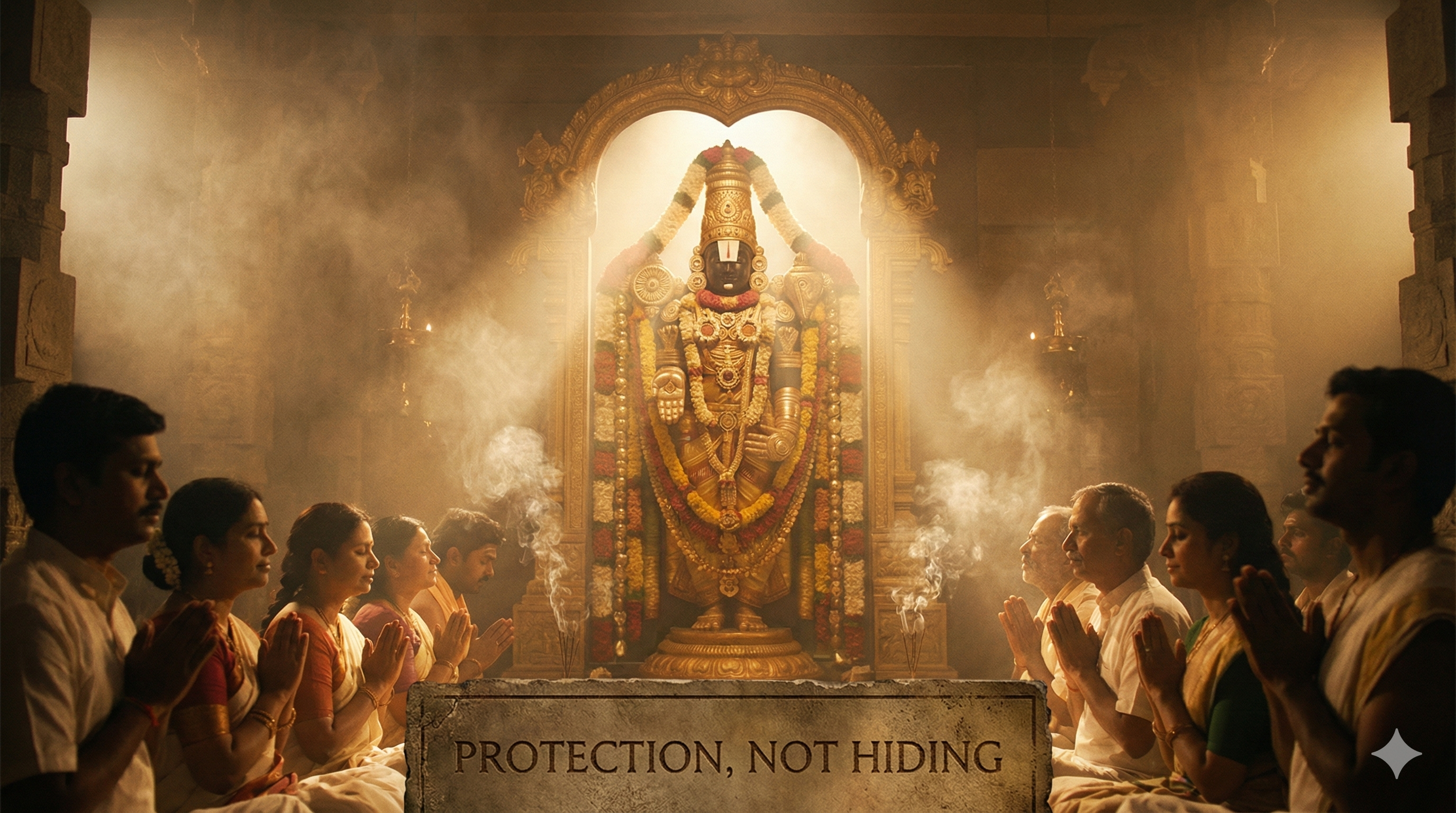
According to the Garuda Purana, the complete divine form of Lord Vishnu is too intense for human perception in Kali Yuga. Human senses, weakened by time and distraction, are not capable of withstanding the full radiance of the Supreme.
This is why, at Tirumala, the deity is always richly adorned with ornaments, silk, and sacred marks. Devotees are allowed only brief and partial darshan, and even priests follow strict time limits while performing rituals. The Purana clearly explains this as an act of compassion, not concealment. By covering His full form, the Lord protects devotees from spiritual overload. This raises a profound mystery — are these decorations meant only for beauty, or are they a shield allowing humans to safely approach the divine?
5. The Eternal Ritual System Started by Ramanujacharya
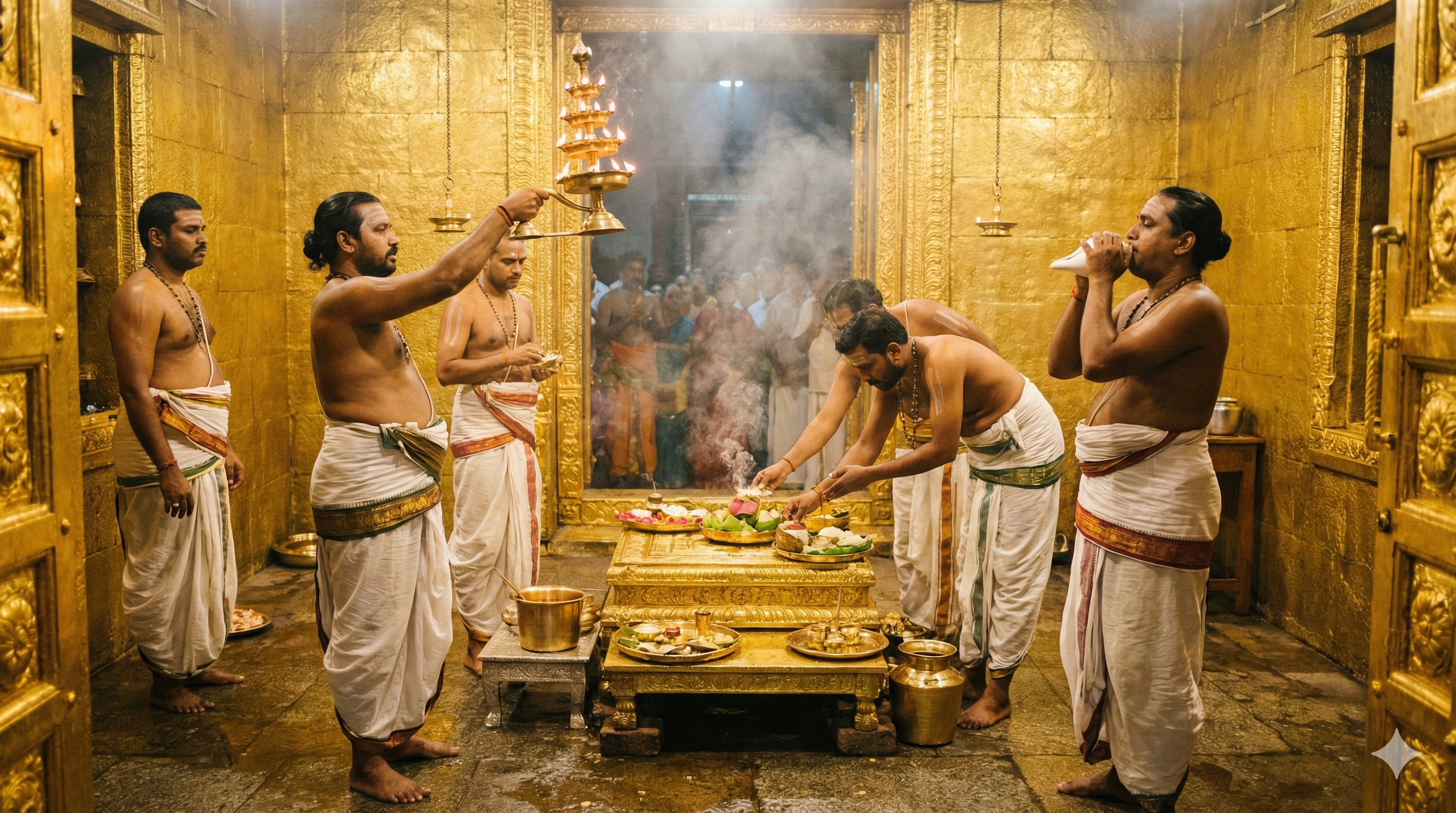
Historical records clearly show that Ramanujacharya in the 11th century reorganized the Tirumala temple’s daily worship by strictly following the Vaikhanasa Agama, a ritual system rooted in ancient Vedic tradition. What makes this extraordinary is that these rituals have remained unchanged for more than 900 years.
Every offering, chant, and procession follows a precise cosmic timetable, aligned with lunar days, star positions, and sacred hours. Even powerful kings and emperors who ruled the region were not permitted to alter a single step of these practices. Unlike most temples that adapted rituals over time, Tirumala preserved absolute continuity. The mystery lies here — how did ancient scholars design a system so perfect, balanced, and timeless that it still functions flawlessly today?
6. Why Tirumala Is Called the Most Powerful Kshetra in Kali Yuga
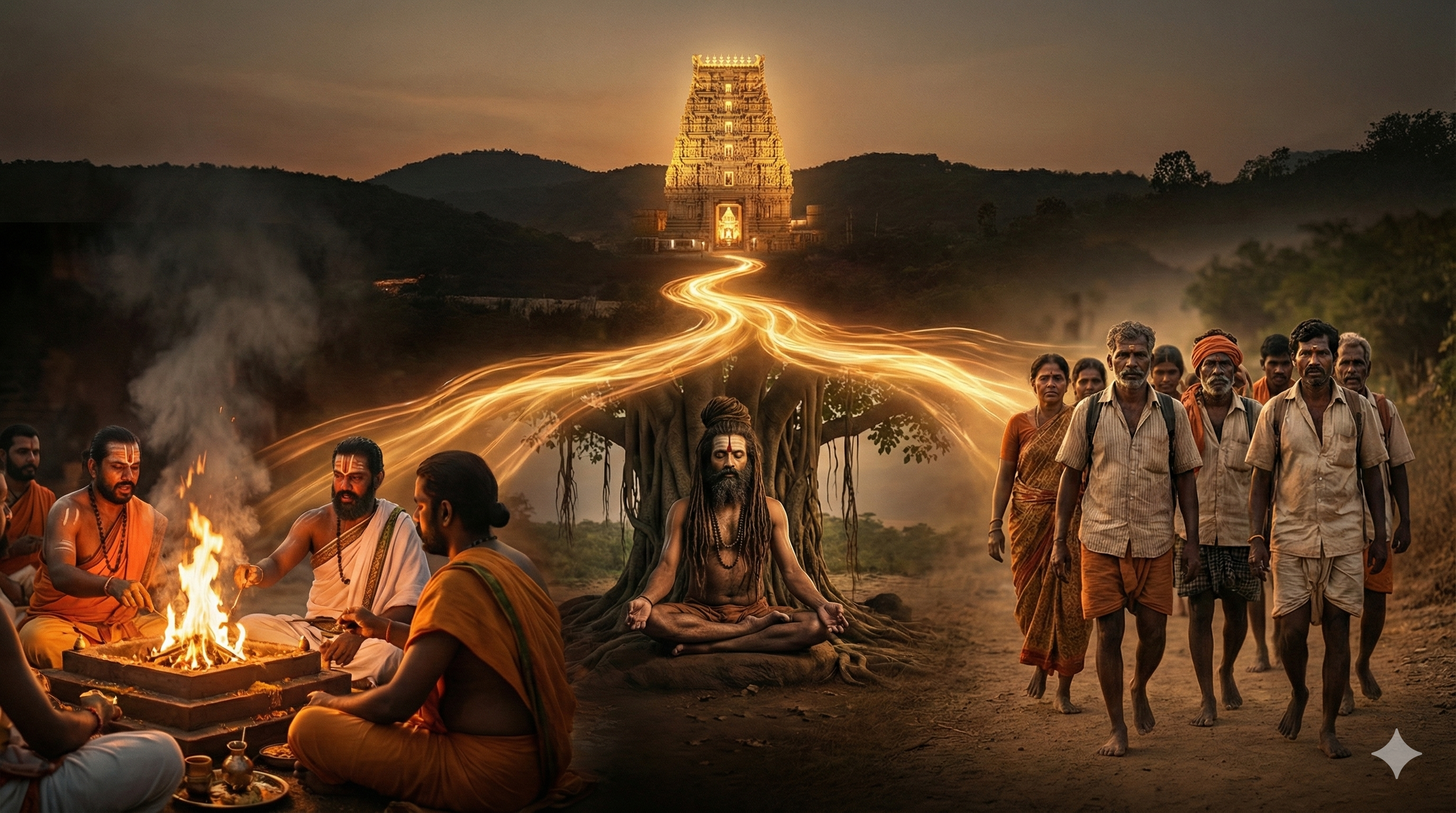
In the Varaha Purana, Tirumala is described with a rare and powerful declaration — it is said to be equal to all sacred places combined. This statement is not poetic praise but a direct spiritual assertion.
The Purana explains that the spiritual results normally achieved through yajnas (sacrificial rituals), tapas (severe penance), and long pilgrimages can be attained simply through darshan at Tirumala. The reason given is Kali Yuga itself — an age where intense spiritual practices are difficult for common people. Tirumala is presented as a place of divine compassion, where effort is reduced but grace is increased. This raises a profound mystery — why was one single hill chosen to carry the spiritual power of countless sacred places combined?
7. The Seven Hills Represent the Seven Cosmic Principles
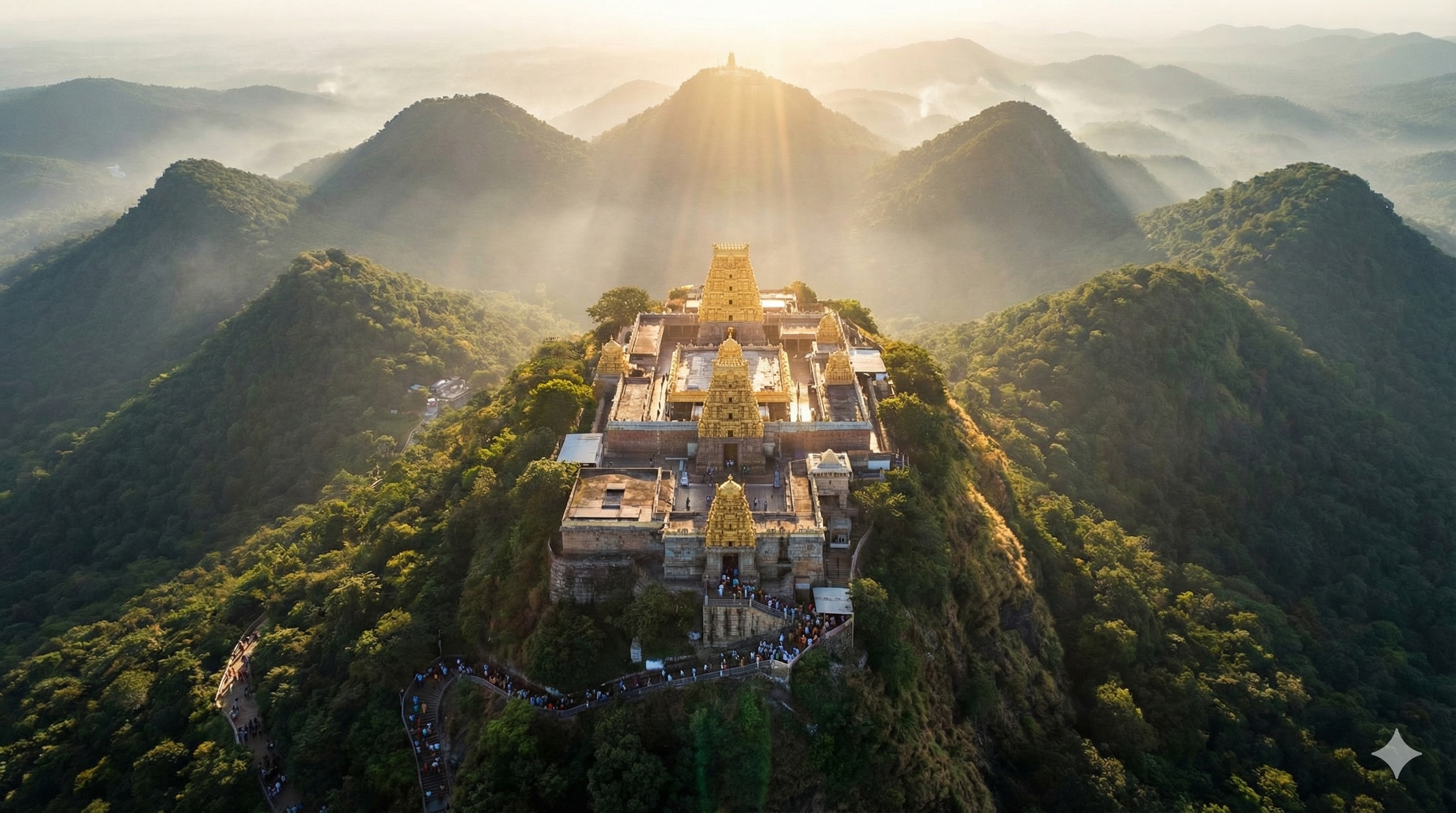
Ancient Puranic texts describe the seven hills of Tirumala not as ordinary landforms, but as representations of seven divine serpent energies — Sesha, Vasuki, Takshaka, Sankhapala, Padma, Mahapadma, and Karkotaka. In Puranic cosmology, these serpents are not creatures but cosmic principles that support balance, stability, and life itself.
The placement of the temple atop these seven hills suggests intentional design, not coincidence. This understanding transforms Tirumala from simple geography into a spiritually aligned landscape, carefully chosen to sustain divine presence. The mystery lies in this question — did ancient sages identify Tirumala as a natural energy centre, or was the land itself shaped to serve a cosmic purpose beyond human understanding?
8. Why the Temple Never Mentions a Destruction Story
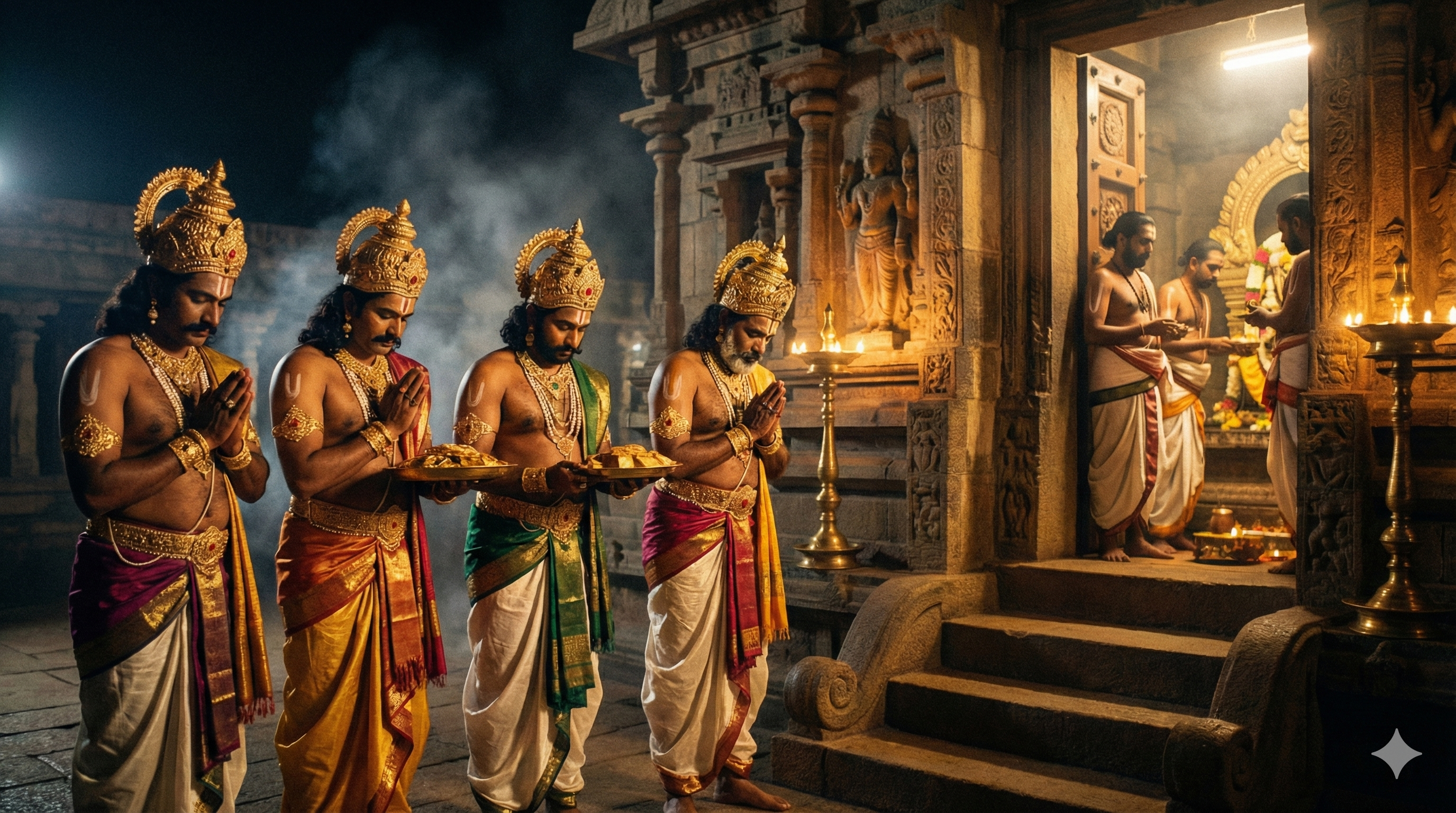
Unlike many ancient temples that record invasions, looting, or interruptions, Tirumala Tirupati Temple has a remarkable history of continuous worship. Historical inscriptions and records show that rituals and festivals were maintained without interruption, even during dynastic changes or periods of political instability.
Kings from the Pallava, Chola, Pandya, and Vijayanagara dynasties all contributed to temple expansions and endowments, yet none recorded any disruption in daily worship. The temple archives preserve detailed accounts of offerings, festivals, and pilgrim visits spanning centuries. The mystery here is profound — despite wars, natural calamities, and regional conflicts, Tirumala remained untouched and fully operational. How did a sacred site survive so consistently, maintaining both spiritual and administrative continuity for hundreds of years?
9. The Living Calendar – Cosmic Time in Practice
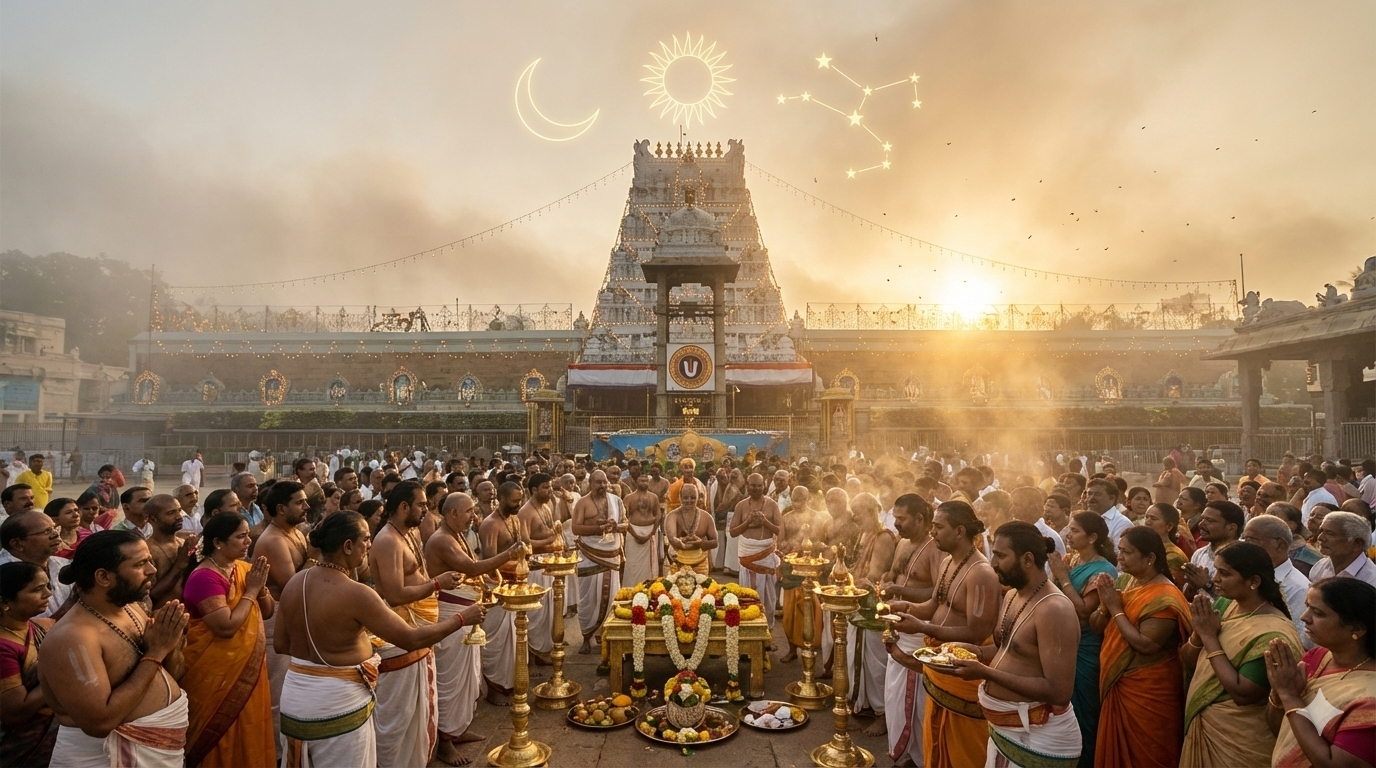
The Tirumala Tirupati Temple follows a precisely calculated calendar that governs all rituals, festivals, and offerings. This system is based on the Panchaangam, which integrates solar and lunar cycles, Nakshatra (star) positions, and other astronomical principles described in the Puranas.
Unlike ordinary calendars, these calculations ensure that every festival occurs at the exact cosmic moment, maintaining harmony between earthly worship and celestial order. As a result, festival dates never shift randomly, and each ritual is timed for maximum spiritual and cosmic efficacy. The mystery is striking — centuries before modern astronomy, ancient scholars could synchronize human devotion with cosmic movements so precisely. Did they possess knowledge of celestial patterns far beyond what we fully understand even today?
10. Why Tirupati Is Said to Grant Both Spiritual and Material Life
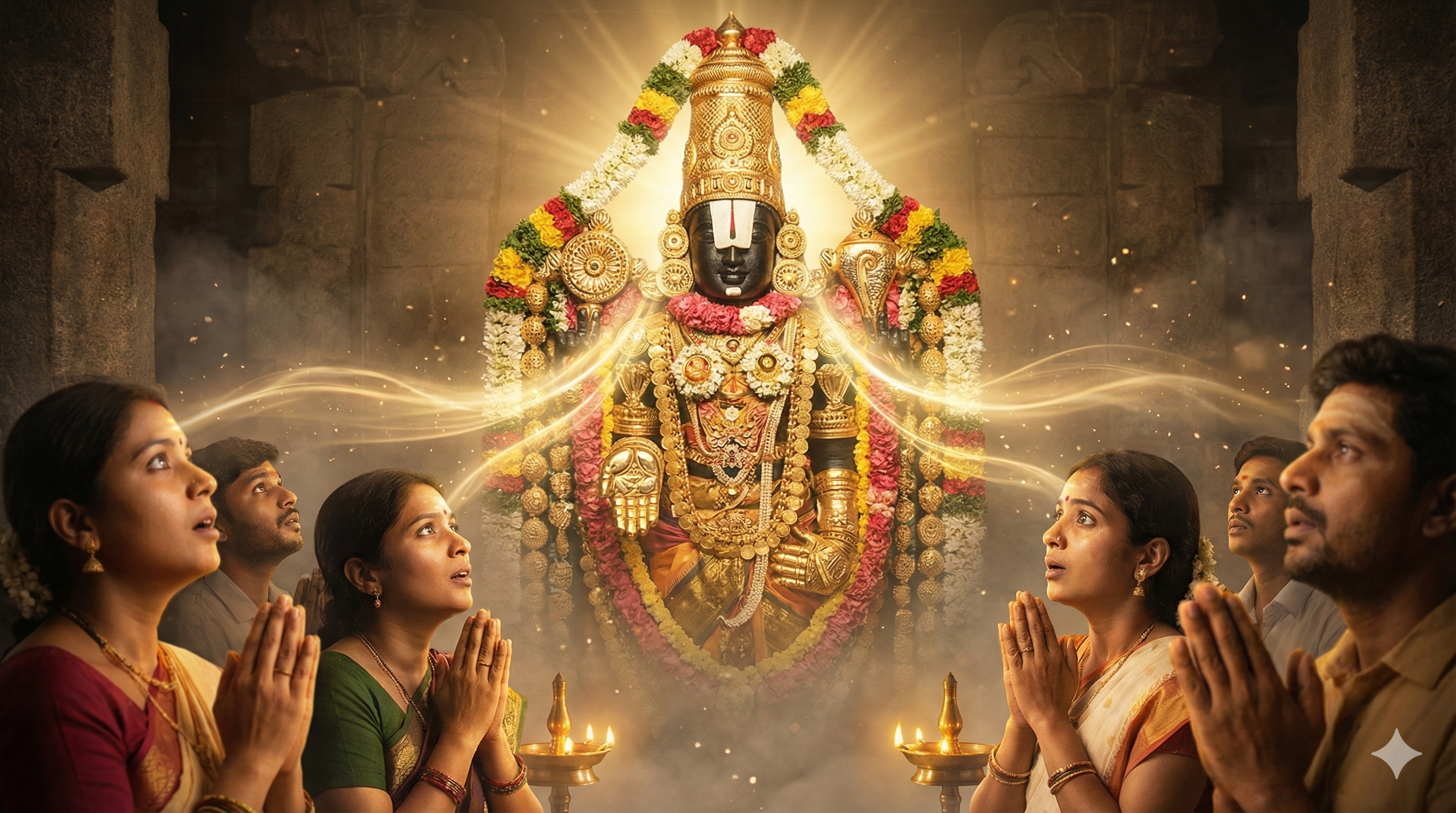
Most temples in India focus on either moksha (spiritual liberation) or fulfilling worldly desires. Tirumala Tirupati Temple is unique. According to the Varaha Purana, the deity assures devotees:
“Those who seek wealth, health, or liberation shall all be fulfilled.”
This means Tirupati offers a dual path — spiritual elevation alongside material prosperity. Devotees report both tangible blessings, such as health and success, and profound spiritual experiences after pilgrimage and darshan. This rare combination is reflected in the temple’s rituals, which simultaneously cater to worldly offerings and meditative practices. The mystery is compelling — why does only Tirumala combine both cosmic and human benefits, making it a place where devotion can satisfy the soul and life’s necessities in perfect harmony?
Conclusion
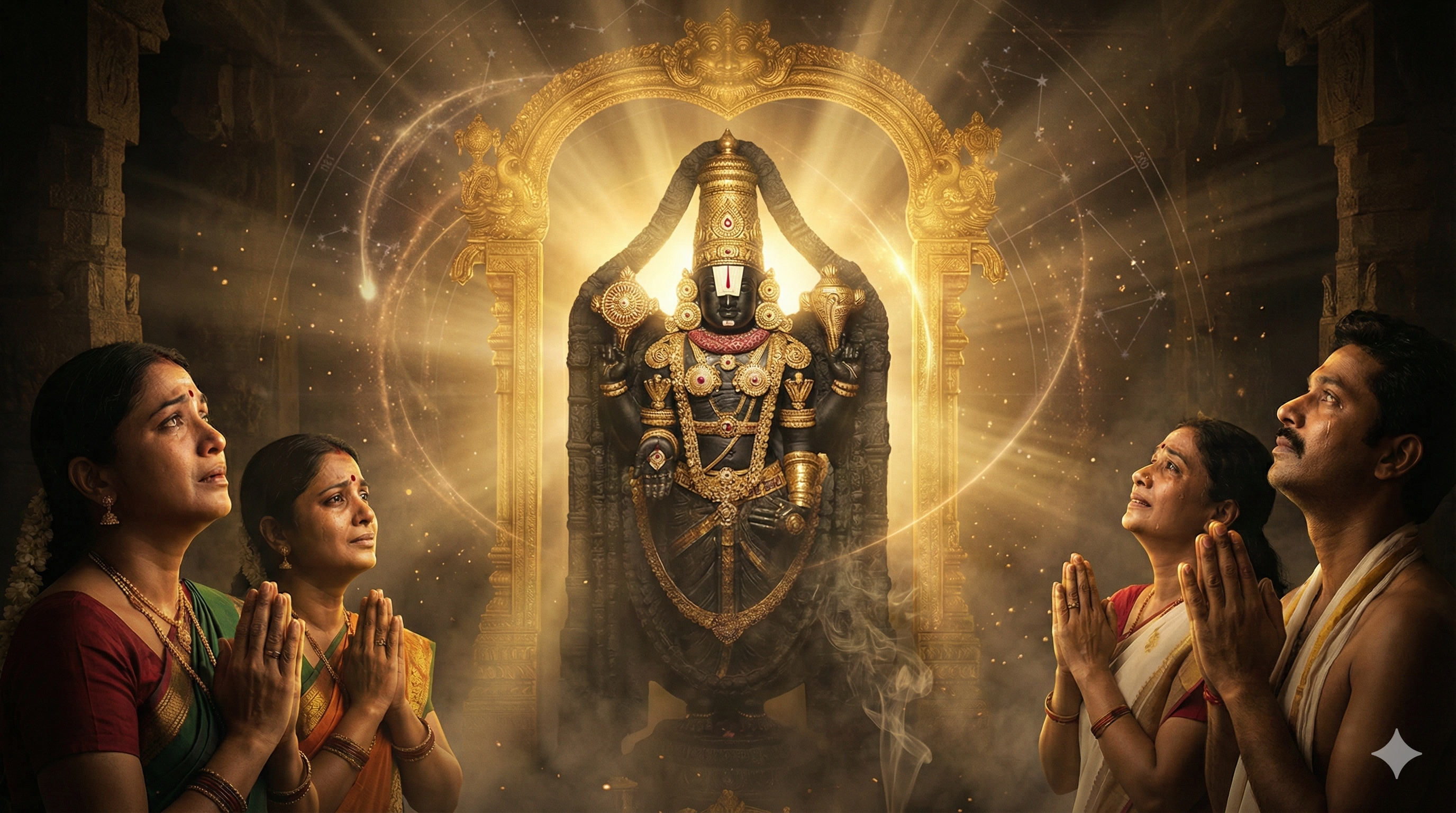
Tirupati is not just a temple. It is a living system described in ancient Puranas, protected by history, and experienced by millions every year.
Whether you believe or question — one truth remains:
👉 No other temple combines scripture, continuity, discipline, and devotion like Tirumala.
So now tell me in the comments: Do you think Tirupati is just faith… or a divine system still functioning in Kali Yuga?
Jai Tirupati Balaji 🙏
Tirupati Balaji FAQs
Why does Lord Venkateswara face South?
Why does Lord Venkateswara face South?
Unlike most deities who face East, Lord Venkateswara faces South (towards the direction of Yama) to stand as a protective guardian, shielding devotees from untimely suffering and the fear of death, as per the Brahmanda Purana.
Why is Tirupati the richest temple?
Why is Tirupati the richest temple?
It is believed that Lord Venkateswara accepted a debt from Kubera to sustain His presence on Earth in Kali Yuga. Devotees offer money to help repay this divine debt, maintaining the cosmic balance of dharma and accountability.
Is Lord Vishnu still living on Tirumala?
Is Lord Vishnu still living on Tirumala?
According to the Varaha Purana, Lord Vishnu declared that He would reside on Venkatadri (Tirumala) throughout Kali Yuga to guide and protect devotees, making it a place of His continuous divine presence.
Why are the rituals at Tirupati never changed?
Why are the rituals at Tirupati never changed?
The rituals follow the Vaikhanasa Agama established by Ramanujacharya in the 11th century. They align with cosmic timetables and have remained unchanged for over 900 years to maintain their spiritual efficacy.