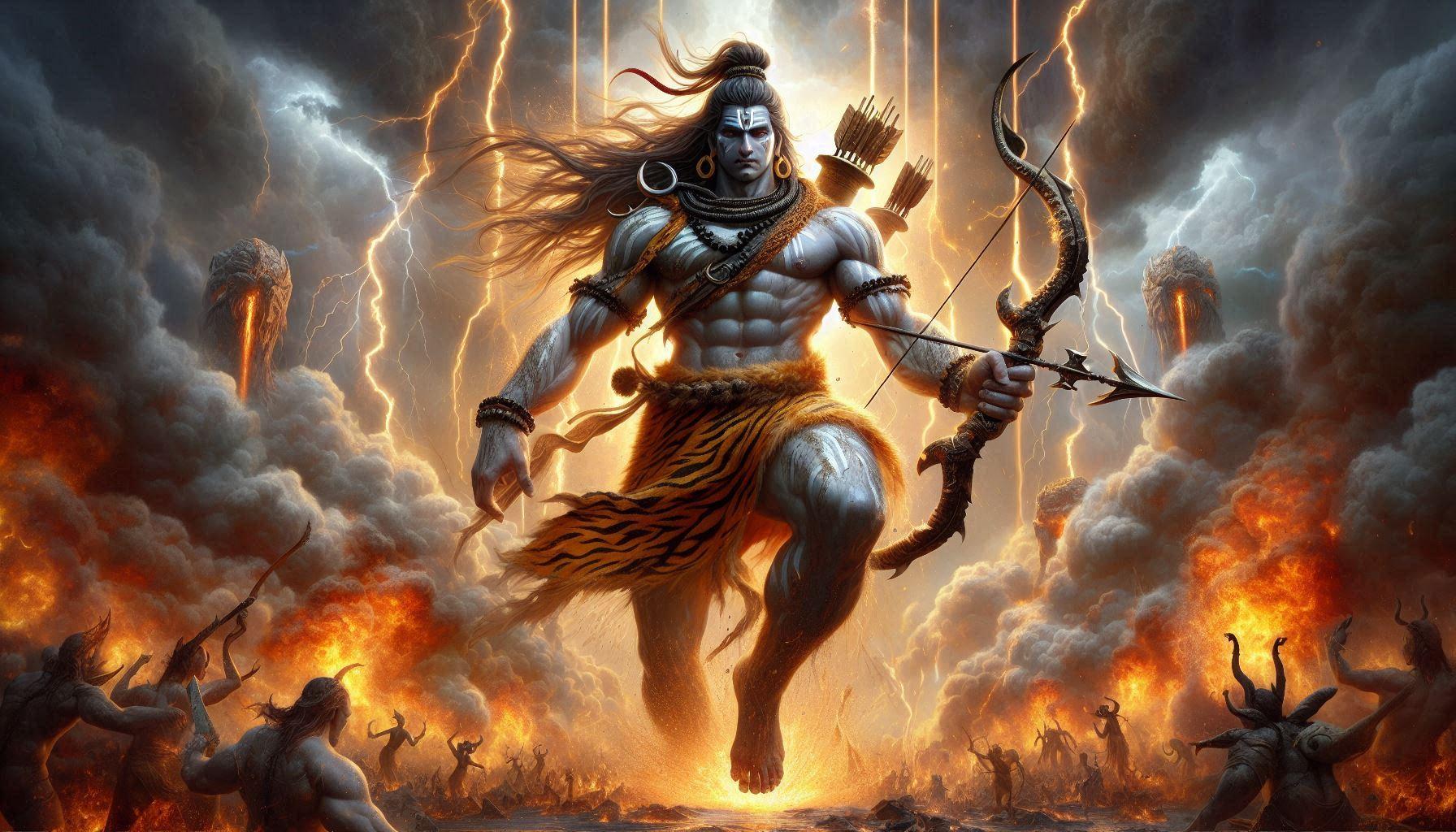
What if I told you… there are weapons in Indian past history so powerful, they could shape the fate of entire wars — weapons that never missed, could shatter cities, and even bend destiny itself? These were no ordinary tools of battle; they were gifts from gods, forged in realms beyond human reach.
From Gandiva, the bow that made Arjuna unstoppable, to Vijaya Dhanush, which guaranteed victory to its wielder… from Pinaka, the cosmic bow of Shiva that destroyed the demon cities in a single shot, to Sharanga, Vishnu’s eternal bow of protection, and Kodanda, Rama’s bow of righteousness — each carries a story where legend and history blur.
But here’s the twist — these divine weapons didn’t just vanish into past history. Ancient texts suggest they were returned to the gods… or hidden, waiting for the next great battle of the ages.
What if… they still exist?
Weapon Number 1, Gandiva Bow.
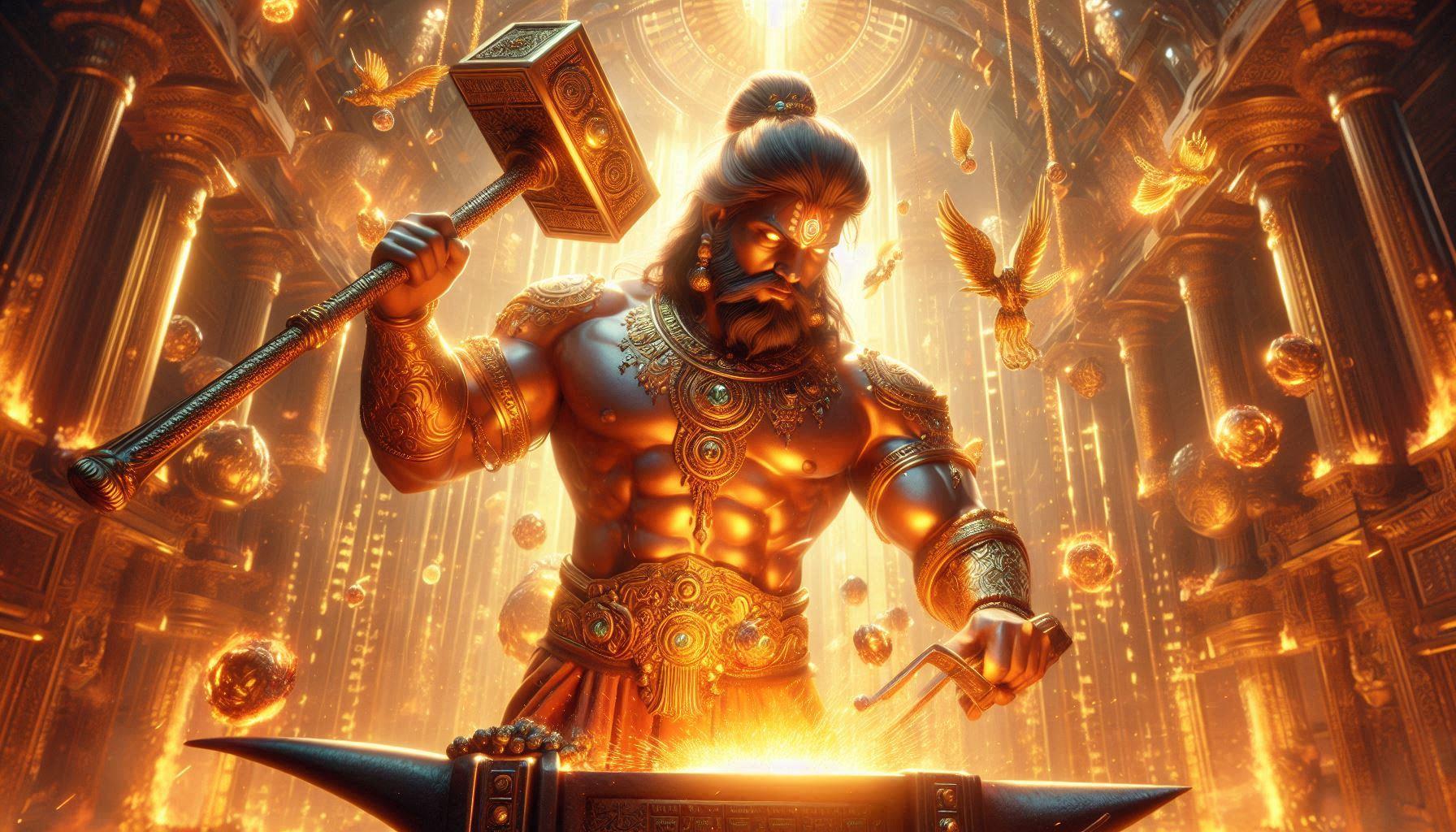
Imagine a bow so mighty that even the strongest warriors couldn’t string it… a weapon forged not for mortals, but for the hands of destiny itself. This was the Gandiva, the legendary bow of Arjuna — and one of the deadliest weapons in the Mahabharata.
Its story begins with Vishwakarma, the celestial architect, who forged Gandiva for the gods themselves. Built from sacred materials of heaven, it was unbreakable, unyielding, and infused with divine energy. For centuries, the bow passed between gods and kings, until Varuna, the Lord of the Seas, gifted it to Arjuna through Agni, the Fire God, as part of a divine mission — to burn down the Khandava forest.
In Arjuna’s hands, Gandiva became unstoppable. Its string, made of celestial sinew, could release countless arrows in a single draw. Legends say that each shot emitted a blinding flash, striking fear into enemies and shaking the earth. During the Kurukshetra War, Gandiva was Arjuna’s greatest ally, raining arrows like a storm, shaping the fate of the battle.
But here’s the mystery — after the war, Gandiva vanished from human history. Some say Arjuna returned it to Varuna; others believe it still exists, hidden away, waiting for the next worthy warrior.
Weapon Number 2, Vijaya Dhanush.
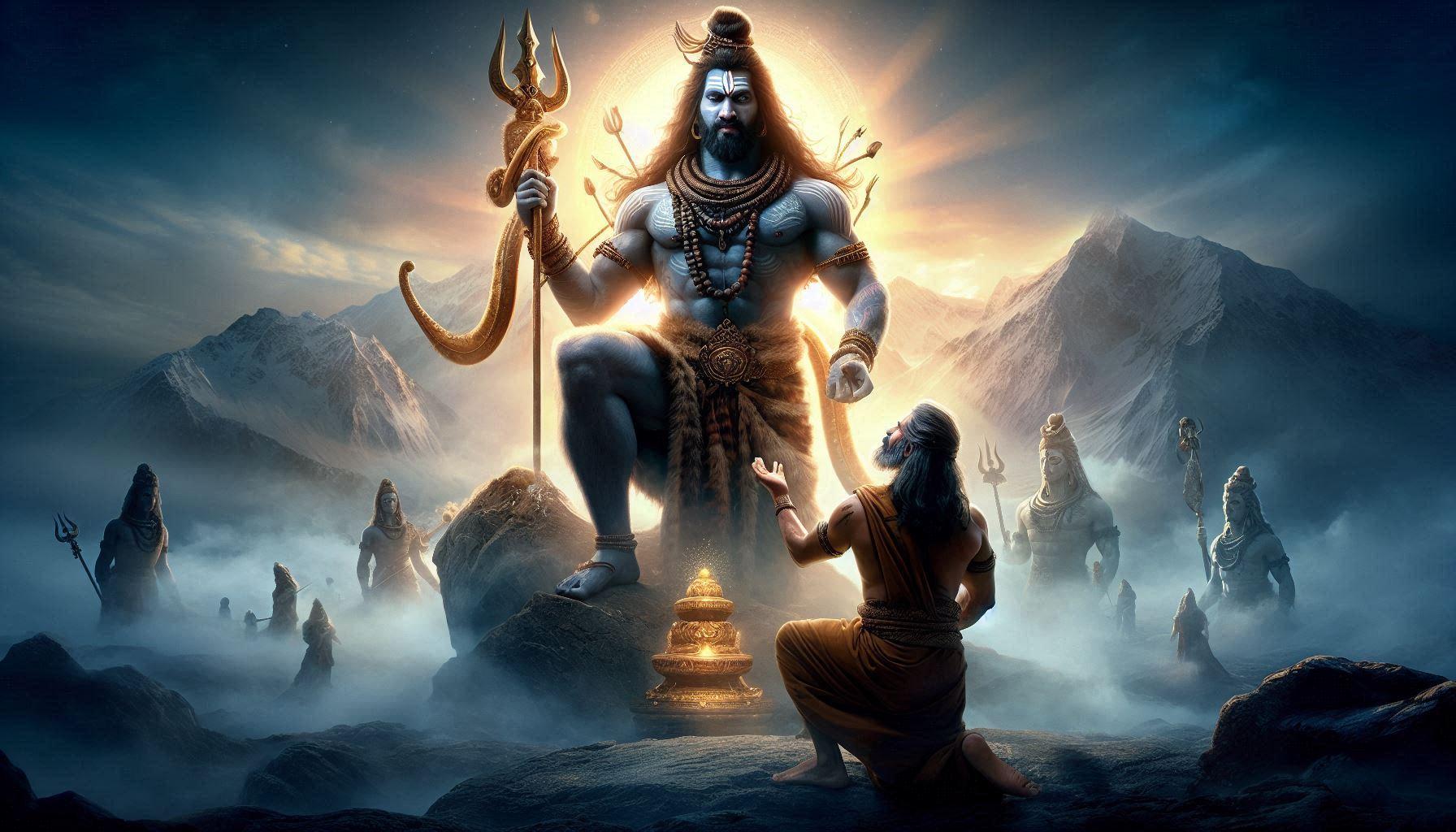
There exists a bow so powerful that no battle fought with it could ever be lost — a weapon that carried not just physical might, but the unstoppable certainty of victory. This was the Vijaya Dhanush, the divine bow once wielded by the fearsome warrior-sage Parashurama.
Its origin traces back to Lord Shiva himself, who created Vijaya Dhanush from cosmic energies during a time when demons threatened the balance of the universe. Crafted to channel unstoppable divine force, the bow was gifted to Parashurama as a weapon of justice — to vanquish evil kings and restore dharma.
Legends say that when strung, Vijaya Dhanush produced a thunderous twang that echoed across the three worlds, striking terror even into gods and demons. Its arrows never missed, and its wielder was shielded from defeat as if destiny itself bent in their favor.
In the Mahabharata, Parashurama passed this bow to Karna, the tragic warrior of unmatched skill. With Vijaya in his hands, Karna became nearly invincible — until fate and curses turned the tide.
Some say Vijaya Dhanush now rests in the heavens, sealed away, waiting for the end times when its power will be unleashed once again.
Weapon Number 3, Pinaka (Shiva Dhanush).
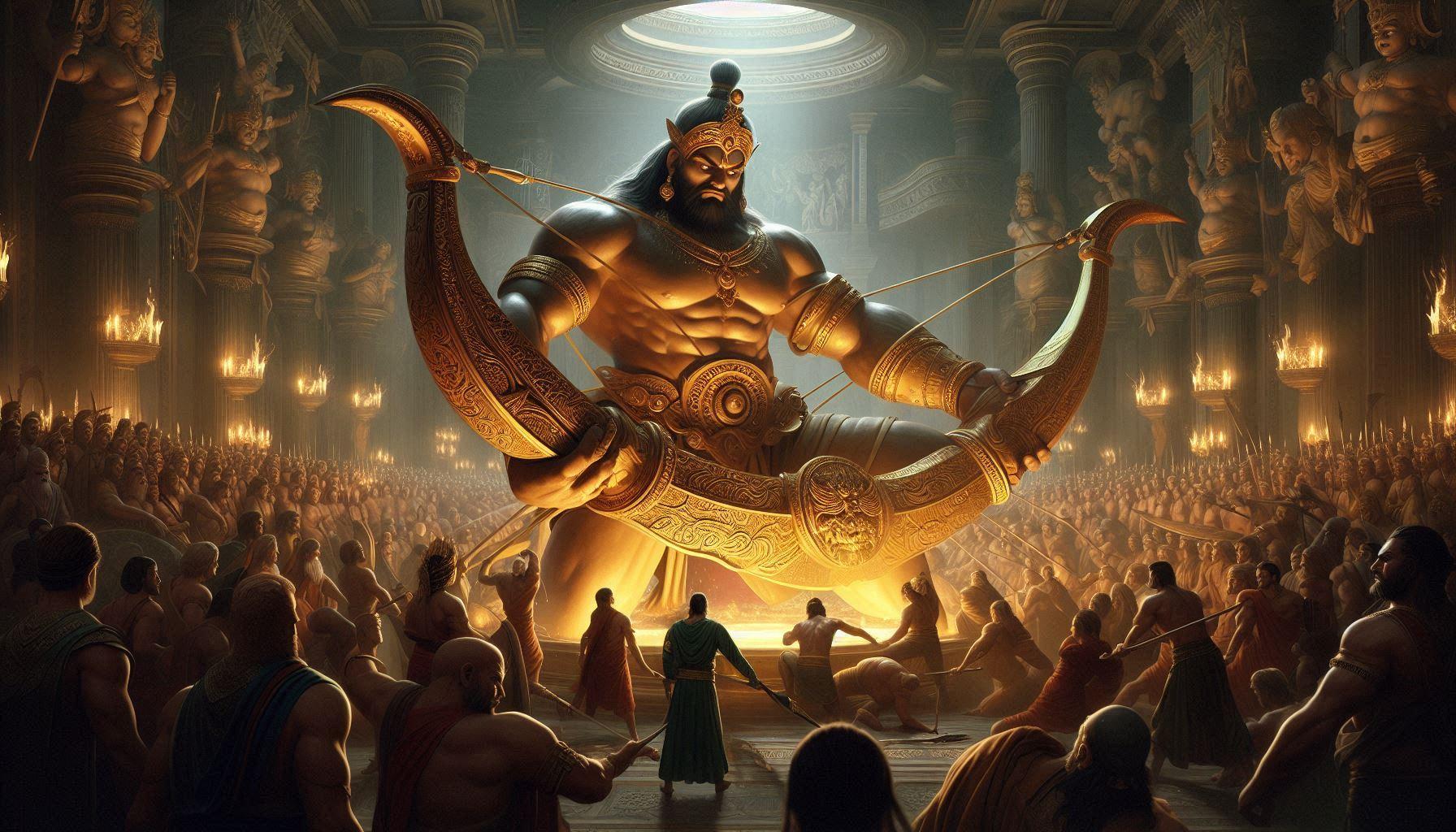
In the realm of Hindu past history, few weapons carry the sheer cosmic terror of Pinaka, the celestial bow of Lord Shiva. Forged from the essence of destruction itself, Pinaka was no ordinary weapon — it was a force capable of unmaking worlds.
Legends say Pinaka was born in the fiery heart of the cosmos, imbued with Shiva’s own energy to maintain universal balance. When Shiva strung it, the vibrations could shake mountains, and when he released an arrow, it could dissolve entire armies in an instant. This was the very bow Shiva used to destroy the city of Tripura — three demon cities floating in the sky — in a single, earth-shattering shot.
But the most famous moment in Pinaka’s earthly history came during Sita’s swayamvara. The kings and princes of the world gathered, each attempting to string the mighty bow to win her hand. One by one they failed — until Rama, with divine grace, lifted and strung Pinaka with ease… and then broke it in two.
That sound of the bow breaking is said to have echoed across the universe, a sign that destiny had arrived. Since then, Pinaka returned to the divine realms, awaiting Shiva’s call once more.
Weapon Number 4, Sharanga Bow.
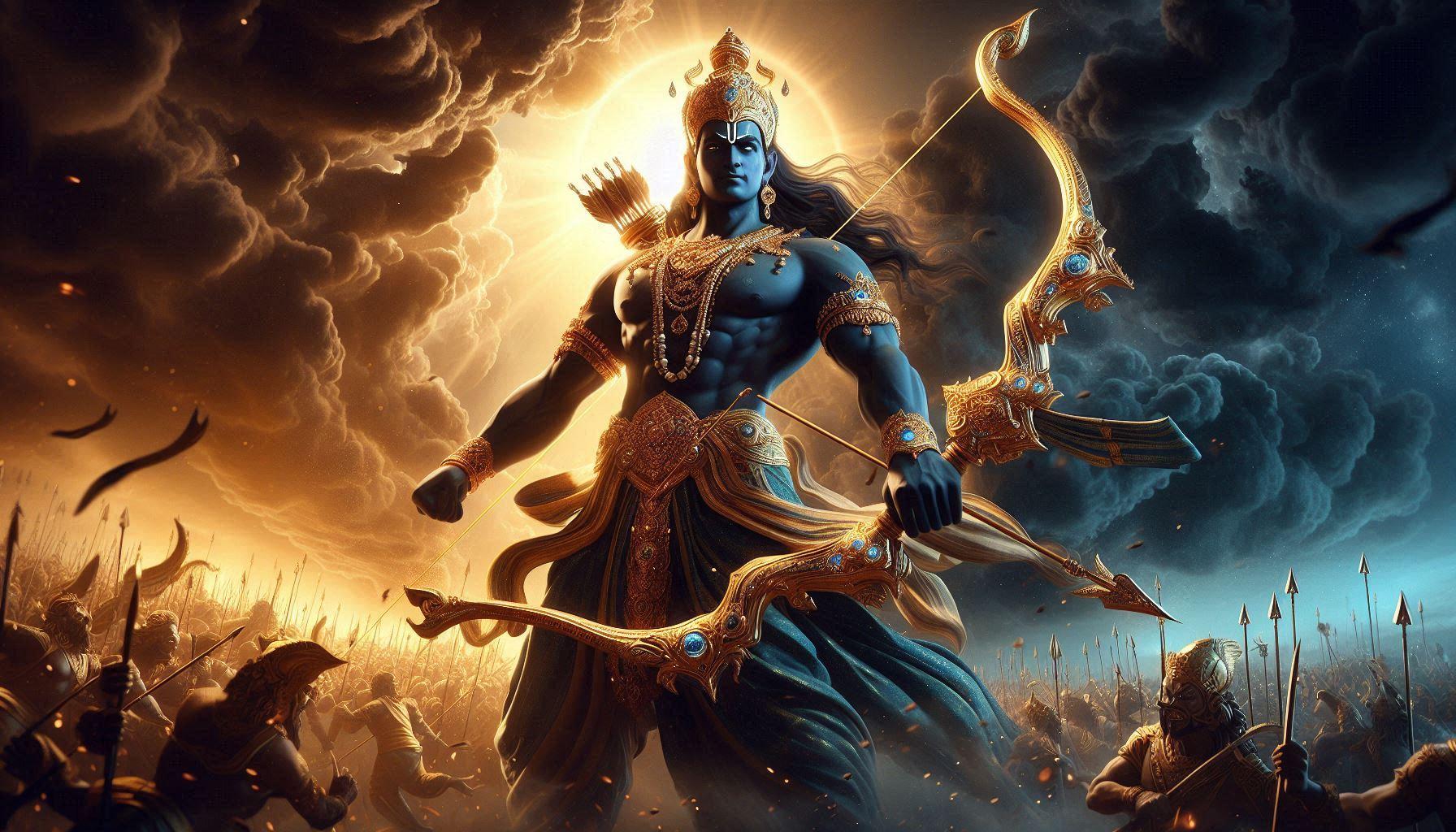
Among the many divine weapons in Hindu past history, Sharanga stands apart as a symbol of unwavering protection. This was not just a weapon of destruction — it was the bow of Lord Vishnu, the Preserver of the universe, crafted to defend dharma whenever evil rose unchecked.
Sharanga was said to be forged by Vishwakarma himself, using celestial metals that never dulled or weakened. It carried the blessings of the cosmic trinity, making it unbreakable and eternally precise. Unlike other weapons meant for annihilation, Sharanga embodied balance — its arrows struck only when justice demanded it.
Vishnu wielded Sharanga in countless cosmic battles, defeating asuras and restoring harmony across worlds. In one tale, he passed the bow to Parashurama, his warrior-sage avatar, who used it to purge the earth of corrupt rulers. Later, Sharanga appeared in the hands of Sri Krishna, another avatar of Vishnu, during the Mahabharata war. Though Krishna vowed not to fight, Sharanga remained at his side — a silent reminder of his power should dharma require direct intervention.
Legends say Sharanga still exists in Vaikuntha, Vishnu’s divine abode, glowing with the light of a thousand suns, ready for the day when the universe once again calls for its protector.
Weapon Number 5, Kodanda Bow.
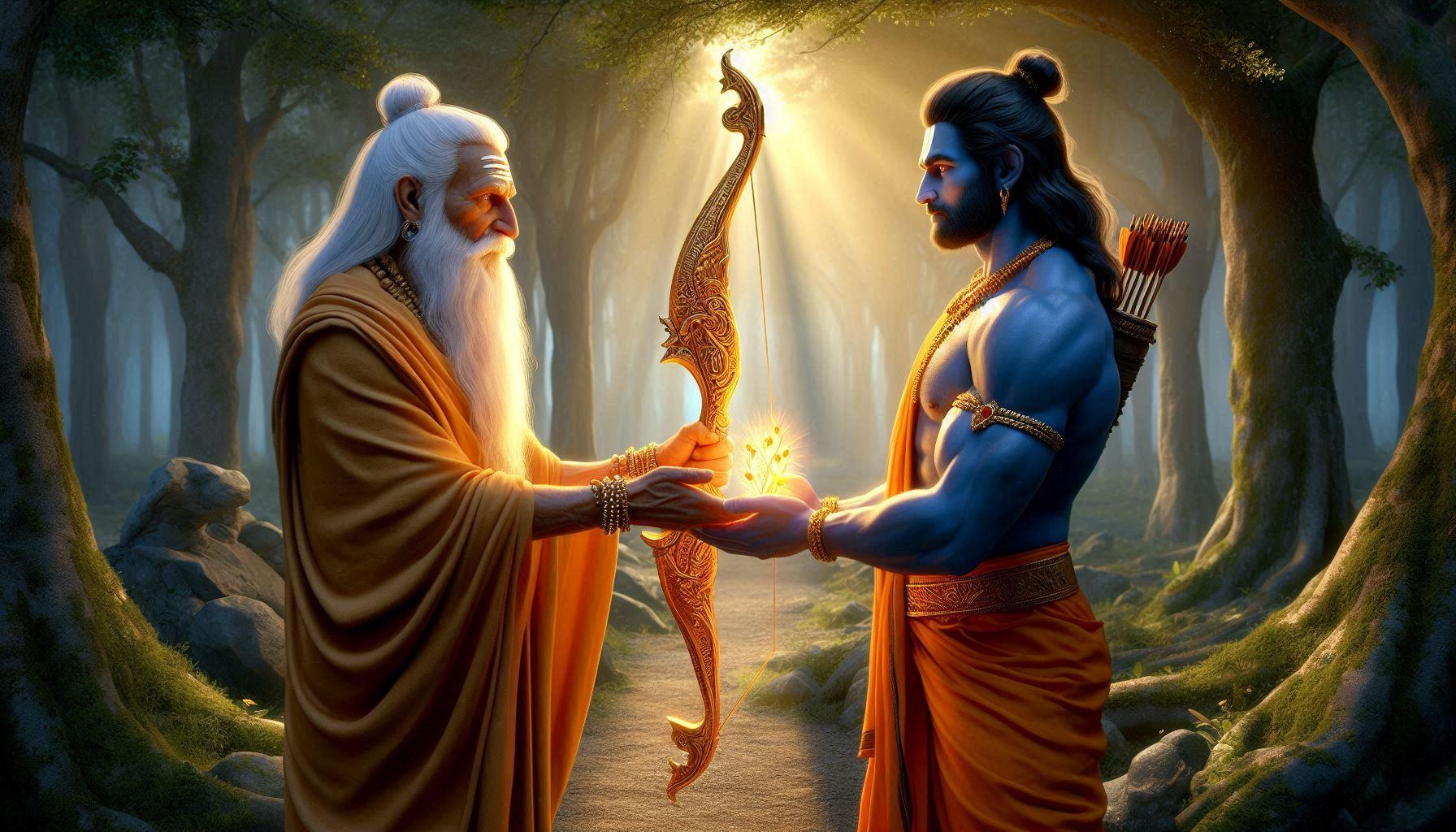
If there was ever a weapon that symbolized righteousness itself, it was the Kodanda, the sacred bow of Lord Rama. Unlike other divine weapons forged for sheer destruction, Kodanda was a bow of justice — it struck only in the service of truth and dharma.
According to legend, Rama received Kodanda from Sage Agastya during his exile in the forest. The sage blessed him with this celestial bow, along with an inexhaustible quiver of arrows, knowing Rama’s destiny was to face forces far beyond mortal strength.
With Kodanda in hand, Rama’s victories became legendary. It was this bow that brought down Khara and Dushana with their massive armies, humbled the demon king Vali, and ultimately ended the reign of terror of Ravana in the epic Ramayana. Each arrow from Kodanda was said to travel with divine precision, guided by the will of the gods.
But Kodanda was more than a weapon — it was an extension of Rama’s unwavering commitment to righteousness. Even when faced with personal loss, Rama never drew Kodanda in anger or revenge; he wielded it only for the protection of the innocent.
Today, depictions of Rama with Kodanda remain a timeless reminder that true strength lies in fighting for what is right.
Final Thoughts.
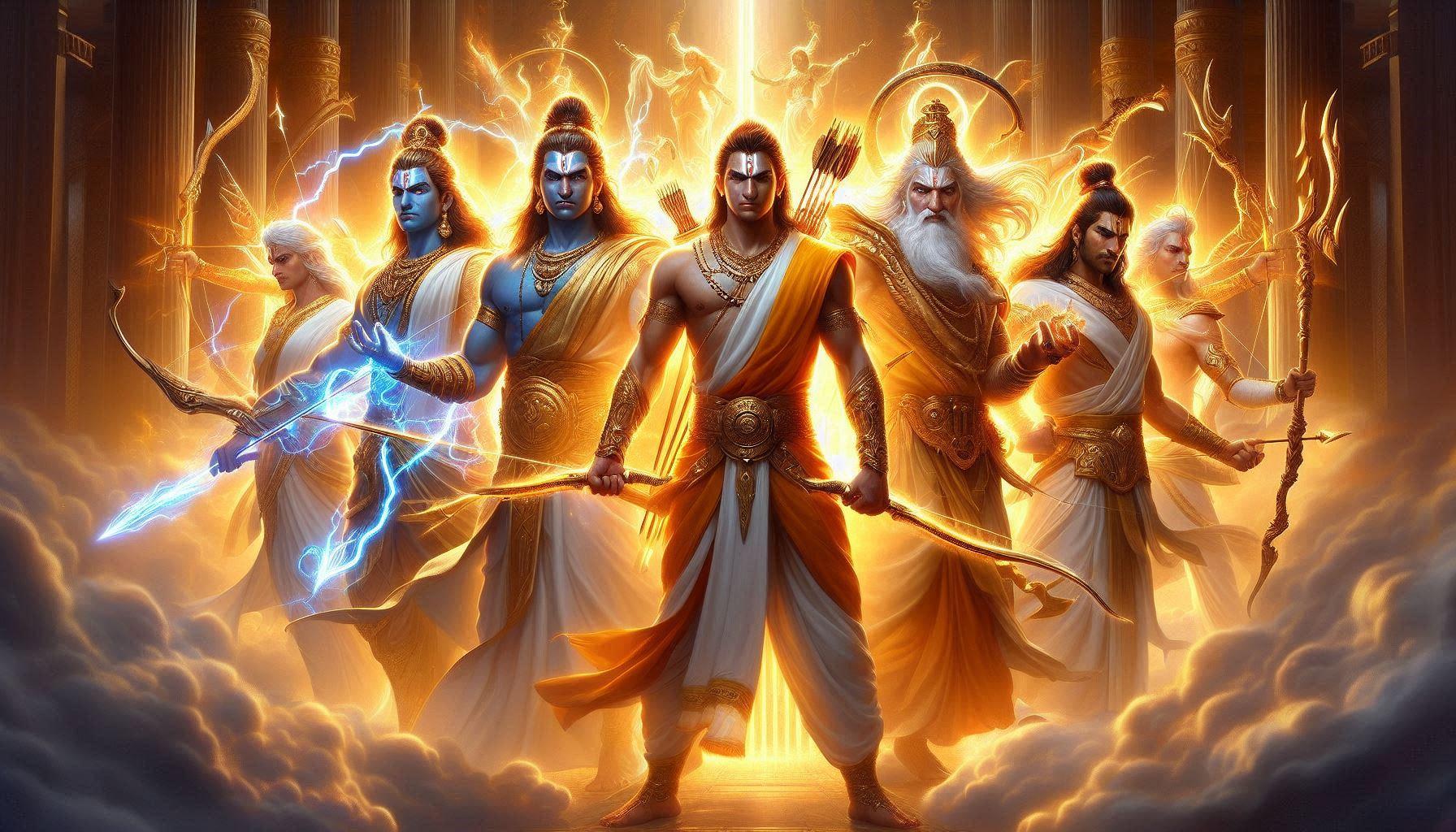
These five divine bows — Gandiva, Vijaya Dhanush, Pinaka, Sharanga, and Kodanda — were far more than instruments of war. They were symbols of divine will, justice, and the eternal battle between good and evil. Each appeared at a turning point in history, wielded by heroes chosen not just for their strength, but for their righteousness and destiny.
And yet… their final fate remains a mystery. Did they return to the celestial realms? Are they sealed in some hidden corner of the earth, waiting for the hands of a worthy soul? Or will they reappear only in the last great war foretold by our scriptures — when the balance of the world hangs by a thread?
Perhaps these weapons were never truly about power… but about reminding us that real victory comes when might serves dharma. The question is — if they returned today, who would be worthy to wield them?