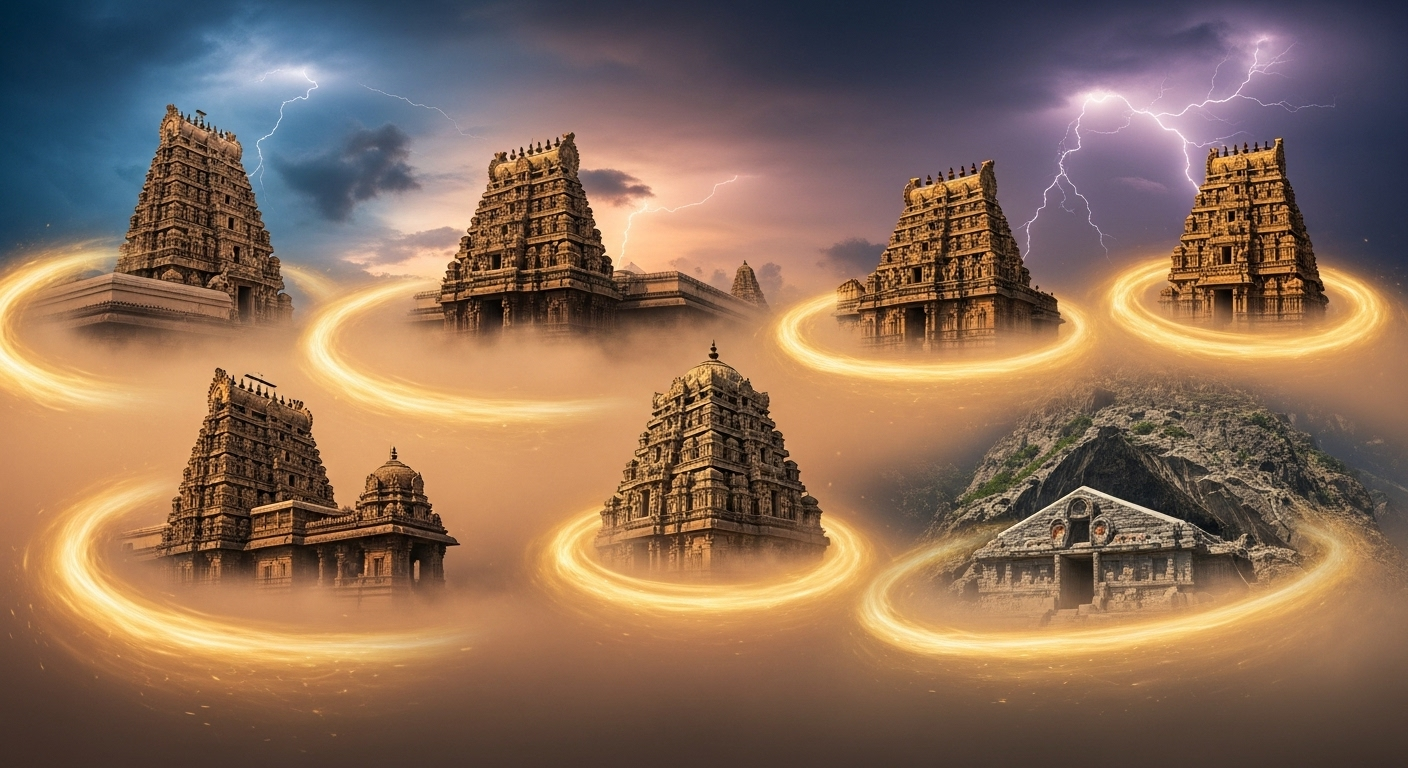
India is a land of countless temples… but among them, there are a few that defy reason, science, and even nature itself. From deities who drink offerings, to seas that fall silent at divine command, to chambers that may never be opened—these temples blur the line between faith and reality. What if the stones we pray to are not silent at all? What if they’re alive, watching us, proving that divinity is not myth but power itself?
Today, we’ll uncover the 10 most mysterious temples of India, each hiding a secret that may change the way you see the divine forever.
For Temple 10, Panakala Narasimha Swamy Temple, Andhra Pradesh.
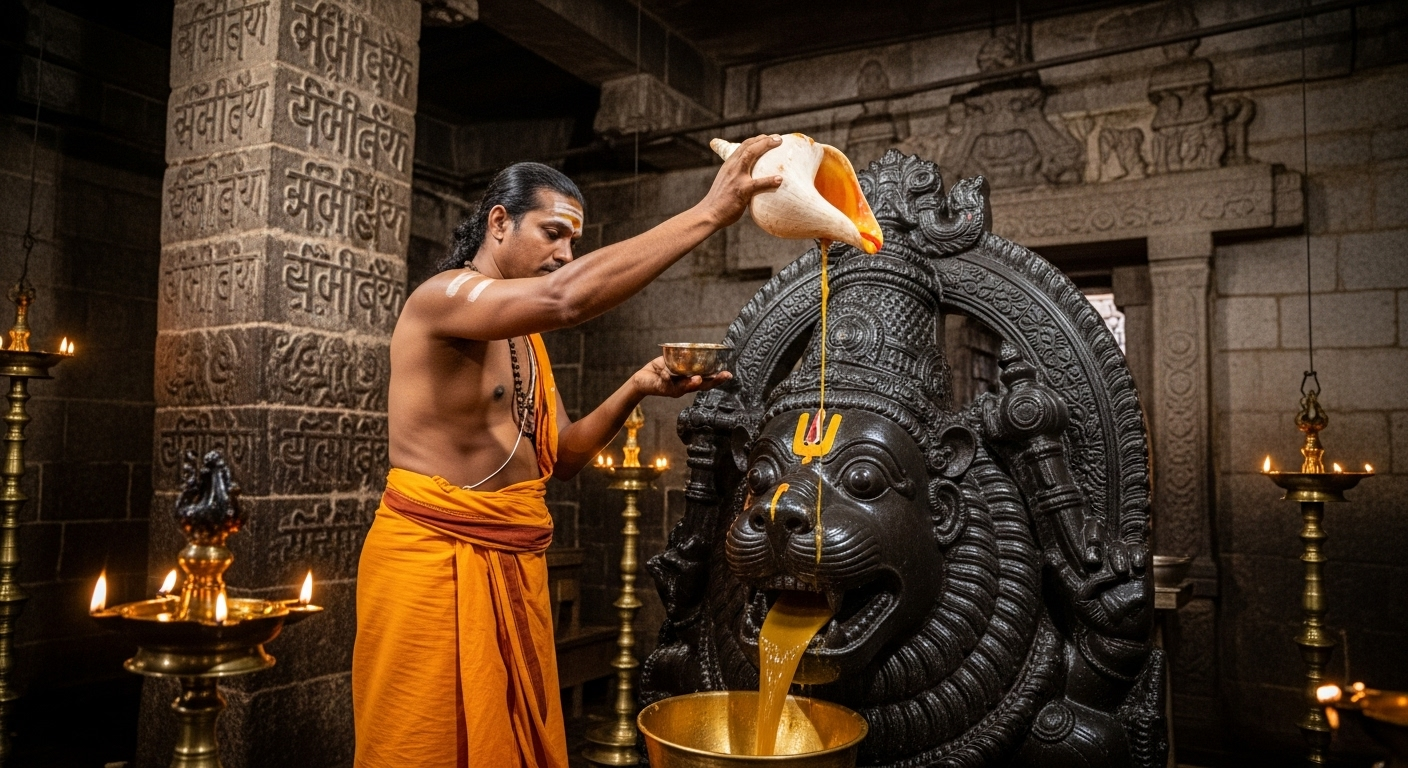
What if I told you there’s a temple where the deity actually drinks the offerings given to him?
At the Panakala Narasimha Swamy Temple, devotees pour jaggery water, called Panakam, directly into the mouth of Lord Narasimha through a conch. Astonishingly, a gargling sound echoes from the sanctum, as if the deity is swallowing the drink. When the sound fades, the priest stops—signifying the Lord has had enough. Even stranger—though jaggery attracts ants everywhere, not a single ant exists here. Half the liquid flows back out and is distributed as prasadam.
Is this clever temple acoustics… or proof that the ferocious Narasimha still breathes within stone?
For Temple 9, Jagannath Temple Odisha.
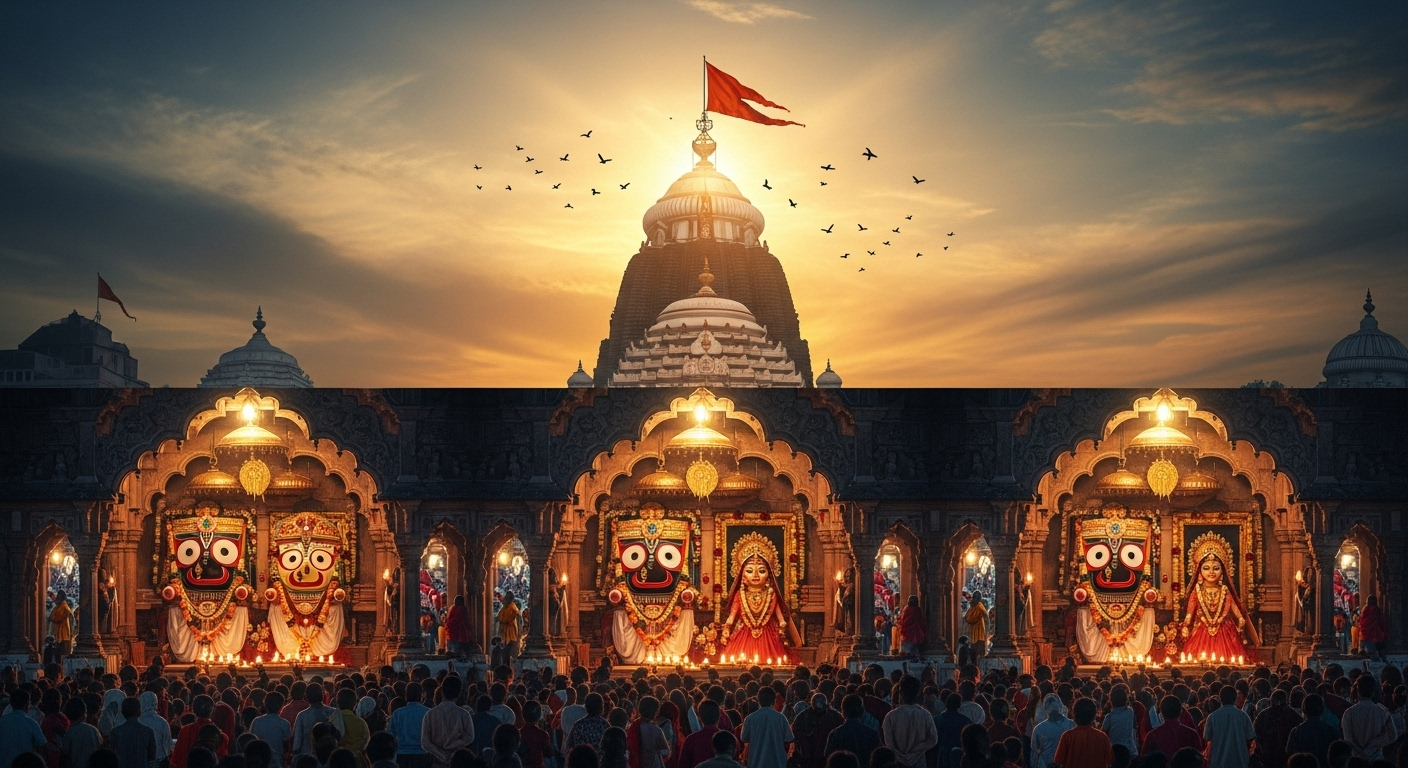
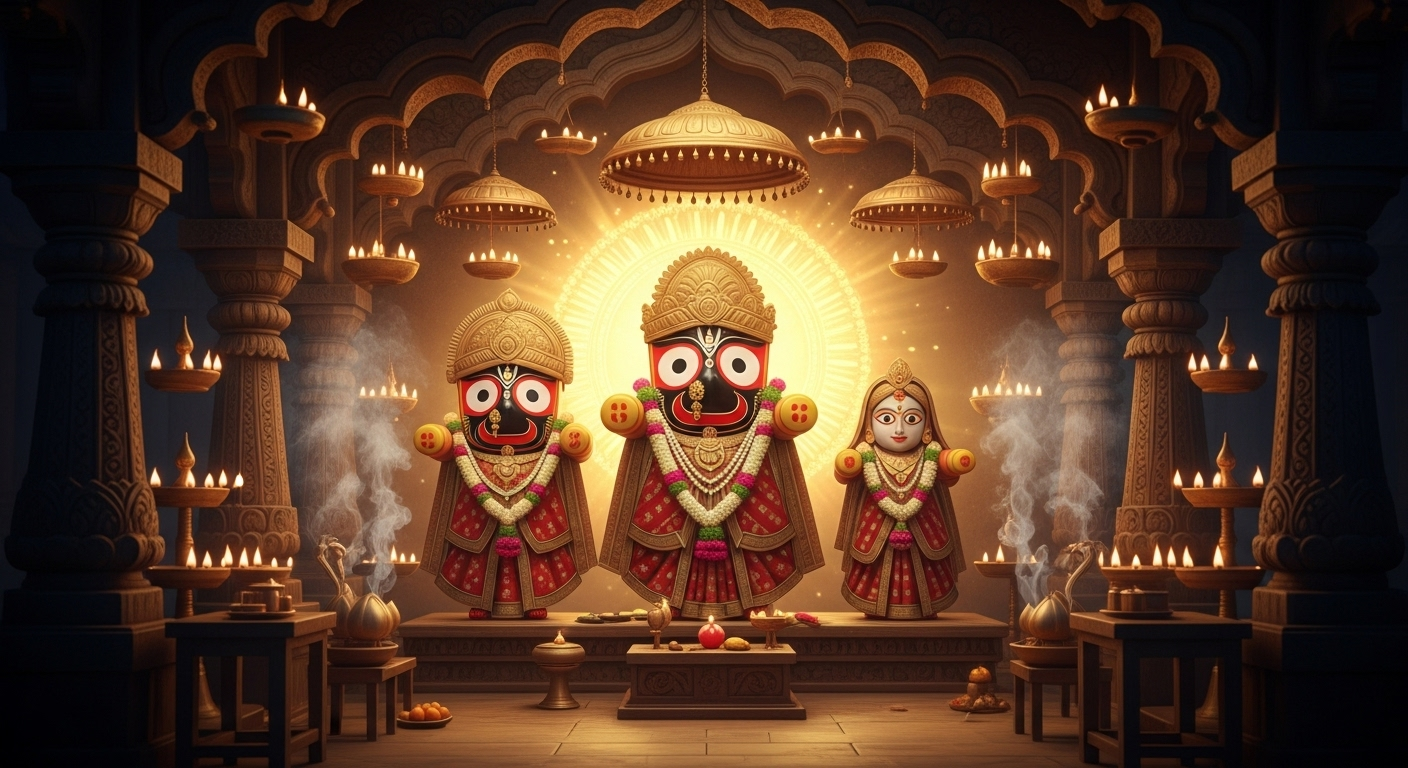
Inside the Jagannath Temple of Puri lies a secret that chills every devotee—within the wooden idol is said to rest the real heart of Krishna, preserved for centuries.
But that’s only the beginning. The temple’s kitchen, the largest in the world, cooks food by stacking earthen pots one on top of the other. Yet, inexplicably, the topmost pot cooks first. Even the temple flag defies physics, flying against the direction of the wind. And in the sky above, not a single bird dares to cross the sanctum.
Coincidence? Science? Or is Jagannath himself rewriting the laws of nature to remind us that his presence is beyond logic?
For Temple 8, Chottanikarai Bhagavathi Temple, Kerala.
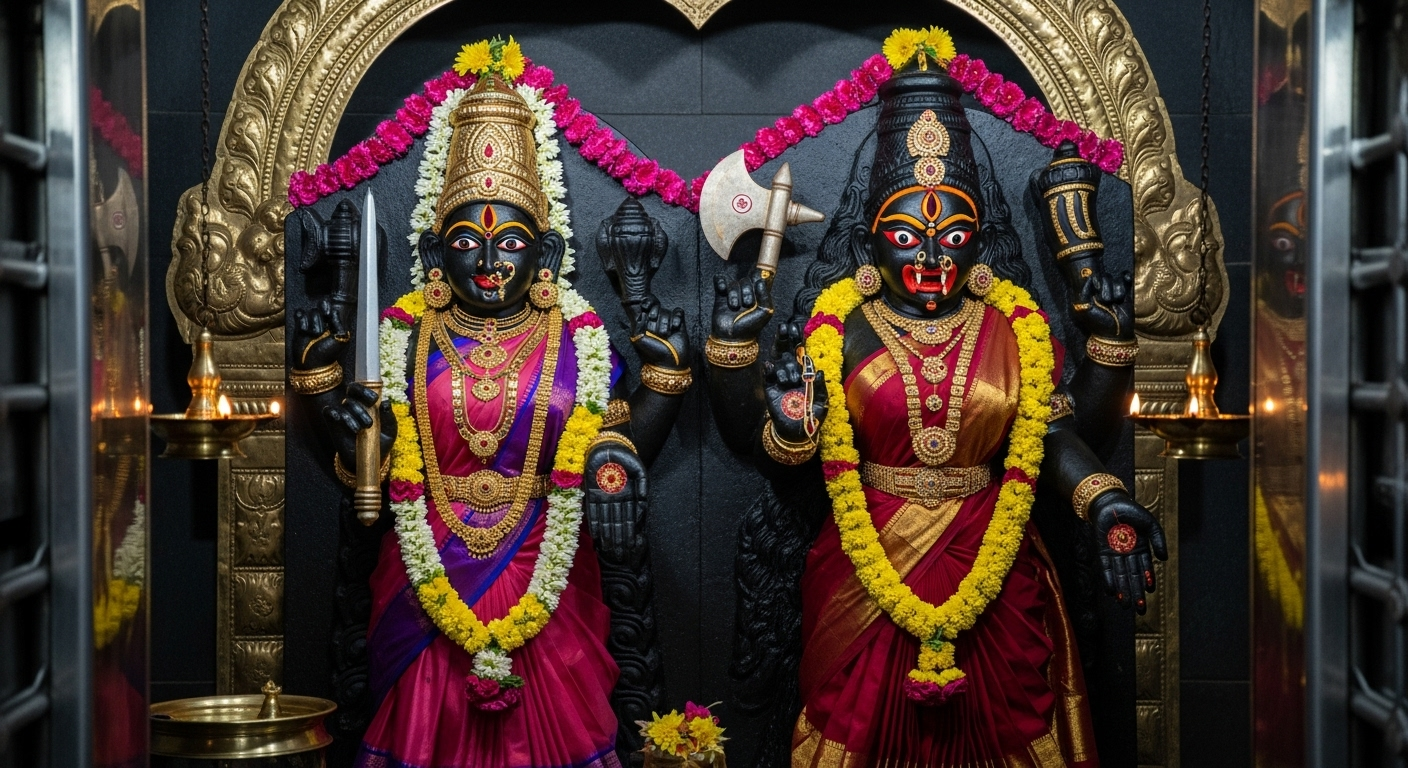
In Kerala’s Chottanikarai Temple, devotees don’t just come for blessings—they come to be freed from demons, curses, and madness.
Though the presiding deity is Maha Lakshmi, by night she takes the terrifying form of Bhadrakali, slayer of evil. Thousands claim healing here through rituals of exorcism. A sacred tree within the temple bears countless iron nails, hammered by those once believed to be possessed.
But the greatest mystery is the Guruthi Puja at 8:45 PM. As chants rise, locals believe the Goddess washes her axe in the temple pond. In the dim temple light, the entire pond glows an eerie blood-red, as though alive with her fury.
Is this temple ancient psychiatry—or living proof that the Goddess still walks with fire in her eyes?
For Temple 7, Mahakaleshwar Temple, Madhya Pradesh.
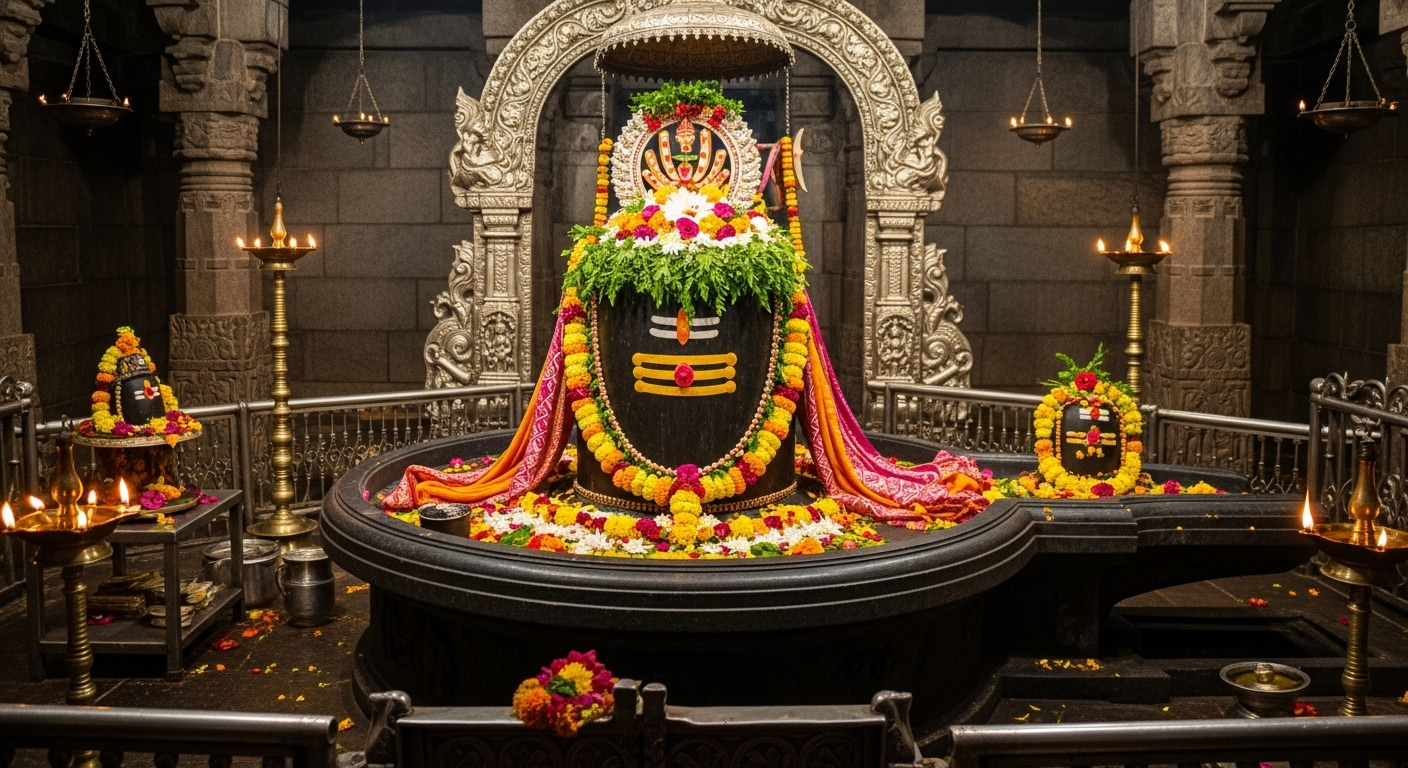
In Ujjain, rulers and officers come and go—but none hold true authority. That’s because the city has only one king: Mahakaleshwar Maharaj, Lord Shiva himself.
The Mahakaleshwar Jyotirlinga is unique, worshipped as the sovereign of time. Legends say that anyone staying in Ujjain overnight—be it king or minister—loses their authority, for only Mahakal governs.
Each dawn, the temple hosts the awe-inspiring Bhasma Aarti, where Shiva is worshipped with ashes from funeral pyres. The message is clear—life is temporary, but the eternal king of time watches over all.
Is Mahakaleshwar just a symbol of death’s inevitability, or does time itself bow to him in this city?
For Temple 6, Rameshwaram Temple, Tamil Nadu.
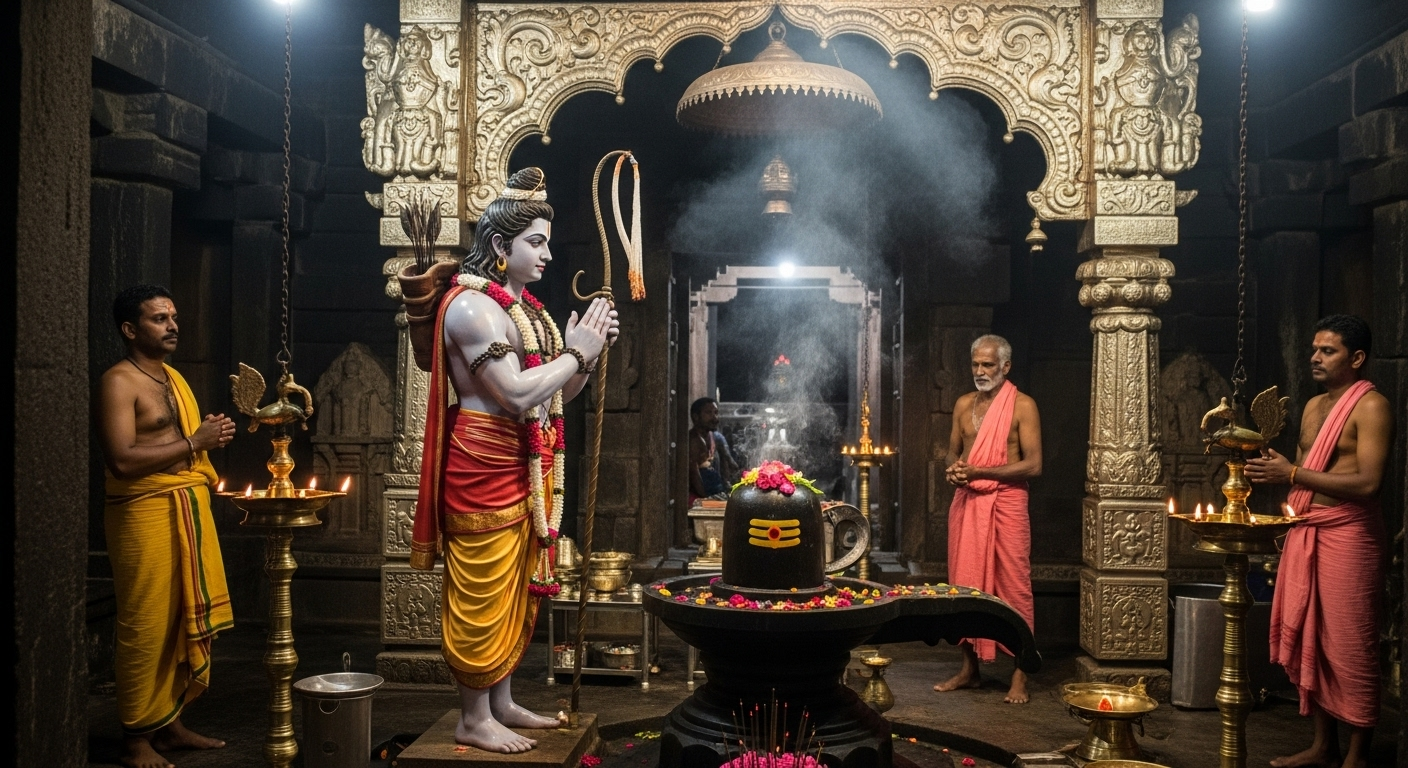
On the southern tip of India stands Ramanathaswamy Temple, where Lord Ram himself prayed to Shiva before building the bridge to Lanka.
Pilgrims perform last rites for ancestors here, seeking their liberation. But the real mystery lies at Agni Theertham, the temple’s seashore. Despite being part of the roaring Bay of Bengal, this stretch of water remains calm and wave-less.
Legends say the ocean once disturbed devotees, and Lord Ram commanded the waves to fall silent forever. To this day, the sea here stays eerily obedient.
Is this just a quirk of geography, or does the ocean still echo Ram’s divine command?
For Temple 5, Shani Shingnapur, Maharashtra.
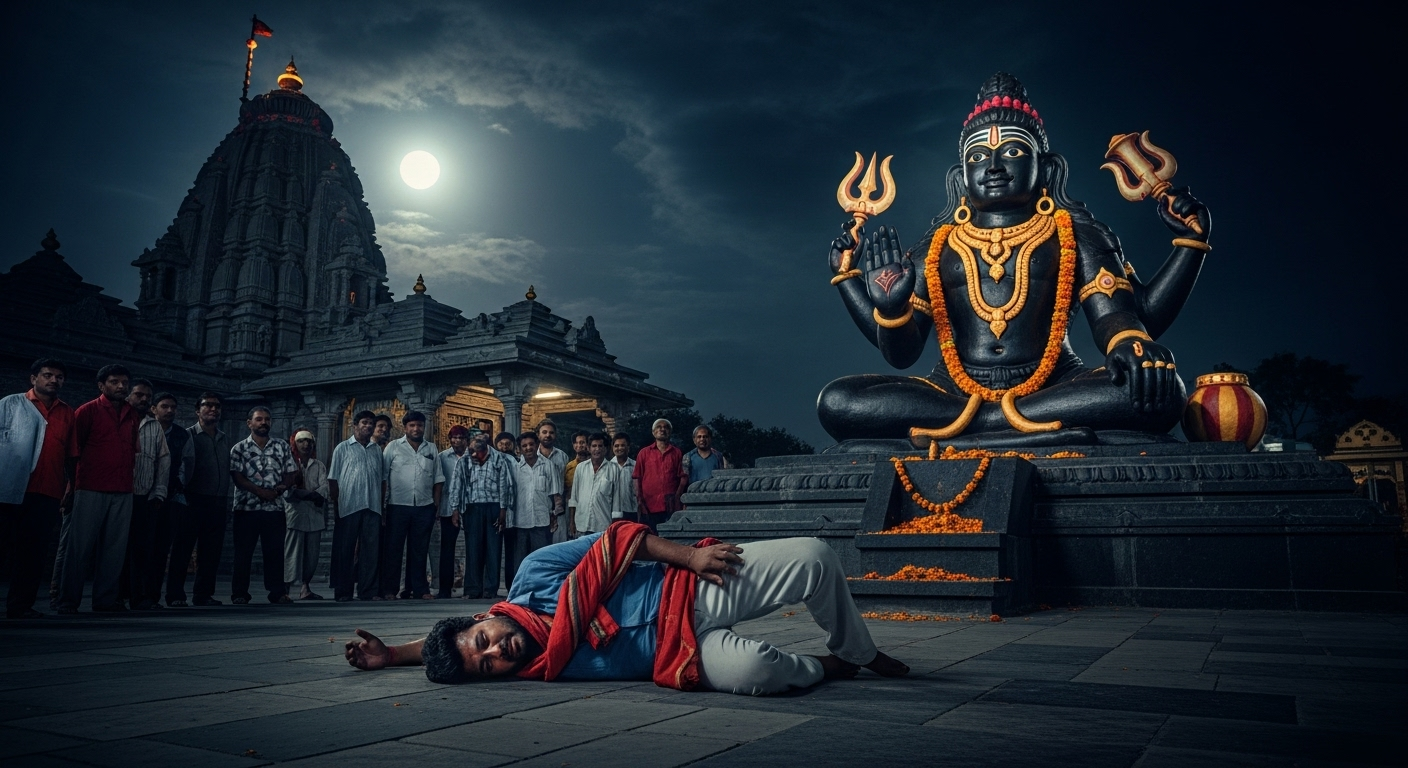
Imagine a village where no house has doors, no bank has locks, and yet theft is unheard of.
Welcome to Shani Shingnapur, where Lord Shani’s black stone deity is believed to punish wrongdoers instantly. Out of sheer faith, villagers live without doors—only open entryways. Even toilets are covered with nothing but curtains. Banks operate without locks, trusting Shani Dev’s justice.
Legends say anyone who dares commit crime here faces severe consequences—illness, ruin, or death. And indeed, stories of thieves meeting tragic ends are passed down through generations.
Is this divine surveillance—or the rarest example of a society where faith alone keeps crime at bay?
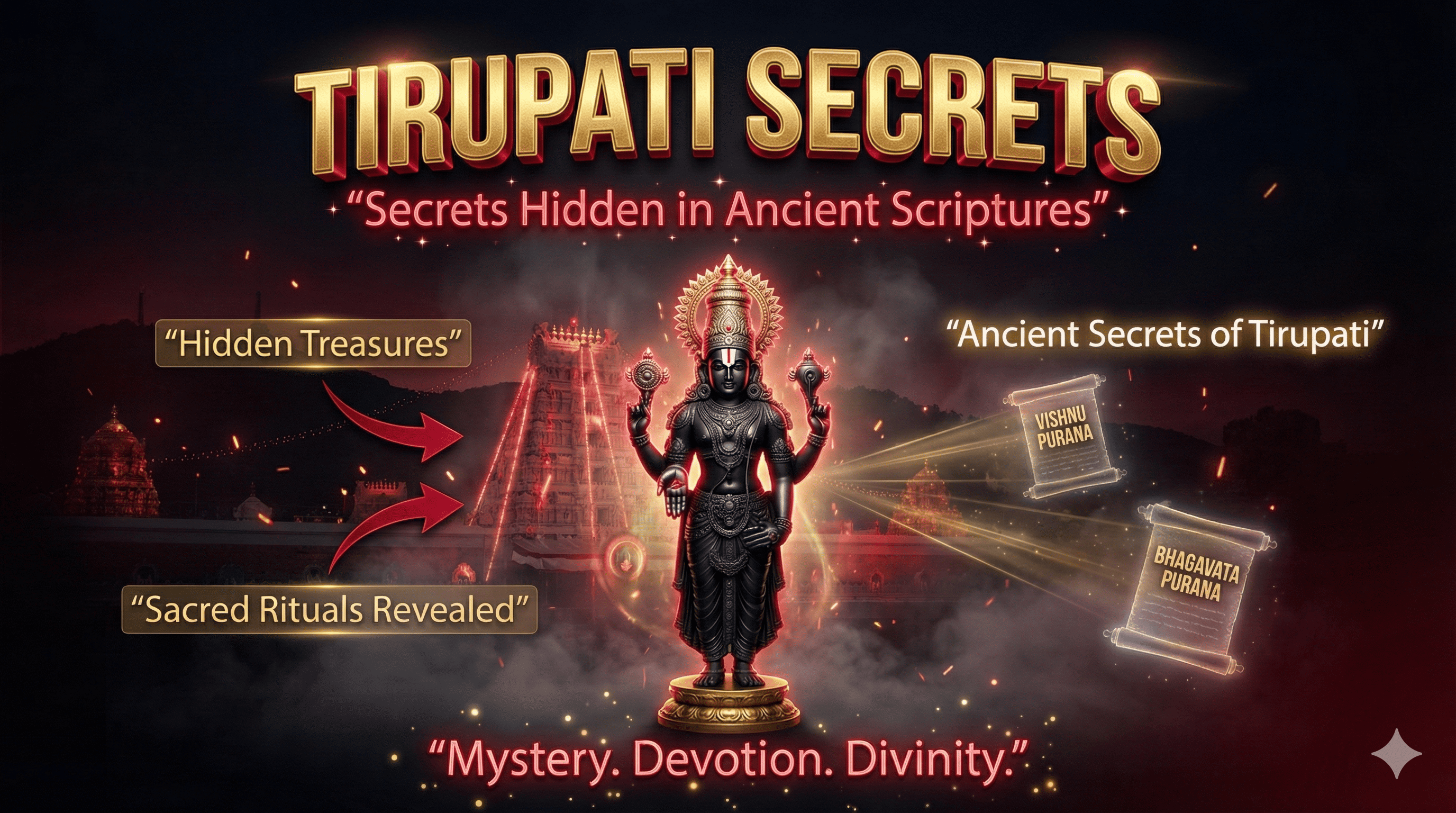
For Temple 4, Venkateshwara Temple, Andhra Pradesh.
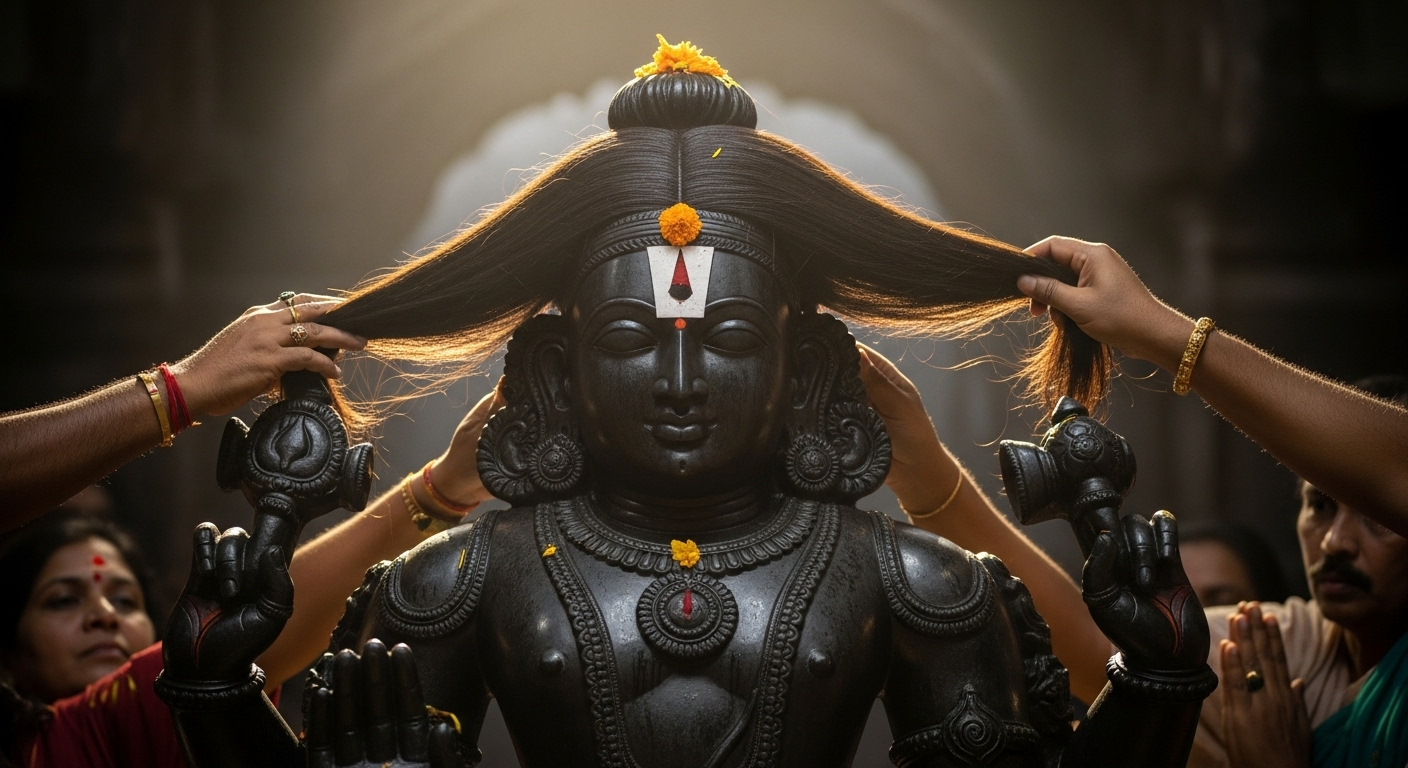
The Tirumala Venkateshwara Temple is one of the most visited shrines in the world, yet its mysteries remain alive.
The idol of Lord Balaji is said to be living. His hair is silky smooth, never tangling or falling out. Priests claim the deity’s body sweats and radiates heat—even after countless ablutions, the idol remains warm. Standing close, devotees swear they feel the warmth of a living being.
Even history bowed here—the temple remained untouched during invasions, as if protected by divine forces. Legends say Vishnu resides in the idol, waiting until the end of Kali Yuga.
Is this a marvel of sacred science—or the clearest proof that God still breathes within stone?
For Temple 3, Nidhivan Temple, Uttar Pradesh.
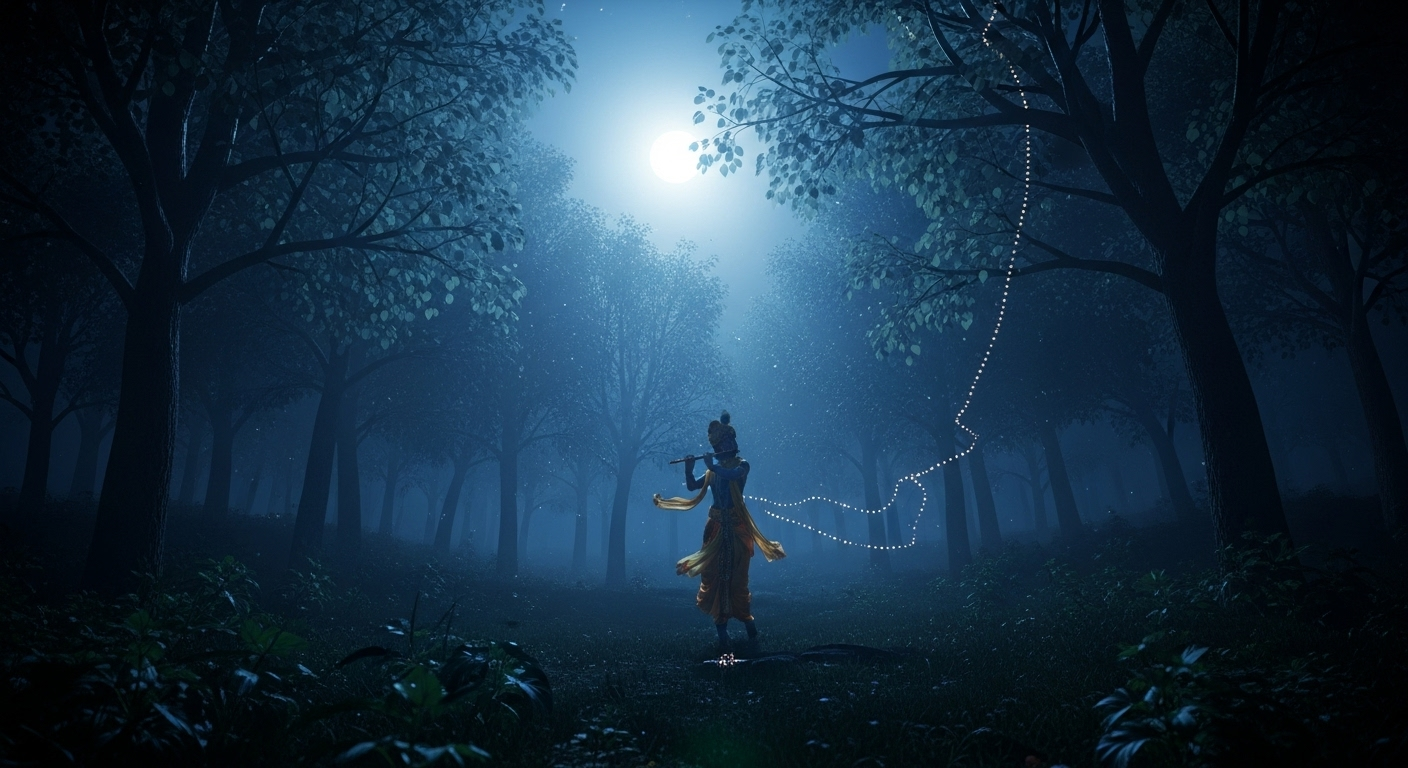
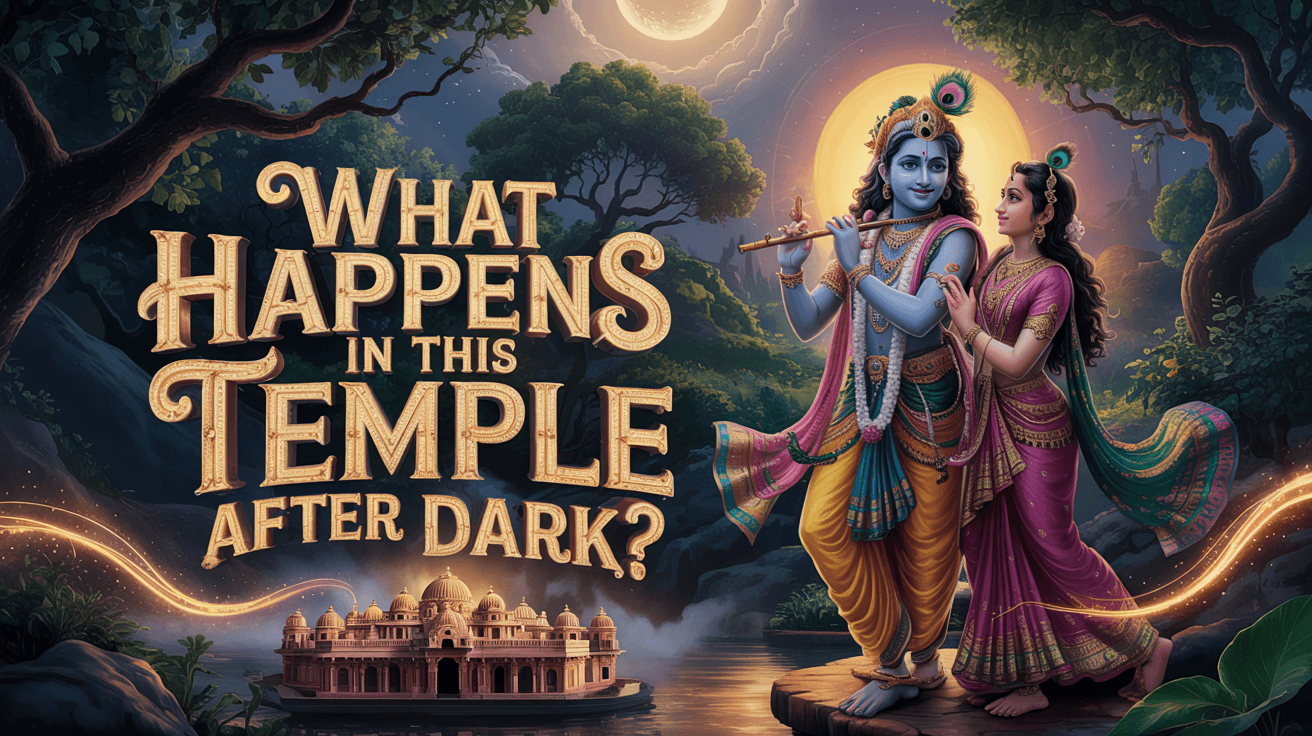
In Vrindavan, the Nidhivan Temple is locked before sunset. Why? Because every night Krishna, Radha, and the gopis are said to perform the eternal Raas Leela.
The grove’s trees are bent and entwined, believed to be gopis who dance at night and freeze into trees by dawn. Each evening, a priest arranges a bed, sweets, and water for Krishna and Radha. By morning, the bed appears disturbed, the offerings partially eaten.
Locals insist no human can witness the Raas Leela. Anyone who dares stay overnight goes blind, deaf, or even dies. Yet, flute notes and anklet sounds often drift through the night air.
Is this just folklore, or is Vrindavan still alive with Krishna’s divine love?
For Temple 2, Amarnath Cave Temple, Jammu & Kashmir.
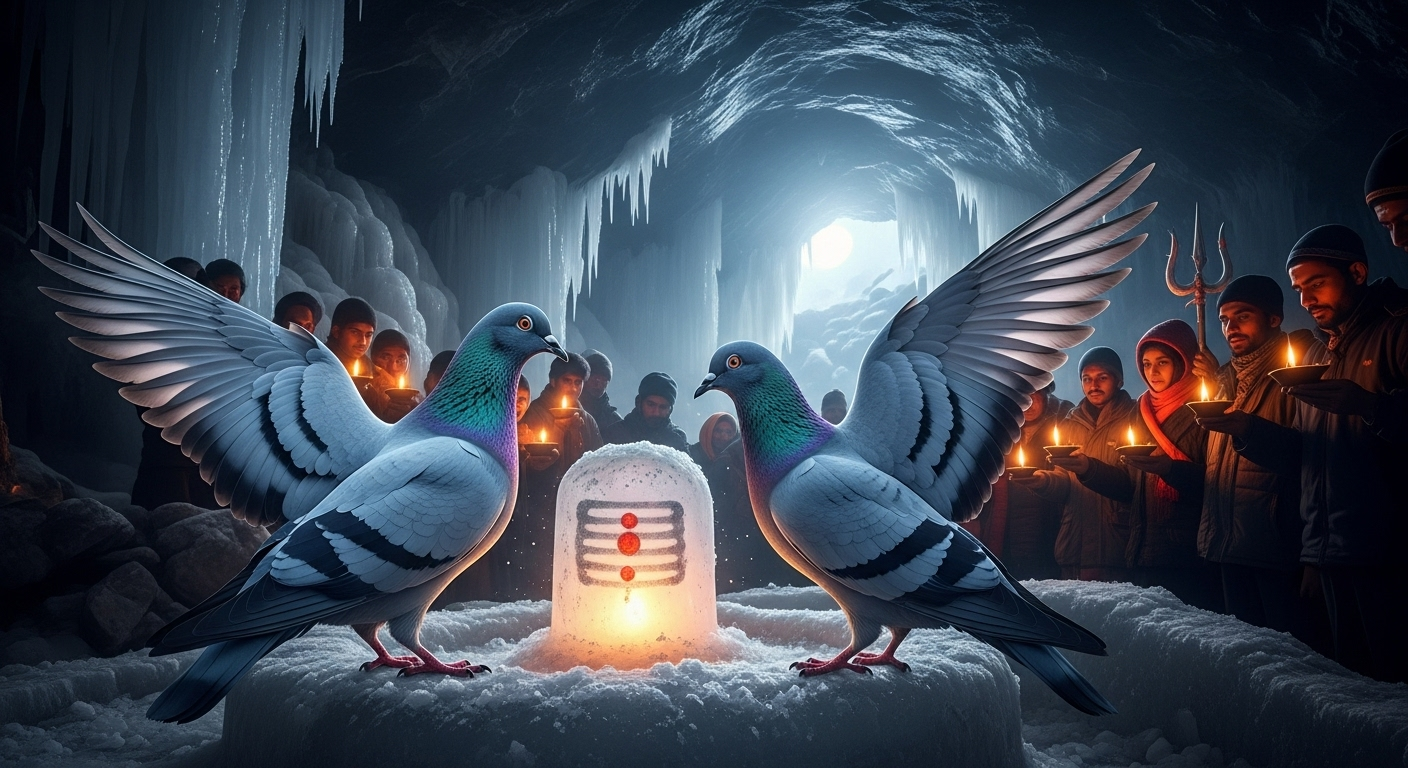
High in the Himalayas lies the Amarnath Cave, where Lord Shiva revealed the secret of immortality to Parvati.
Inside forms the miraculous ice Shivling, which waxes and wanes with the lunar cycle. Pilgrims believe this is Shiva’s eternal presence. Legends add another twist—two pigeons, believed to have overheard Shiva’s secret, are seen in the freezing cave. Astonishingly, they survive year after year, in conditions where life shouldn’t exist.
For centuries, devotees have considered them the immortal forms of Shiva and Parvati themselves.
Is this natural wonder—or the divine reminder that the secret of eternity still lingers in the icy silence?
For Temple 1, Padmanabhaswamy Temple, Kerala.
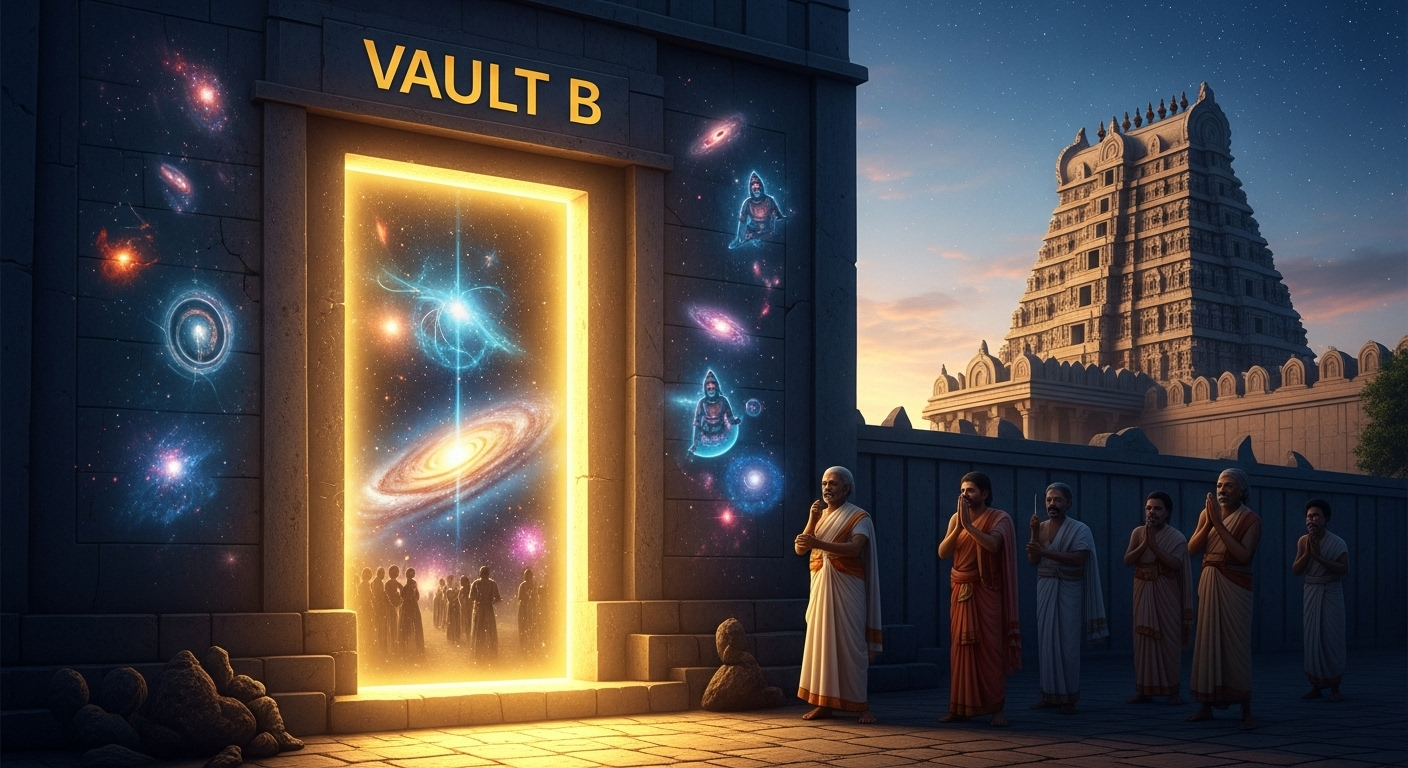
Finally, we reach the most mysterious temple in the world—the Padmanabhaswamy Temple in Kerala.
Dedicated to Lord Vishnu reclining on Ananta, it is not only the richest temple on earth, but also the most forbidden. Beneath it lie vaults filled with unimaginable treasure—gold, jewels, artifacts worth billions. Yet one chamber, Vault B, remains sealed.
Legends warn it is locked with Naga Bandham—a serpent curse—and guarded by celestial beings. Ancient texts claim opening it will bring catastrophic destruction. To this day, despite treasure-hunters and governments, the massive door remains untouched. Priests insist it can only be opened with sacred chants, not force.
Is Vault B simply filled with riches beyond imagination? Or is it a cosmic doorway to powers humanity was never meant to awaken?
Final Thoughts.
From oceans that obey commands, to idols that breathe, to vaults that may never be opened—India’s temples remind us that faith and mystery walk hand in hand. Some call them legends, others dismiss them as superstition. But what if these mysteries are hidden truths, waiting for the right moment to reveal themselves?
Which of these temples left you most spellbound? Do you believe they are miracles of the divine—or secrets of ancient science that modern minds cannot yet decode?
The answer, perhaps, lies not in the temple… but in the faith that beats within your heart.
Mysterious Indian Temples: FAQs
What makes Indian temples mysterious?
What makes Indian temples mysterious?
Many Indian temples are associated with unexplained phenomena—such as idols that seem to drink offerings, seas that remain still, or chambers that cannot be opened. These mysteries blur the line between science, faith, and ancient knowledge.
Why does the Panakala Narasimha Temple sound like the deity is drinking?
Why does the Panakala Narasimha Temple sound like the deity is drinking?
Devotees hear a distinct gargling sound when jaggery water is offered at the temple. Some say it’s temple acoustics, while others believe it is proof that Lord Narasimha himself accepts the offering.
What is the greatest mystery of the Jagannath Temple in Puri?
What is the greatest mystery of the Jagannath Temple in Puri?
The temple’s idol is said to contain Lord Krishna’s heart, preserved for centuries. The kitchen also defies logic—the top pot cooks before the ones below. Even the temple flag flies against the wind.
Why is Nidhivan Temple locked every evening?
Why is Nidhivan Temple locked every evening?
Locals believe that Krishna, Radha, and the gopis perform the Raas Leela each night. Anyone attempting to witness it is said to suffer blindness, madness, or even death.
What is hidden inside the sealed Vault B of Padmanabhaswamy Temple?
What is hidden inside the sealed Vault B of Padmanabhaswamy Temple?
Vault B is believed to be protected by a serpent curse and divine guardians. While some think it contains unimaginable treasure, others believe it conceals cosmic secrets too dangerous for humanity.
Are these temple mysteries explained by science?
Are these temple mysteries explained by science?
Some mysteries may have scientific or architectural explanations, but many remain unsolved. For devotees, the unanswered questions are proof of divine presence beyond human understanding.